Münster at a Glance – Monthly Review February 2026
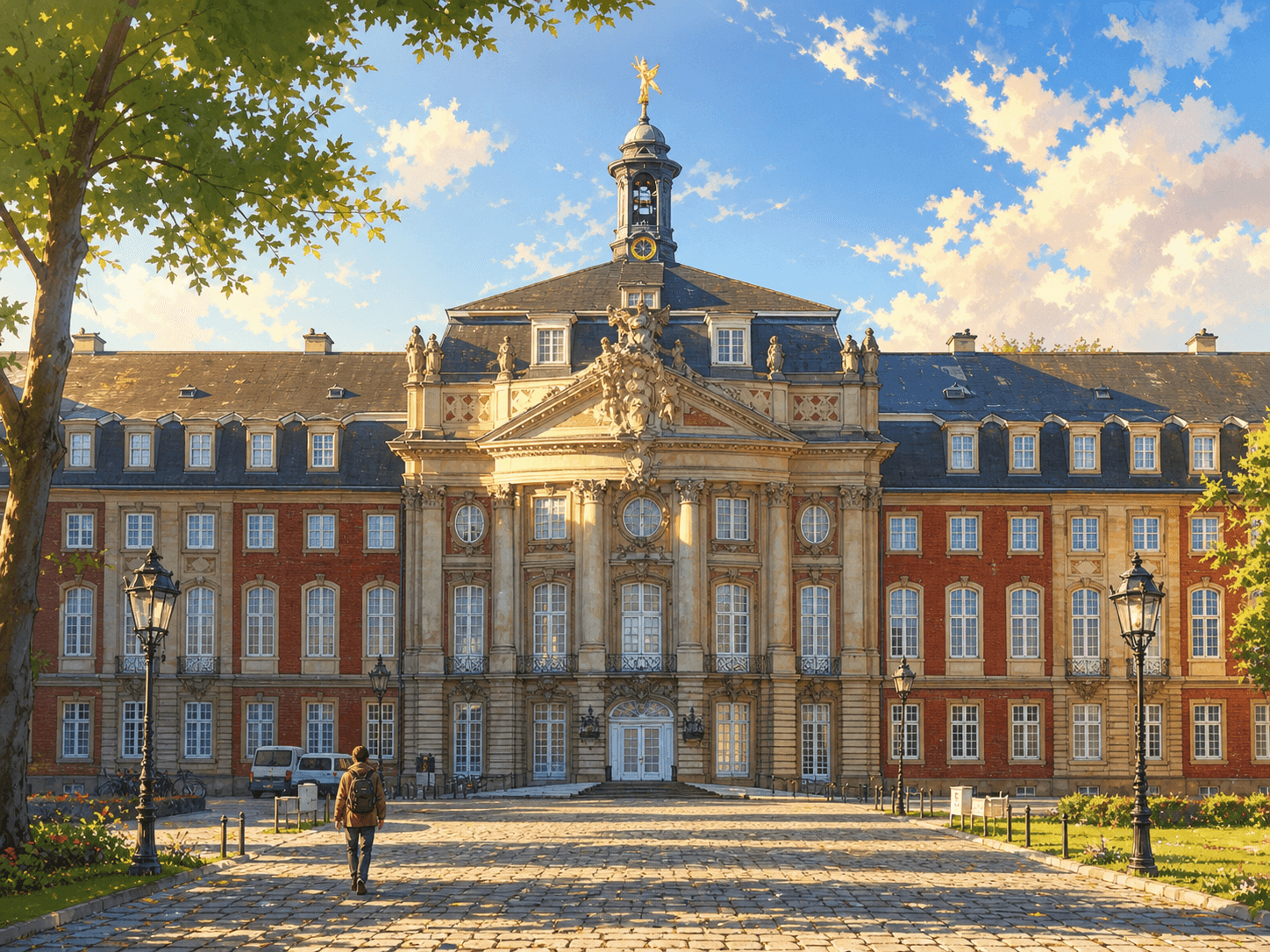
A comprehensive overview of the most important decisions and developments in Münster in February 2026 – from urban development to the climate protection strategy.
Münster is moving forward – with an eye on the future
What was important this month
- New developments in the Martiniviertel: The draft for the "MikroKiez" project was unanimously approved. Barrier-free paths, green spaces, and charging zones are planned to be completed by 2028.
- Closure of two kindergartens: Due to structural issues, the kindergartens at Killingstraße and the Alte Schule will close on August 1, 2026.
- Climate neutrality by 2030: Münster is on track – CO2 emissions have decreased by 37 % since 1990.
- European Youth Capital 2029: The Youth Council voted unanimously in favor of Münster's application.
- Citizen initiative to change street names: The initiative "Münster-Mitte" was approved with a "yes" vote.
- New schools planned: A three-track primary school is being built in Handorf, and the PRIMUS School will be permanently established.
Urban Development: On the way to a vibrant city center
Münster is making significant investments in shaping its city center. The "MikroKiez" project in the Martiniviertel is a milestone: With total costs of 7 million euros and 4.1 million euros in funding, a new barrier-free living space is to be created by 2028. The project will not only ease traffic but also create green spaces and charging zones – a clear benefit for everyone.
Changes are also taking place along the Hörsterstraße: The street will be converted for two-way cycling with a speed limit of 20 km/h and low curbs. The canal promenade will also see new lighting times to save energy while ensuring safety.
Children and Education: Safety and Future Perspectives
Two kindergartens in Münster will close on August 1, 2026. The kindergartens at Killingstraße and the Alte Schule could no longer be used due to structural and occupational safety deficiencies. Children will be integrated into other facilities, and there will be no redundancies – this is important to ensure stability in early childhood education.
In the education sector, Münster will build three new schools by 2029, including a three-track primary school in Handorf. The PRIMUS School will be permanently established, and Münster is applying to be the European Youth Capital in 2029 – a project that aims to strengthen youth participation and foster intercultural exchange.
Climate Protection: Münster remains on course
Münster has set further milestones in climate protection in February 2026. CO2 emissions have decreased by 37 % between 1990 and 2024 – the goal of becoming climate-neutral by 2030 is realistic. The municipal climate budget was approved as an iterative process to make financial decisions more transparent.
A resilience strategy for the Aasee lake was also adopted to address the effects of climate change in the city. Approximately 130,000 euros are planned annually for this. Accessibility and inclusion are also being integrated into urban planning – a central step toward making Münster a livable city for everyone.
Economy and Finance: Investments and Support
Münster Marketing has adopted an economic plan for 2026 with a deficit of nearly 200,000 euros. At the same time, a grant for SC Preußen Münster was approved, the amount of which depends on whether the team remains in the Bundesliga. This shows that Münster is also investing in sports and the economy.
An employment and integration program was also approved in the area of integration and equal opportunity, costing 13 million euros. Subsidies for cultural projects such as the Newroz festival or a Bulgarian concert were approved – a sign of diversity and inclusion in the city.
Trends and Developments – what is changing
A clear trend in Münster is the increased involvement of citizens in decision-making processes. The digital participation process in the Apostelgarten shows that Münster is also working in a participatory manner in the digital space. In addition, inclusion and accessibility are increasingly being integrated into planning processes – a positive signal for the future.
Another exciting aspect is the application for European Youth Capital. This project could put Münster in the international spotlight and provide new impulses for youth participation. The commitment to gender parity in municipal bodies also underlines Münster's commitment to equal opportunities and diversity.
Conclusion and Outlook
February 2026 was a month of decisions and planning in Münster. From the Martiniviertel to the climate strategy – the city is moving toward a livable, inclusive, and climate-friendly future. Investments in education, culture, and housing show that Münster is not just reacting to the present, but actively shaping the future.
More budget decisions and possible progress on the Martiniviertel project are expected in March. Stay tuned – Münster is in motion.
NeoSearch analyses public council documents, committee minutes and municipal announcements. Source references appear automatically once verified meeting data is available.
What does this mean for businesses?
Urban development, zoning plans and commercial settlements create early construction and supply opportunities. Following council decisions reveals projects before they go to tender.
Track similar decisions in your region
Set up monitoring for economic development in Nordrhein-Westfalen — prefilled from this article.
Set up monitoring →More signals from Munster
Culture and Community in Münster: Theater and Historical Preservation in Focus
In April 2026, important decisions and developments in the field of culture and community were at the center of attention in Münster. The Cultural Committee intensely addressed the future of Theater Münster and the expansion of the expert advisory board for the historical site Villa ten Hompel.
Read more → Münster's Youth Policy in April 2026: Leisure Spots, Demonstrations, and Future Visions
In April 2026, youth policy topics such as leisure meeting points, demonstrations, and collaborations with political parties were at the center of the Youth Council's focus in Münster. This deep dive reveals which decisions were made and what challenges remain.
Read more → Münster Invests in Resuscitation and Care: Where State, Technology, and Society Must Collaborate
In April 2026, Münster will discuss key measures to strengthen the resuscitation chain and care provision. The goal is to increase survival rates in cases of cardiac arrest while securing the care infrastructure for the future.
Read more →