Münster in March 2026: Climate Protection and Sustainable Urban Development in the Focus
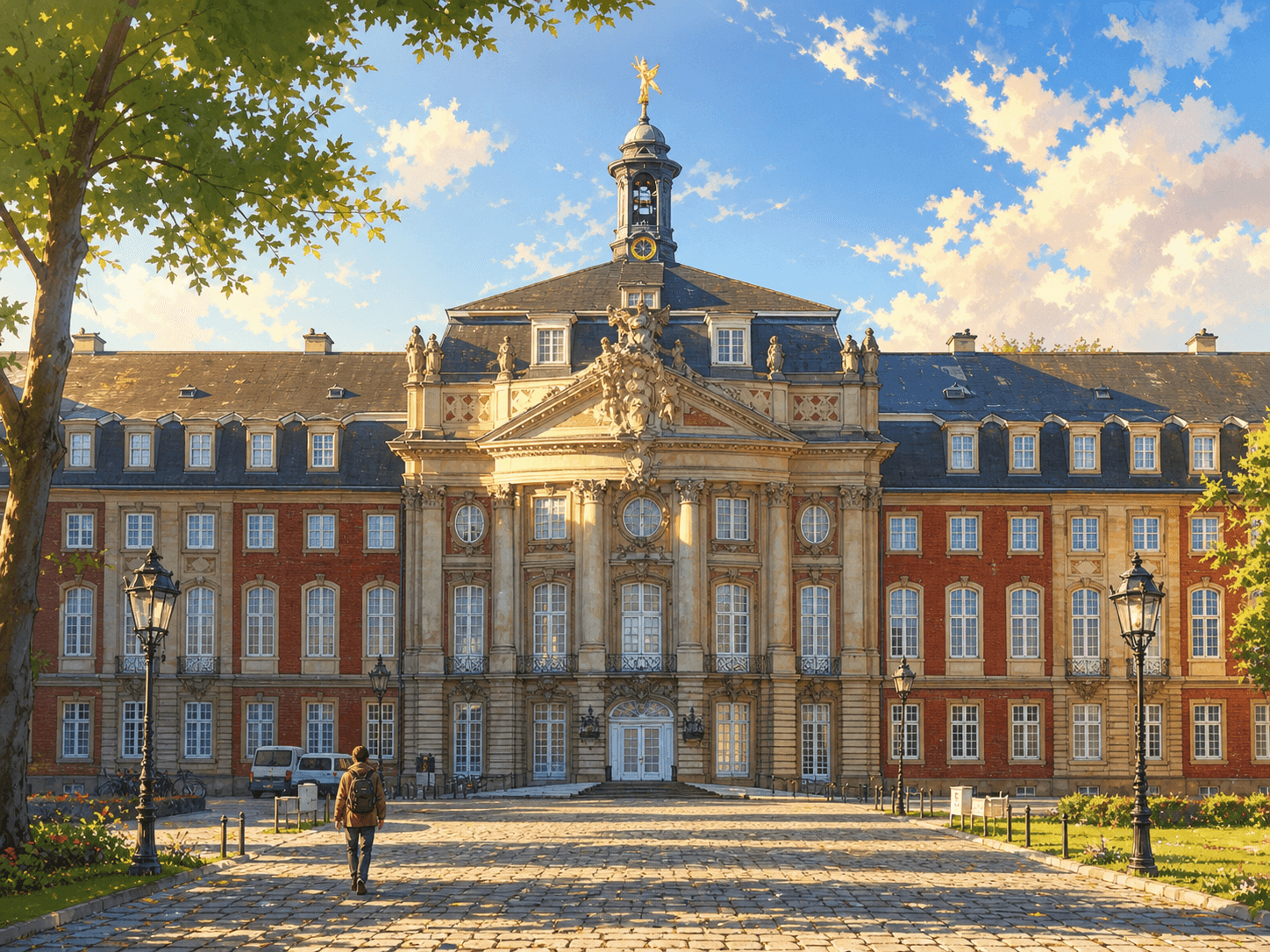
In March 2026, the city of Münster set new standards in climate protection and sustainable urban development through various planning and construction decisions. From the construction of new schools to the redevelopment of inner-city areas – the decisions reflect a clear effort to combine ecological, social, and urban planning goals.
Climate Change as a Driver for Urban Transformation
Münster has positioned itself as a pioneer in climate protection and climate adaptation in recent years. In March 2026, the city once again set impulses through a variety of decisions in the areas of construction planning, renewable energies, and green space development. The topics range from the redevelopment of historical inner-city areas to the sustainable design of sports and educational facilities. These decisions demonstrate how climate protection is embedded in urban planning – not as an isolated project, but as a central element of a long-term strategy.
Sustainable Construction Planning and Climate Justice in the Apostelgarten
The redevelopment of the Apostelgarten is a milestone in the city's climate protection policy. The garden area, traditionally used as a park, is being redesigned to create non-commercial leisure and usage opportunities. The focus is on increasing green areas, achieving climate justice through shading and wind protection, and creating barrier-free access.
The planning process was accompanied by a participatory procedure involving citizens, experts, and politicians. Financial support from the federal program "Future-Proof In-City Centers and Town Centers" underlines the project's significance for urban development. In addition, urban development funds from the state of North Rhine-Westphalia were approved to advance the structural implementation. The administration has been tasked with initiating the next planning steps, including the application for further funding.
Solar Energy and Conservation Regulations: A Delicate Balance
Another central topic was the evaluation of the approval of solar installations in conservation areas. In Münster, the balance between heritage protection and climate protection is particularly sensitive. The figures show that the city is actively moving forward in this area: As of November 30, 2025, 3,428 photovoltaic modules were approved or planned. Within the historic city conservation area alone, 2,156 modules were approved, 1,156 of which have already been installed.
Approvals are usually granted in conjunction with roof renovations or construction measures. In particular, flat roofs of public and church buildings contribute to the production of solar electricity. However, the challenge remains to balance the preservation of the urban image with renewal through solar installations. The city has developed clear guidelines and offers an information platform that presents design options for solar installations in conservation areas.
School Construction and Climate Protection: An Investment in the Future
Another focus was the construction of the new Matthias-Claudius Primary School in Handorf. With an investment volume of 32.36 million euros, the project is a milestone in the city's educational and climate protection policies. The construction planning follows the checklist "Sustainable Building" and also takes into account the requirements of the checklist "Barrier-Free/Design for All."
The school will be built without a green roof to reduce investment costs. At the same time, the use of decentralized air handling units is being omitted, which saves costs but could potentially affect energy efficiency and air quality. The outdoor facilities, however, are more focused on climate adaptation: a stream will be renaturalized, planting islands will structure the entrance area, and noise-reducing ball nets will be installed in the sports area.
Conclusion: Münster as a Model for Climate-Friendly City Policy
March 2026 shows that Münster has consistently embarked on the path of anchoring climate protection not only as a goal, but as a principle in urban development. The projects in the areas of renewable energy, sustainable construction, and green space development prove that it is possible to combine ecological, social, and economic goals.
The challenge for the future lies in implementation: the planned projects must not only be approved, but also realized. In doing so, it is important to maintain the balance between investment costs, climate protection, and social inclusiveness. Münster can serve as a model for other cities with these decisions – not least because they show that climate protection is not only possible, but also economically sound.
NeoSearch analyses public council documents, committee minutes and municipal announcements. Source references appear automatically once verified meeting data is available.
What does this mean for businesses?
Municipal heat planning, photovoltaics and climate measures create early project indicators. Following council decisions surfaces sites and tenders before they are publicly advertised.
Track similar decisions in your region
Set up monitoring for environment & climate in Nordrhein-Westfalen — prefilled from this article.
Set up monitoring →More signals from Munster
Culture and Community in Münster: Theater and Historical Preservation in Focus
In April 2026, important decisions and developments in the field of culture and community were at the center of attention in Münster. The Cultural Committee intensely addressed the future of Theater Münster and the expansion of the expert advisory board for the historical site Villa ten Hompel.
Read more → Münster's Youth Policy in April 2026: Leisure Spots, Demonstrations, and Future Visions
In April 2026, youth policy topics such as leisure meeting points, demonstrations, and collaborations with political parties were at the center of the Youth Council's focus in Münster. This deep dive reveals which decisions were made and what challenges remain.
Read more → Münster Invests in Resuscitation and Care: Where State, Technology, and Society Must Collaborate
In April 2026, Münster will discuss key measures to strengthen the resuscitation chain and care provision. The goal is to increase survival rates in cases of cardiac arrest while securing the care infrastructure for the future.
Read more →