Münster's Education Policy in March 2026: Investments, Renovations, and Strategic Planning
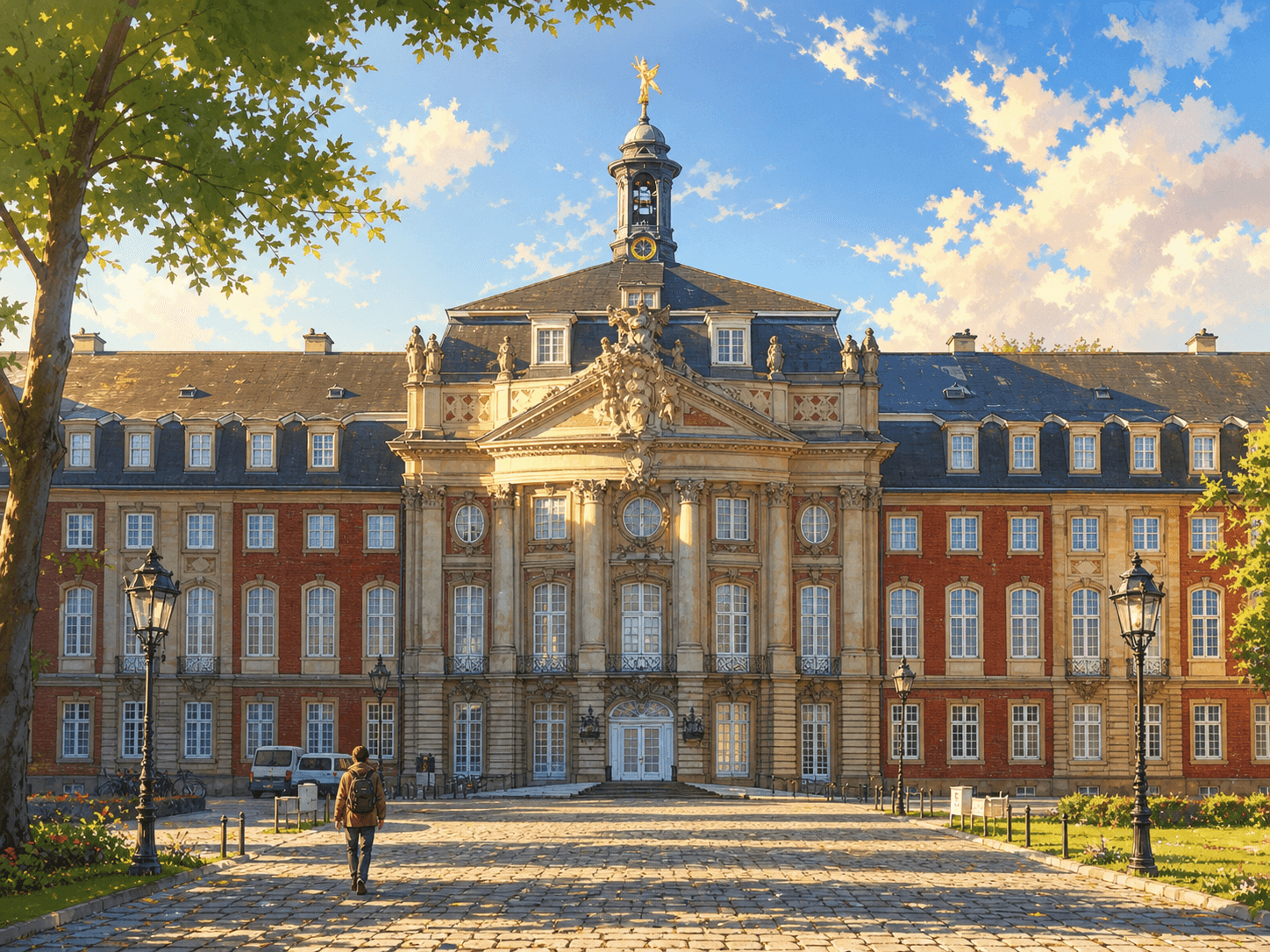
In March 2026, Münster made significant decisions in education policy. The focus was on the consolidation of inclusive education models, strategic school construction planning, and the renovation of existing buildings. The expansion of the Matthias-Claudius School and the extension of the Gesamtschule Münster-West are key measures that will shape the city's educational landscape in the future.
Education Policy in a Crisis: Münster Invests in the Future
Münster's education policy is navigating a tightrope between rising demand, limited resources, and new legal requirements. In March 2026, the city set a clear focus on ensuring modern learning conditions and the long-term stability of its education system through a series of decisions and planning initiatives. Particularly noteworthy are the measures taken to consolidate the PRIMUS school pilot project, strategic school construction planning, and the expansion of the Matthias-Claudius School.
Consolidation of the PRIMUS School Pilot: A Model for Inclusive Education
The PRIMUS School Münster, a model project for inclusive education, was permanently anchored as a long-term offer of the city in March 2026. With locations in Berg Fidel and Geist, the project aims to teach students with special educational needs alongside those on the general educational track. The consolidation was adopted unanimously and is based on § 132b (2) of the North Rhine-Westphalia School Act, providing legal certainty and enabling long-term financial planning.
The PRIMUS School currently enrolls 186 students in primary education and 298 in secondary education. Admissions capacity is limited to two intake classes per educational level, with a maximum of 25 students per class for five students with special educational needs. Construction measures, such as the renovation in Berg Fidel and barrier-free modifications in Geist, are already in planning and will improve accessibility and usability.
Strategic School Construction Planning: Ensuring Future Viability
Münster has created a structured instrument with strategic school construction planning for the period up to 2030 to address the growing space requirements and demands for modern learning environments. The planning includes the prioritization of construction projects, assessed based on objective criteria such as space requirements, building condition, and time urgency. Priority levels A to D enable a transparent and comprehensible decision-making process.
The financial implications of the planning are substantial. The statutory entitlement to full-day care, in place for several years, has already significantly affected school development. The administration is tasked with developing a detailed funding concept to be included in the 2026/2027 budget plans. Risks such as planning delays, supply bottlenecks, and cost increases are considered and regularly monitored in the planning process.
Matthias-Claudius School: Expansion and New Construction for the Future
A central project of the month was the construction decision for the new building of the Matthias-Claudius School in Handorf. With an investment volume of 32.36 million euros, the primary school will be expanded from a two-track to a three-track school. The new building will be constructed in the Kirschgarten planning area, and the old location on Drostestraße will be abandoned. The planning places special emphasis on barrier-free accessibility, a cluster concept with differentiated learning areas, and age-appropriate design of the outdoor areas.
The schoolyard will not only serve as a learning environment but also for extracurricular activities, with access via Heriburgstraße and a bridge over the Juffernbach. In addition to infrastructure, staffing needs will also be adjusted, with additional hours for janitorial services and the secretariat. The completion of the new building is planned for the end of 2028.
Conclusion: Education as a Central Component of Urban Development
Münster's education policy in March 2026 shows a clear orientation toward investing in the future. The consolidation of inclusive models, strategic planning for school construction, and the concrete implementation of construction projects such as the Matthias-Claudius School underscore the city's commitment to creating a modern, inclusive, and high-performing educational landscape. The challenges remain significant, but with clear planning and financial security, the groundwork is being laid for a stable and growth-oriented education policy in Münster.
NeoSearch analyses public council documents, committee minutes and municipal announcements. Source references appear automatically once verified meeting data is available.
What does this mean for businesses?
Schools, daycare centres and public buildings create early planning and construction opportunities. Following council agendas surfaces tenders for refurbishment, new builds and fit-out months before the official award — from shell construction to specialist planning to furnishing.
Track similar decisions in your region
Set up monitoring for education & public facilities in Nordrhein-Westfalen — prefilled from this article.
Set up monitoring →More signals from Munster
Culture and Community in Münster: Theater and Historical Preservation in Focus
In April 2026, important decisions and developments in the field of culture and community were at the center of attention in Münster. The Cultural Committee intensely addressed the future of Theater Münster and the expansion of the expert advisory board for the historical site Villa ten Hompel.
Read more → Münster's Youth Policy in April 2026: Leisure Spots, Demonstrations, and Future Visions
In April 2026, youth policy topics such as leisure meeting points, demonstrations, and collaborations with political parties were at the center of the Youth Council's focus in Münster. This deep dive reveals which decisions were made and what challenges remain.
Read more → Münster Invests in Resuscitation and Care: Where State, Technology, and Society Must Collaborate
In April 2026, Münster will discuss key measures to strengthen the resuscitation chain and care provision. The goal is to increase survival rates in cases of cardiac arrest while securing the care infrastructure for the future.
Read more →