Hagen Update: What Was Decisive in March 2026
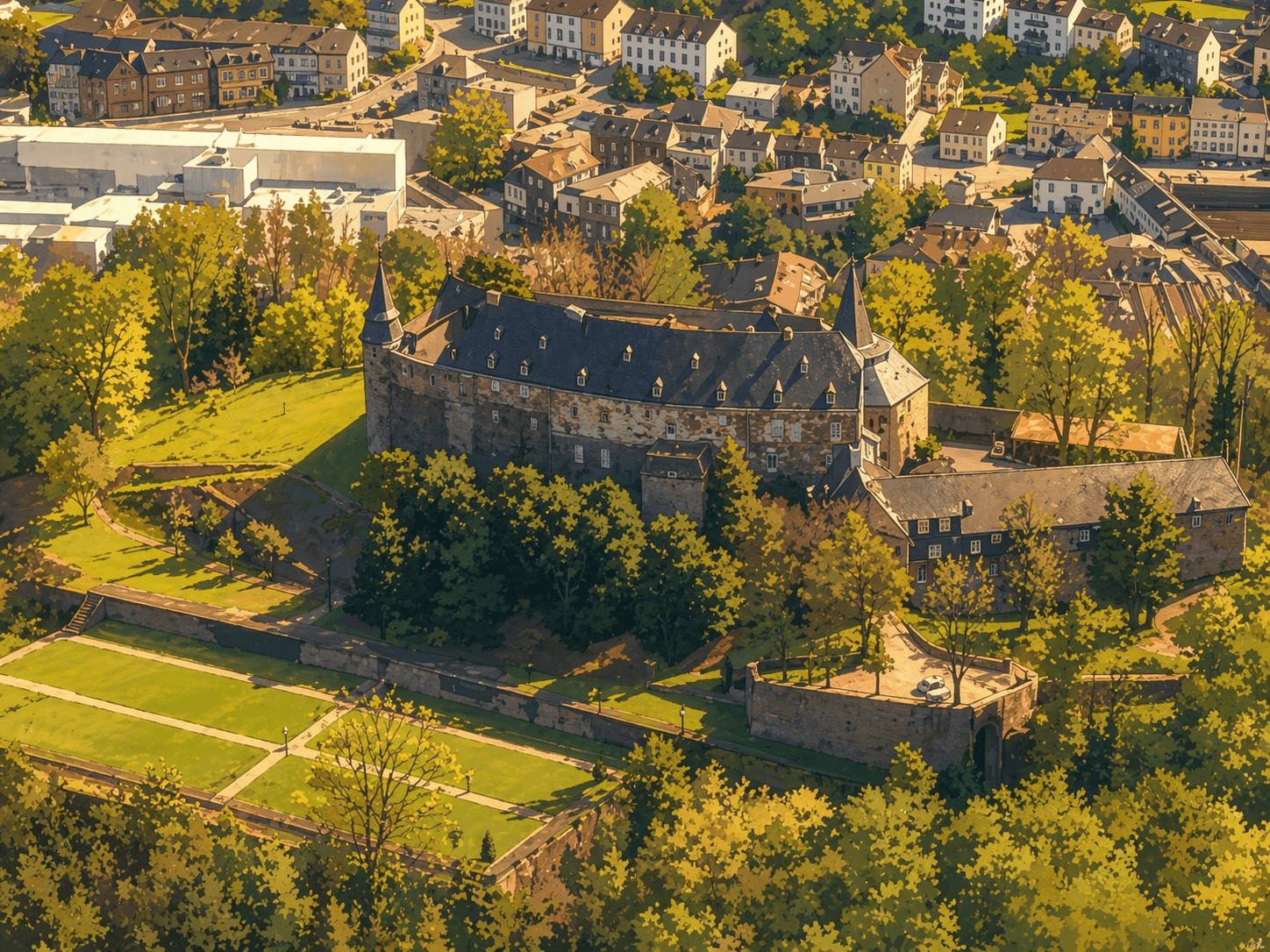
In March 2026, topics such as mobility, urban development, and climate were in focus in Hagen. Here's a review of the most important decisions and developments of the month.
Noise Protection, Construction Projects, and Climate: A Lot Happened in Hagen in March
What Was Important This Month
- Noise protection measures along the railway line strengthened – Residents benefit from sound barriers funded by federal funds.
- New childcare facilities in planning – More childcare places for families in Hagen.
- ABC classes planned to support children with special needs – The state government is promoting inclusive education.
- Double budget for 2026/2027 adopted – With a significant deficit and long-term compensation planning.
- Wind energy planning discussed – Focusing on sustainability and energy supply.
Mobility and Traffic: Noise Protection and Traffic Flow in Focus
In March, Hagen addressed issues of noise reduction and traffic planning more intensively. The construction of two sound barriers along the railway line in Haspe was decided. Funded with 75% federal funds, the project aims to improve noise protection in residential areas.
In the district of Hagen-Mitte, discussions took place on the renovation of the pedestrian connection between Bahnstraße and Herrenstraße. The removal of the city wall and the conversion of a traffic island into a pedestrian crossing are intended to optimize traffic flow. In addition, the political groups debated the use of speed displays, particularly in Hohenlimburg.
Housing and Urban Development: Plans for Construction Projects Approved
In the field of urban development, significant progress was made. The zoning plan for the street section B7 Kölner/Enneper Straße remained a focus of the urban renewal strategy. In addition, the B7 Berliner Straße will be extended to the Hasper Kreisel to improve traffic flow.
In Hohenlimburg, a temporary sandbox project is starting at Brucker Platz, running until September 2026. In addition, a graffiti project on the railway noise barrier is planned to make the city center more lively.
In the area of Wesselbach/Schloss, discussions are taking place on future development strategies, particularly in the context of wind energy planning. In addition, the InSEK process in Hohenlimburg-Zentrum is continuing, with a focus on the courtyard at the market square.
Finance and Climate: Budget Security and Energy Policy
The double budget for 2026/2027 was adopted with a deficit of 39.95 million euros for 2026 and 74.90 million euros for 2027. The debt relief (ASEG NRW) of 543 million euros provides short-term relief, but the budget balance will not be achieved until 2034.
In the field of climate and energy policy, the political groups debated the wind energy planning in Hohenlimburg. In particular, the permanent lighting of wind turbines, which has been banned since early 2025, and the conformity of BNK systems (lightning protection and night lighting systems) were central.
Education and Youth Welfare: Expansion of Childcare Offers
In education, clear signals were sent for increased inclusion. The state government plans ABC classes in Hagen, where up to 500 children could be enrolled. In addition, the expansion of childcare facilities at Franzstraße (5 groups, 15 U3 places) and at Prentzelstraße (3 groups, 70–75 U3 places) is being detailed.
In addition, the Diakonie Mark-Ruhr requested the recognition of 19 Protestant facilities in youth welfare. The HAK faction also submitted inquiries on issues of addiction, domestic violence, and consumption behavior in youth welfare.
Politics and Administration: New Appointments and Procedural Paths
The Economic Committee was reappointed: Markus Langenkamp was unanimously appointed as secretary, and Jörg Klepper as deputy chair. In addition, the 5th amendment to the Nature Monument Ordinance in the district of Mitte was initiated with a simplified procedure.
In the Youth Welfare Committee, new members were appointed, department heads were introduced, and workshop offers for the further training of staff were presented.
Overview: Urban Development and Budget in a Tension Field
March 2026 showed how diverse the challenges in Hagen are. On the one hand, investments are being made in noise protection, education, and climate protection, while on the other hand, budget security remains a central focus. The balance between investments and financial stability remains crucial.
In addition, it becomes clear that Hagen is capable of planning in a citizen-oriented way – whether through temporary sandboxes in Hohenlimburg or through transparent budget planning. Communication with citizens remains decisive here.
Conclusion and Outlook
March 2026 was marked by concrete decisions in the areas of mobility, construction, and education. The city is focusing on sustainability, inclusion, and investments in the future. In April, further budget discussions, wind energy planning, and the implementation of city center projects are on the agenda.
NeoSearch analyses public council documents, committee minutes and municipal announcements. Source references appear automatically once verified meeting data is available.
What does this mean for businesses?
Urban development, zoning plans and commercial settlements create early construction and supply opportunities. Following council decisions reveals projects before they go to tender.
Track similar decisions in your region
Set up monitoring for economic development in Nordrhein-Westfalen — prefilled from this article.
Set up monitoring →More signals from Hagen
Economic Development in Hagen: Challenges and Opportunities in April 2026
In April 2026, several key initiatives in the field of economic development were in focus in Hagen. With the new construction of Max Fry, the training offensive, and the revitalization of the city center, the city is demonstrating ambitions to ensure growth and stability. This blog post highlights the central developments and their long-term effects.
Read more → Social and Housing Policy in Hagen – Between Budget Consolidation and Social Inclusion
In April 2026, important decisions in the field of social and housing policy were made in Hagen. The city is planning investments in social infrastructure, increasing budget expenditures for social services, and discussing digital inclusion and accessibility. This analysis shows how Hagen balances financial necessity with social responsibility.
Read more → Youth Policy in Hagen: Challenges, Progress, and Future Visions
In April 2026, Hagen focused on a range of youth policy topics – from promoting mental health and investing in daycare centers to youth support and participation. The city of Hagen is pursuing long-term youth development through new construction projects, structural reforms, and funding measures. This blog article analyzes the most important decisions and developments of the month.
Read more →