Urban Development in Frankfurt (Oder): Culture, Finance and Infrastructure in Focus
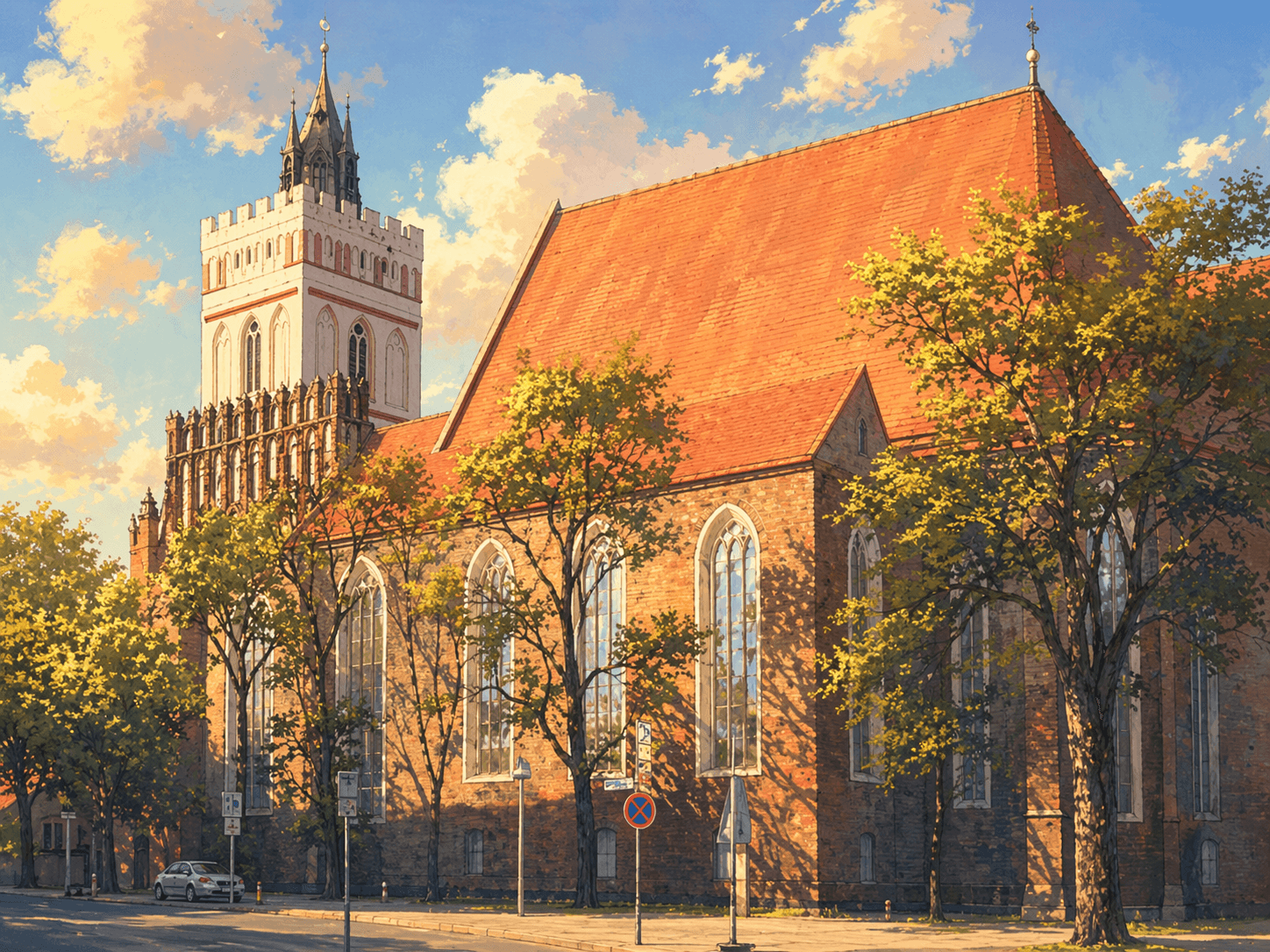
In February 2026, important decisions in the field of urban development and construction were on the agenda in Frankfurt (Oder). The renovation of the Old Cinema, financing models, cross-border cooperation, and cultural structures were intensively discussed. This blog provides a comprehensive insight into the developments, backgrounds, and consequences.
Urban Development in Frankfurt (Oder): Culture, Finance and Infrastructure
Frankfurt (Oder) has developed in recent years into a central hub of the German-Polish twin city. Urban development and construction are not only technical or architectural challenges, but also political, financial, and cultural processes. In February 2026, several central topics were on the agenda – from the renovation of the Old Cinema to the financing of cultural institutions, from cross-border mobility to the parking ordinance.
1. Renovation of the Old Cinema – Museum of Young Art / BLMK
The renovation of the former cinema into a Museum of Young Art is one of the largest and most significant projects in the history of Frankfurt (Oder). With a total volume of 46.25 million EUR, the project is not only a cultural but also a financial challenge.
Financing and Cost Development
Funding will be 50% from the federal and state governments of Brandenburg, and 10% from the city as a risk reserve. Nevertheless, 12.1 million EUR remains uncovered, leading to a review of cost-saving measures. Costs have risen by 24% from the original plan of 23 million EUR (2018) to 39 million EUR. This is due, in part, to late-communicated measures such as the relocation of the district heating pipeline, which cost 2.1 million EUR.
Project Goals and Timeline
The goal of the project is a historically appropriate renovation with multifunctional use: cinema, exhibitions, café, museum education, and storage areas. The master planning is carried out in cooperation with the Federal Commissioner for Culture and the Media. Completion is planned for 2030.
Criticism and Challenges
Despite the positive objectives, there is criticism regarding the cost development and financing structure. The city’s financial need is high, and the application for cost reduction was unanimously withdrawn. Funding is provided through urban development grants – a model that is not without controversy in the region.
2. Cultural Structures and Financial Consolidation
In addition to construction and renovation, cultural institutions were also in the focus. The cultural enterprises in Frankfurt (Oder) had to face cuts in the 2026 financial plan. The 2026 financial plan shows an increase in revenue but also a rising deficit.
Budget Cuts and Structural Reforms
The cost savings affect all cultural institutions: museums, library, adult education center, and music school. For example, the opening hours of the Museum Viadrina were reduced, teaching staff fees were lowered, and positions were cut. Digitalization is being used more intensively to reduce costs – although this can lead to a loss of quality.
Financing and Investments
Investments in the cultural enterprises (KEB) in 2026 amount to 61,400 EUR. Funding is provided from own capital, with no loans. Investments in memorials and parking spaces are part of the plan. However, the financial model remains tight, and the deficits continue to rise.
3. Cross-Border Mobility and Infrastructure
Frankfurt (Oder) is part of a twin city with Słubice. Mobility is a key factor for the development of both cities. In February 2026, several measures regarding mobility were discussed.
Mobility Concept and Planning
A central project is the cross-border mobility concept, which emphasizes sustainability, multimodality, and energy security. Planned measures include park-and-ride services, autonomous shuttles, integrated on-demand transport, and a digital information system.
Infrastructure Measures
The infrastructure in Słubice and Frankfurt (Oder) is being redesigned. The goal is to create a "15-minute twin city," where short distances and a stronger integration of living, working, and shopping are possible. This includes the development of mobility stations, bicycle parking areas, car charging stations, and bicycle repair stations.
Financing and Funding
The measures are funded through EU grants and inter-municipal collaboration. The mobility concept is planned for the period 2025–2035, with the first decision by the city councils expected in early 2026.
4. Parking Ordinance and Transport Policy
Transport policy was also on the agenda. The parking ordinance, last updated in 2012, is considered outdated. The new version, available since September 2024, includes property-based compensation calculations. The construction costs for parking spaces have increased, and the ordinance needs to be more flexible to allow for future adjustments.
Financing and Legal Framework
The compensation fees are based on construction costs and land value indicators. The ordinance is part of the Brandenburg Building Code (BbgBO) and does not apply to parking spaces for people with disabilities. The city describes the ordinance as balanced, but the discussion about its adaptation and modernization is not yet concluded.
Future Perspectives – Urban Development as a Process
Frankfurt (Oder) faces major challenges – financially, culturally, and infrastructurally. Urban development is not a one-time process, but an ongoing one. The topics of mobility, financing, culture, and infrastructure are closely interlinked and influence each other. The decisions made in February 2026 are steps toward a sustainable, culturally vibrant, and infrastructure-strong twin city.
NeoSearch analyses public council documents, committee minutes and municipal announcements. Source references appear automatically once verified meeting data is available.
What does this mean for businesses?
Municipal council decisions are early indicators: following the council agenda surfaces projects and tenders months before the official award — before they ever reach the procurement portals.
Track similar decisions in your region
Set up monitoring for Finance and Budget in Brandenburg — prefilled from this article.
Set up monitoring →More signals from Frankfurt-Oder
Youth Policy in Frankfurt (Oder): Challenges, Developments, and Perspectives in April 2026
In April 2026, Frankfurt (Oder) focused on numerous youth policy issues – from childcare provision and child protection to educational and prevention programs. The Youth Welfare Committee extensively discussed developments, risks, and potential measures.
Read more → Governance and Administration in Frankfurt (Oder) – April 2026 in Focus
In April 2026, Frankfurt (Oder) saw numerous meetings of local advisory boards and administrative decisions in the areas of governance and administration. The city recorded both structural and communicative progress, while also facing challenges such as staff shortages and slow construction planning.
Read more → Frankfurt (Oder) in the Cultural Spotlight: Jubilee, Music, and Community in April 2026
In April 2026, Frankfurt (Oder) was entirely focused on cultural impulses and social connections. From jubilee preparations to the future of the Brandenburg State Orchestra and educational projects to cross-border cooperation – the month demonstrated how diverse the city shapes its cultural identity.
Read more →