Frankfurt (Oder) Industrial and Business Park on B87: Opportunities, Challenges, and Impacts on Urban Development
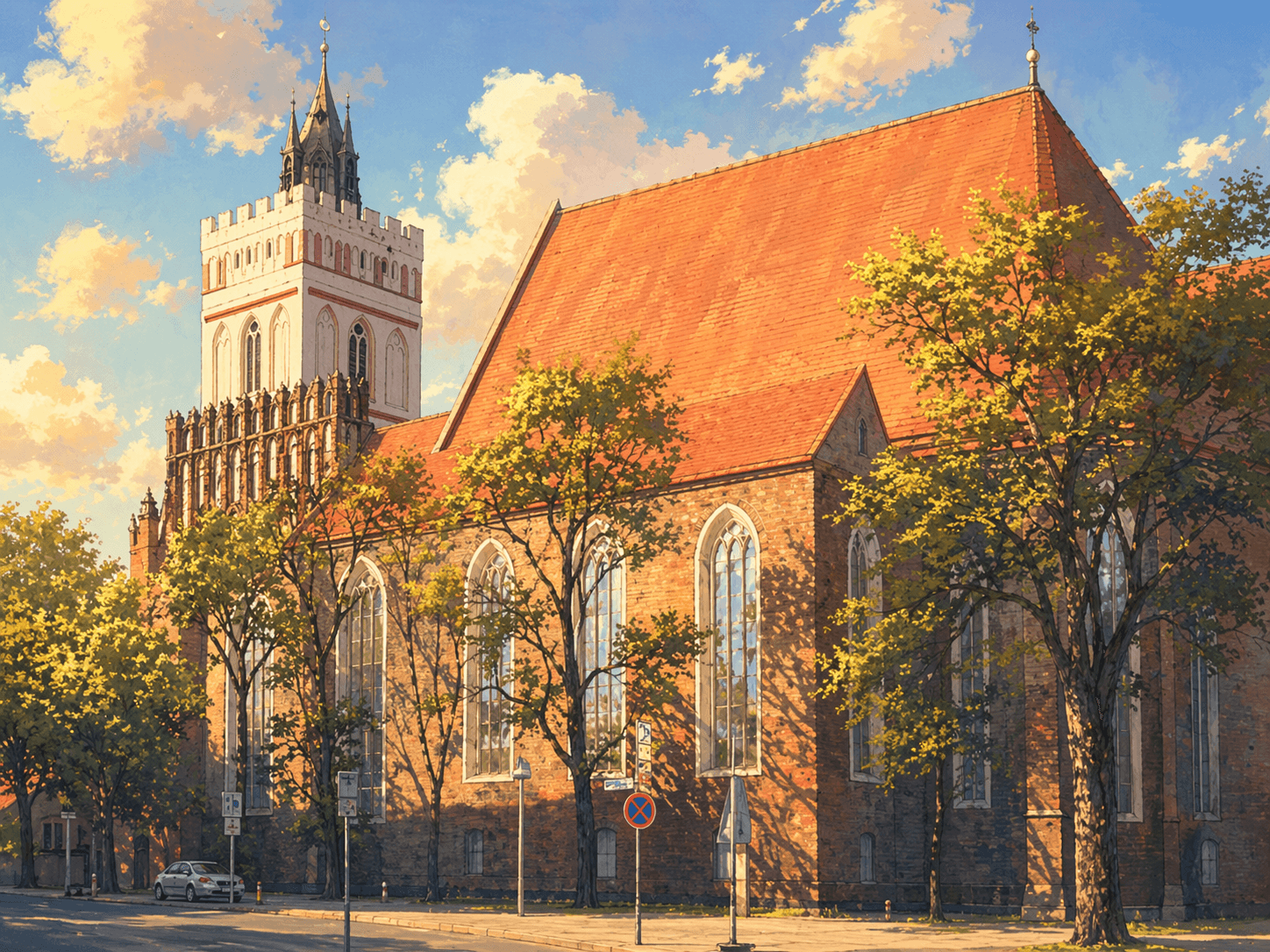
In March 2026, Frankfurt (Oder) will take a significant step into the future: the implementation of the zoning plan BP 54-007 for the Industrial and Business Park on B87. But what does this mean for the city, its environment, and its infrastructure?
The Industrial and Business Park on B87: A Key Initiative for Frankfurt (Oder)
Frankfurt (Oder) is in a phase of transformation. With the development of a new industrial and business park on B87, which has become known as zoning plan BP 54-007 in public debate, the city is sending a strong signal for economic growth, job security, and technological innovation. However, behind the expansion lies a complex planning process that brings both opportunities and risks.
Land Development: Focusing on Economic Interests
Zoning plan BP 54-007 aims to allocate a total area of approximately 60 hectares south of the existing industrial area "Markendorf II." These areas are currently used for agriculture or are located in the outer zone. The conversion is in line with the Regional Development Plan of the Berlin-Brandenburg Capital Region, which defines Frankfurt (Oder) as an "upper-tier center" with a regional function.
The economic goals are clear: the park is intended to attract companies from future industries such as renewable energy, semiconductor technology, battery production, and the automotive industry. Particularly noteworthy is the planned data center, whose waste heat can be fed into the district heating network – a sensible sector coupling that also emphasizes climate protection.
Environment: Compensation, Protection Measures, and Nature Conservation
However, the expansion also brings significant environmental burdens. Approximately 45.5 percent of the area will be newly sealed. To compensate for the negative effects, extensive measures are planned: stormwater retention basins, mandatory planting, green roofs, and the creation of compensatory habitats for protected species such as sand lizards, skylarks, and bats.
The preliminary assessment under the EU Habitats Directive (FFH) for neighboring protected areas such as "Fauler See/Markendorfer Wald" has been carried out. While there are no immediate negative effects on FFH areas, local biodiversity is still at risk. Therefore, a measures concept is required that ensures the avoidance, minimization, and compensation of impacts.
Traffic and Infrastructure: Challenges for the Future
Another crucial aspect is traffic accessibility. Zoning plan BP 54-007 is closely linked to the planning of the B87n, a planned bypass intended to relieve the traffic congestion along the existing B87. The B87n is part of the federal transport plan 2030 and is scheduled to be completed by 2030. Without this connection, the business park will not be economically viable.
The Frankfurt (Oder) Hospital is particularly affected: it is located within the area of influence of the traffic, and the planning therefore takes into account noise protection with precise emission limit values (45 dB(A) during the day, 35 dB(A) at night). A shift of the B87n to the rear area of the planning site is being discussed in order to reduce the noise burden on the hospital.
Soil and Groundwater: A Delicate Balance
The soils in the planning area are sensitive. They consist of stiff plastic gravel marl, which has a low infiltration capacity. This makes local stormwater management difficult. The groundwater recharge rate is high, which increases the risk of contamination due to sealing and potential pollutants. Therefore, a rainfall management concept is essential, focusing on local infiltration, evaporation, and stormwater retention.
Soil investigations have also revealed a suspicion of unexploded ordnance. This requires further investigation to ensure planning security.
Conclusion: A Cautious Investment in the Future
The development of the industrial and business park on the B87 is a milestone in the urban development of Frankfurt (Oder). It offers opportunities for economic growth, jobs, and technological innovation. At the same time, it requires a careful balance between economic interests, environmental protection, and social aspects.
With zoning plan BP 54-007, the city has created a solid foundation that takes both economic and ecological challenges into account. However, the implementation will be crucial. Only if the planning remains transparent, environmental burdens are compensated, and infrastructure is developed in a timely manner can the business park be successful in the long term.
NeoSearch analyses public council documents, committee minutes and municipal announcements. Source references appear automatically once verified meeting data is available.
What does this mean for businesses?
Schools, daycare centres and public buildings create early planning and construction opportunities. Following council agendas surfaces tenders for refurbishment, new builds and fit-out months before the official award — from shell construction to specialist planning to furnishing.
Track similar decisions in your region
Set up monitoring for education & public facilities in Brandenburg — prefilled from this article.
Set up monitoring →More signals from Frankfurt-Oder
Youth Policy in Frankfurt (Oder): Challenges, Developments, and Perspectives in April 2026
In April 2026, Frankfurt (Oder) focused on numerous youth policy issues – from childcare provision and child protection to educational and prevention programs. The Youth Welfare Committee extensively discussed developments, risks, and potential measures.
Read more → Governance and Administration in Frankfurt (Oder) – April 2026 in Focus
In April 2026, Frankfurt (Oder) saw numerous meetings of local advisory boards and administrative decisions in the areas of governance and administration. The city recorded both structural and communicative progress, while also facing challenges such as staff shortages and slow construction planning.
Read more → Frankfurt (Oder) in the Cultural Spotlight: Jubilee, Music, and Community in April 2026
In April 2026, Frankfurt (Oder) was entirely focused on cultural impulses and social connections. From jubilee preparations to the future of the Brandenburg State Orchestra and educational projects to cross-border cooperation – the month demonstrated how diverse the city shapes its cultural identity.
Read more →