Frankfurt (Oder) in March 2026: Deep Dive into Municipal Financial Planning
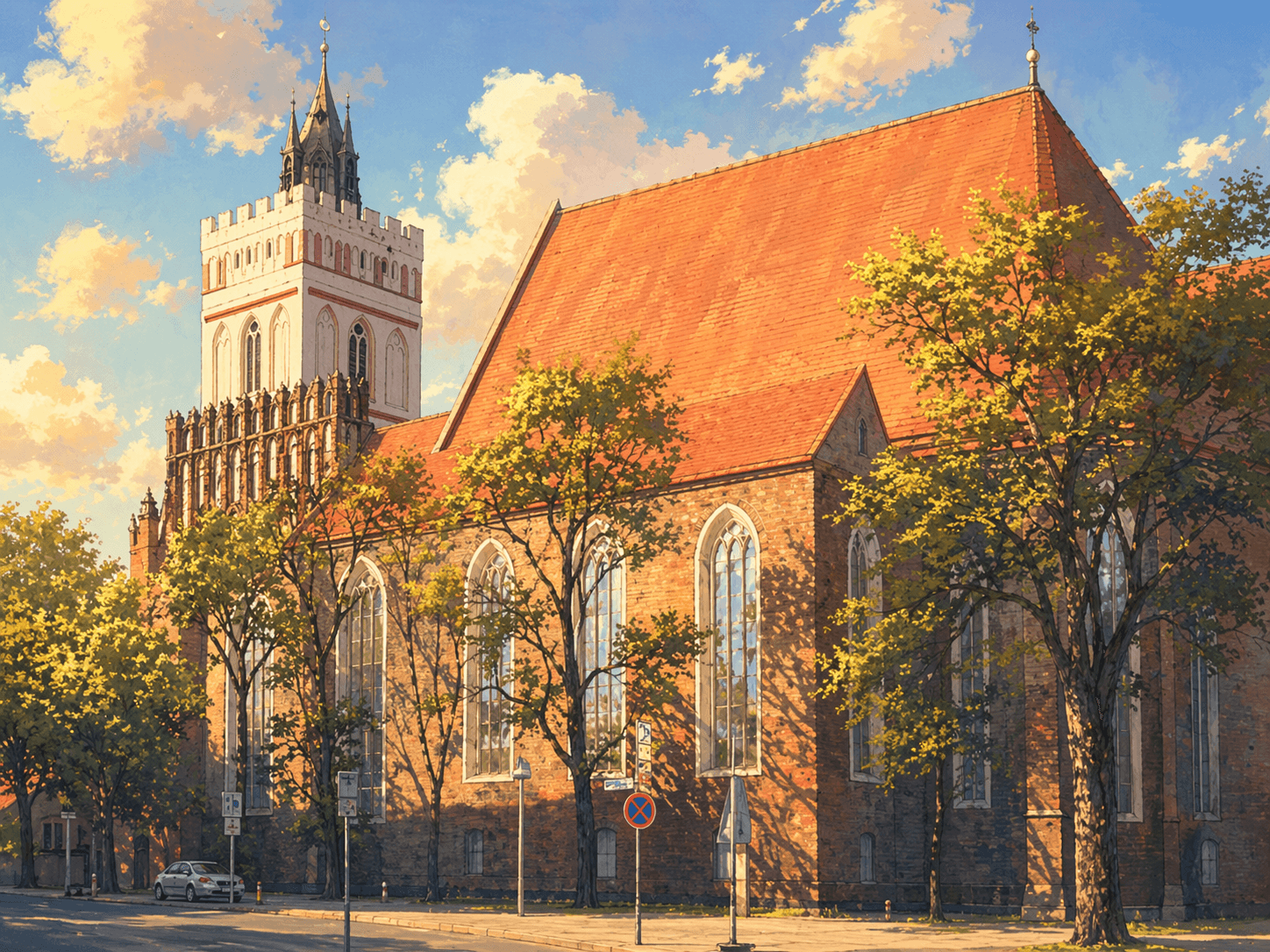
In March 2026, Frankfurt (Oder) focused on several key steps in municipal financial planning. The city utilized federal special funds, invested in infrastructure and climate neutrality, and discussed budget execution, savings potential, and the future of financial equalization models. An overview of the most important developments.
Municipal Financial Planning in March 2026 – Is Frankfurt (Oder) on the Right Track?
In early March 2026, the city of Frankfurt (Oder) devoted significant attention to financial planning for the coming years. Numerous decisions and discussions indicate that the city is in a critical phase to remain financially stable in the long term while also addressing social and infrastructural challenges.
2025/2026 Budget Planning and the Use of Special Funds
In March 2026, the revision of the 2025/2026 budget and the use of federal funds were in the spotlight. According to the proposals, the city received a total of 32.6 million euros from the federal special fund for investments in municipal infrastructure. These funds are being invested in projects such as the construction of new gymnasiums, renovations at daycare centers, climate-neutral measures, and digital infrastructure.
A central project is the new gymnasium on A.-Leonow Street, for which 2.3 million euros are planned by 2029. Additionally, the renovation of the Kita Bambi (1.04 million euros) and the construction of the Hansaschule (3.319 million euros) are scheduled. The city is combining its own funds and federal subsidies to realize these projects.
The energy transition also plays a central role. Investments in photovoltaic systems and heat pumps are planned for the coming years, with an estimated cost of around 5.555 million euros by 2029. The city is also utilizing funding programs such as the State Program "Social Cohesion" and the Federal Funding Program for Climate Neutrality.
Budget Execution and Liquidity: Challenges under Scrutiny
The city's liquidity was once again discussed in March 2026. According to the city treasurer, liquidity stood at approximately 24.68 million euros on 04.03.2026. At the same time, 7.888 million euros in payments were pending, indicating a certain urgency in budget execution.
Another focus was the budget execution for 2025/2026, which had already been concluded by January 2026 with a report. The report discussed measures to save 7.5 million euros, including the reduction of voluntary services, the centralization of administrative services, and a critical review of funding guidelines.
Accessibility and Social Commitments
The statement from the Council for People with Disabilities brought an important social aspect into financial planning. The council is calling for a binding share of the special funds to be reserved for accessibility. Future projects should only be considered "future-ready" if they are demonstrably planned or retrofitted to be barrier-free.
A concrete project is the equipping of a model school with barrier-free guidance systems, elevators, and hearing technology. In addition, a multi-year program called "Free Paths and Safe Orientation" is proposed, to be implemented by 2029. These measures will be relevant not only socially but also from a tourism and economic perspective.
Investments in the Future – Energy Economy and Digitalization
Another focus was on the energy economy. The city can generate additional revenue through investments under the EEG, the Brandenburg Wind Energy Contribution Act (BbgWindAbgG), and the Photovoltaic Contribution Act (BbgPVAbgG). According to estimates, photovoltaic systems could generate up to 153,000 euros in annual revenue. In addition, the city earns approximately 83,630 euros annually from leasing land for wind energy installations.
Digitalization is also a central issue in financial planning. Funds have been allocated for the procurement of special hardware and software, as well as for the development of an online platform for digital citizen services. The city also plans to commission external companies to develop its own digital solutions. A total of 50,000 euros is budgeted for an e-learning system in 2026.
Conclusion and Outlook
In March 2026, the city of Frankfurt (Oder) clearly committed to comprehensive and sustainable financial planning. The use of federal funds, investments in infrastructure, the energy transition, and digitalization, as well as the inclusion of social aspects such as accessibility, show that the city remains active on multiple levels.
However, the challenges are considerable. Funding from grants is often associated with delays, and the implementation of many projects depends on approval from the municipal oversight authority. In addition, the financing of bus line 983 remains an open issue, as Słubice has not made any contractually agreed payments since 2023.
Nevertheless, it is evident that Frankfurt (Oder) is investing in the future with a clear strategic orientation – not only in buildings, but also in people and the city's future viability.
NeoSearch analyses public council documents, committee minutes and municipal announcements. Source references appear automatically once verified meeting data is available.
What does this mean for businesses?
Municipal council decisions are early indicators: following the council agenda surfaces projects and tenders months before the official award — before they ever reach the procurement portals.
Track similar decisions in your region
Set up monitoring for Finance and Budget in Brandenburg — prefilled from this article.
Set up monitoring →More signals from Frankfurt-Oder
Youth Policy in Frankfurt (Oder): Challenges, Developments, and Perspectives in April 2026
In April 2026, Frankfurt (Oder) focused on numerous youth policy issues – from childcare provision and child protection to educational and prevention programs. The Youth Welfare Committee extensively discussed developments, risks, and potential measures.
Read more → Governance and Administration in Frankfurt (Oder) – April 2026 in Focus
In April 2026, Frankfurt (Oder) saw numerous meetings of local advisory boards and administrative decisions in the areas of governance and administration. The city recorded both structural and communicative progress, while also facing challenges such as staff shortages and slow construction planning.
Read more → Frankfurt (Oder) in the Cultural Spotlight: Jubilee, Music, and Community in April 2026
In April 2026, Frankfurt (Oder) was entirely focused on cultural impulses and social connections. From jubilee preparations to the future of the Brandenburg State Orchestra and educational projects to cross-border cooperation – the month demonstrated how diverse the city shapes its cultural identity.
Read more →