Nuremberg in February 2026: Environment, Infrastructure, and Education in Focus
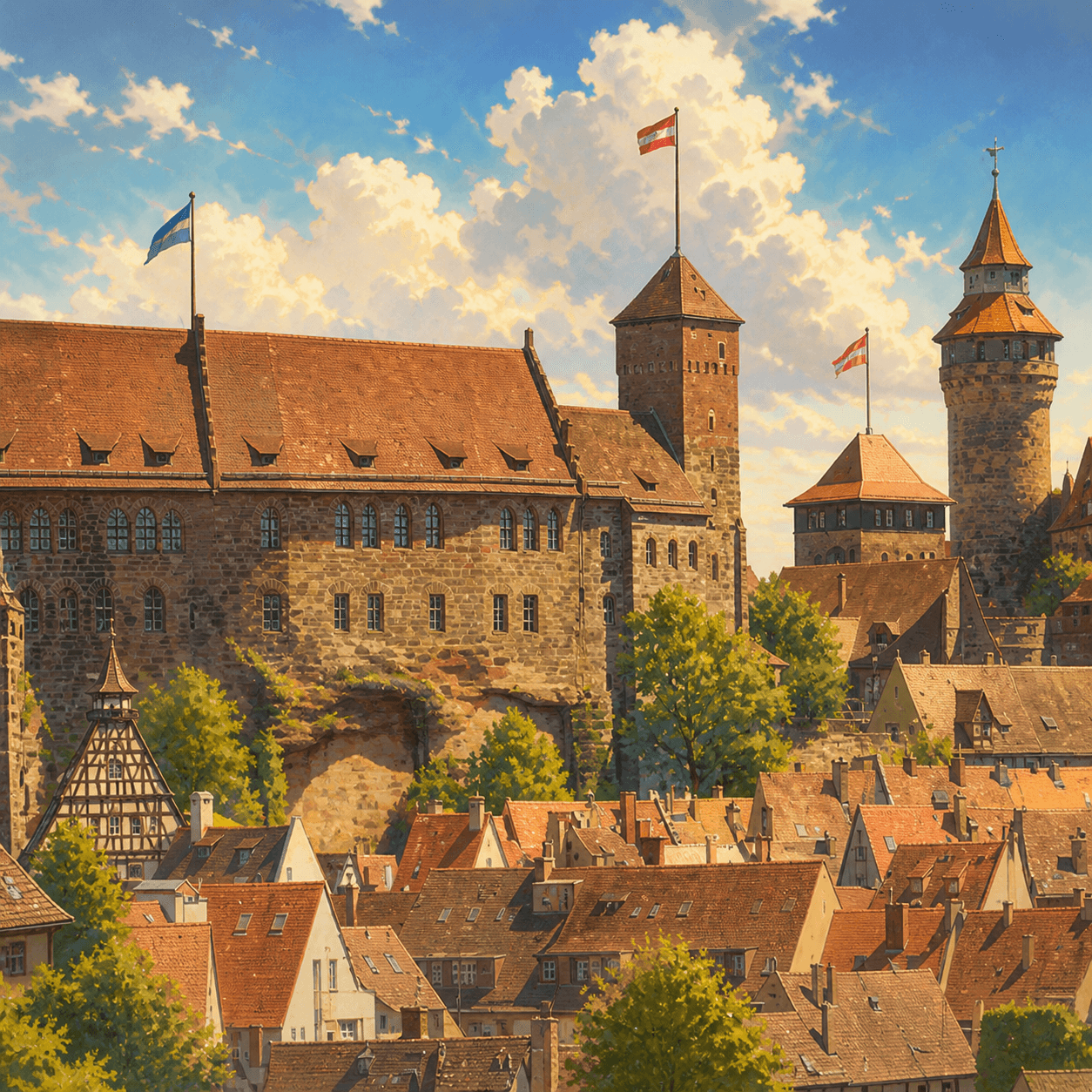
February 2026 in Nuremberg was marked by key steps in the areas of environment, infrastructure, and education. Numerous committees met to plan, discuss, and coordinate projects for the city’s future. Here are the most important developments at a glance.
Environment, Infrastructure, and Education in Focus
What Was Important This Month
- Environmental and Nature Protection: The Environmental Committee discussed the designation of the Ziegellach as a protected nature area and measures for hedgehog and urban gardening protection.
- Infrastructure Development: In the Work Committee SÖR, road construction projects, bridge repairs, and green initiatives were approved, including the expansion of bicycle lanes and the planting of eight trees at Nelson Mandela Square.
- School Construction and Renovations: The Building and Tender Committee approved several renovation and new construction projects at schools, including the Südwest School Center and Uhlandschule.
- Healthcare: The Personnel and Organization Committee and the Work Committee NürnbergStift discussed renovation needs and future concepts for care services.
- Youth Policy: The Youth Welfare Committee decided to expand playgrounds and sports areas as well as measures to strengthen the youth education center Burg Hoheneck.
- Economy and Labor Market: The Committee for Law, Economy, and Labor reported on Siemens Energy’s investment plans and discussed new approaches for public transport.
Environment and Nature: Protection and Integration
The Environmental Committee met at the end of February and addressed several topics. Central were the protection of habitats such as the Ziegellach, its designation as a nature reserve, and measures for hedgehog and urban gardening protection. These are particularly important in the context of the State Garden Show 2030, as they are seen as participatory elements.
In addition, reports on the protection of building nesters, discussed on motions from the Greens and CSU, were presented. The decisions contribute to securing Nuremberg's biodiversity in the long term and promoting public participation in urban green spaces.
Infrastructure: Building and Expanding for the Future
In the Work Committee Service Operation of the Public Space (SÖR), several infrastructure measures were approved. Important projects such as the renovation of the Wettersteinstraße Bridge and the expansion of Stage 2 Bicycle Lanes were financially secured and scheduled. The cost of the bridge renovation amounts to 7.52 million euros and is set to begin in August 2026, with completion in November 2027.
In addition, the committee approved the planting of eight trees at Nelson Mandela Square, funded from budget surpluses. These measures show how Nuremberg, as a livable city, acts sustainably even in small, symbolic projects.
Education and School Development: Investment in the Future
The Building and Tender Committee dealt intensively with school development measures. Particularly noticeable was the cost increase for several projects, such as the Fire Station Kornburg, where costs rose by almost 420,000 euros. These increases were attributed to index developments and additional planning points.
The new construction of the Südwest School Center and the renovation of the Uhlandschule’s small halls were also approved. The latter requires an investment of 6.28 million euros, with additional costs mainly due to ceiling renovations. These investments are a clear signal of the importance of inclusion, barrier-free access, and modern equipment in Nuremberg’s educational policy.
Youth and Health: Future Concepts in Focus
The Youth Welfare Committee decided in February on the expansion planning for play and sports areas in Nuremberg for the years 2026–2027. With 1.127 million euros in investment costs, more spaces for children and young people are to be created. In addition, a commitment to the renovation of the youth education center Burg Hoheneck was made, with the consideration of external funding.
In the Work Committee NürnbergStift, it was decided to postpone the new construction of the large kitchen in Raudtener Straße for the time being and instead consider renting an alternative. In addition, a springer concept for long-term care was reported, which is considered a pilot project for a better quality of life in old age.
Economic Impulses and Political Decisions
The Committee for Law, Economy, and Labor reported on the Future Initiative Downtown, which has already shown initial successes. In addition, Siemens Energy announced investments of 250 to 300 million euros in Nuremberg, which could create up to 400 new jobs. This investment is a strong signal for the city's economic future.
Another focus was the discussion on the Hamburg Model for car and taxi licenses, which could be adapted in Nuremberg to stabilize private transport services. In the City Council meeting, it was also decided to plan a "House of Democracy" and to prepare the expansion of the U-Bahn to Reichelsdorf. Both projects are long-term impulses for Nuremberg's political and infrastructural development.
Outlook
February 2026 was a month of far-reaching decisions that shape Nuremberg’s future in the areas of environment, infrastructure, education, youth, and economy. The focus was on sustainability, investment in public space, and the strengthening of education and democracy. The coming months will show how these projects integrate into the everyday lives of Nuremberg’s residents.
NeoSearch analyses public council documents, committee minutes and municipal announcements. Source references appear automatically once verified meeting data is available.
What does this mean for businesses?
Municipal heat planning, photovoltaics and climate measures create early project indicators. Following council decisions surfaces sites and tenders before they are publicly advertised.
Track similar decisions in your region
Set up monitoring for environment & climate in Bayern — prefilled from this article.
Set up monitoring →More signals from Nuernberg
Youth Policy in Nuremberg: Outlook, Sustainability, and Digital Opportunities in April 2026
In April 2026, Nuremberg focused on key decisions and initiatives in youth policy. The Youth Welfare Committee reflected on the past council period, presented plans for the future, and promoted sustainability and digital opportunities in youth organizations.
Read more → Social Policy in Nuremberg: Focus on Violence Prevention and Senior Policy in April 2026
In April 2026, Nuremberg made significant progress in implementing the Istanbul Convention, gender equality work, and senior policy. The Social Committee discussed comprehensive measures to combat domestic violence and to enhance the quality of life for older people.
Read more → Governance and Administration in Nuremberg – April 2026 in Focus
In April 2026, Nuremberg focused on a range of decisions in the areas of governance and administration. From citizen initiatives to personnel and financial measures, to urban structural projects – the city is setting impulses for transparency, efficiency, and future viability.
Read more →