Budgetary Pressure and Investment Needs: Financial Planning in Kirchheim in March 2026
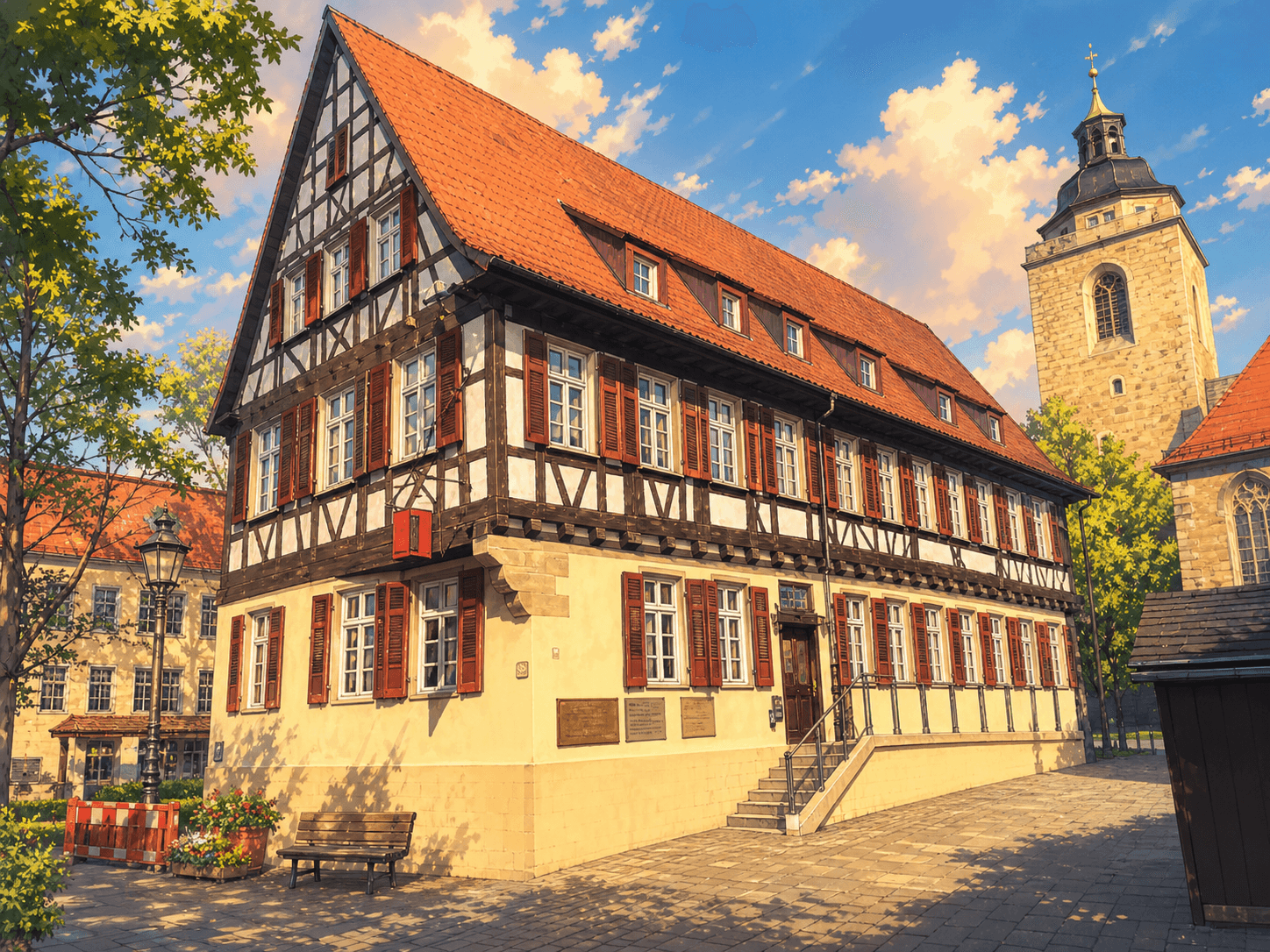
In March 2026, the town of Kirchheim focused on its budget planning and financial strategy. The municipality is facing a strained financial situation, with investments being postponed and taxes and fees being increased. In this blog post, we analyze the key developments and underlying factors.
Budgetary Pressure and Investment Needs: Kirchheim Tackles Rising Costs
The financial planning for the municipality of Kirchheim for 2026 and the period up to 2029 is characterized by increasing expenses, declining revenue, and a strained budget. The municipality is responding with tax increases, cuts, and borrowing to finance investments and ongoing expenditures.
Rising Expenditures and Declining Revenue
The administrative budget for 2026 is planned with total revenues of 53.49 million euros and total expenditures of 53.01 million euros. Although revenues are slightly increasing, costs are rising rapidly. The transfers from the administrative to the capital budget remain far below the required minimum level: only 476,400 euros are planned for 2026, although at least 3.4 million euros are needed.
A key reason for the financial burden is the increase in the district tax rate by 2 percentage points, which results in additional costs of 625,000 euros. At the same time, the basic taxes A and B were increased by 108% to generate additional annual revenues of around 800,000 euros. These measures are part of a comprehensive effort to close the financial gap.
Borrowing and Investments
In the capital budget for 2026, revenues of 24.56 million euros and expenditures of 28.13 million euros are planned. The deficit of approximately 3.6 million euros is covered by borrowing of 9.31 million euros. The main expenditures are for construction projects such as the new town hall, renovations at primary schools, and the construction of a warehouse.
The municipality plans to limit new debt in the future, but this is not currently possible. For 2026 and 2027, borrowing of over 3.5 million euros each year is required. The total debt is estimated at around 76 million euros, with an early repayment of 10 million euros considered only from 2030 onward.
Cost Savings and Delayed Investments
To cope with the budgetary crisis, cuts of 10% to 20% have been implemented in almost all areas. Examples include savings of 10,000 euros for HHST 0000.6312 and 5,500 euros for HHST 0800.6310. In addition, investments such as the new construction of the Kirchheim Gymnasium (partially 18 million euros) and the Aschheim school campus (partially 20.5 million euros) must be postponed due to rising construction costs and financial constraints.
Local Projects and Future Perspectives
Despite the financial challenges, Kirchheim is pursuing the implementation of forward-looking projects. An example is the local senior citizens' concept, whose total costs until 2027 are estimated at around 12,500 euros. The costs for analysis, workshops, and public surveys are detailed, and part of the costs can be reimbursed through the coordination office for care and housing.
Additionally, a new regulation for village festivals has been adopted: instead of a 10% profit tax, a fixed lump-sum tax is now planned, which is expected to significantly simplify the planning and organization for event organizers.
Outlook and Challenges
The municipality of Kirchheim is facing a long-term challenge: the financial situation will only ease in the coming years. The reserves are expected to grow to around 12 million euros by 2029, and the realization of land sales is mentioned as another potential revenue source. At the same time, the minimum reserve of 487,000 euros remains a necessary safety buffer.
The decisions of the main committee, recommending both the administrative and capital budget for 2026 as well as the financial plan 2026–2029, show the urgency of the situation. The implementation of these plans now depends on the approval of the municipal council.
Overall, financial planning in Kirchheim remains a complex balance between investments, savings, and borrowing. Without new tax revenues or income from land sales, the financial pressure will continue for the foreseeable future.
NeoSearch analyses public council documents, committee minutes and municipal announcements. Source references appear automatically once verified meeting data is available.
What does this mean for businesses?
Municipal council decisions are early indicators: following the council agenda surfaces projects and tenders months before the official award — before they ever reach the procurement portals.
Track similar decisions in your region
Set up monitoring for Finance and Budget in Bayern — prefilled from this article.
Set up monitoring →More signals from Kirchheim
Urban Development in Kirchheim: Neighborhood Planning, Infrastructure, and Energy Efficiency in April 2026
In April 2026, urban development was in focus in Kirchheim near Munich, particularly neighborhood planning, infrastructure measures, and energy efficiency. Numerous approvals and planning decisions show how the municipality is responding to growth and sustainability.
Read more → Kirchheim: April 2026 – Construction Plans, Senior Care Concept, and Energy Future
In April 2026, Kirchheim focused on key decisions regarding urban development, senior care, and energy policy. Here is our monthly review.
Read more → Social Services and Housing Planning in Kirchheim – April 2026 in Focus
In April 2026, Kirchheim made key decisions in the areas of social services and housing planning. With the local senior citizens’ concept, administrative digitization, and the demand planning for child daycare centers, the municipality is setting impulses for forward-looking social policy.
Read more →