Lübeck's Urban Development in Focus: Housing Market, Transport, and Inclusion
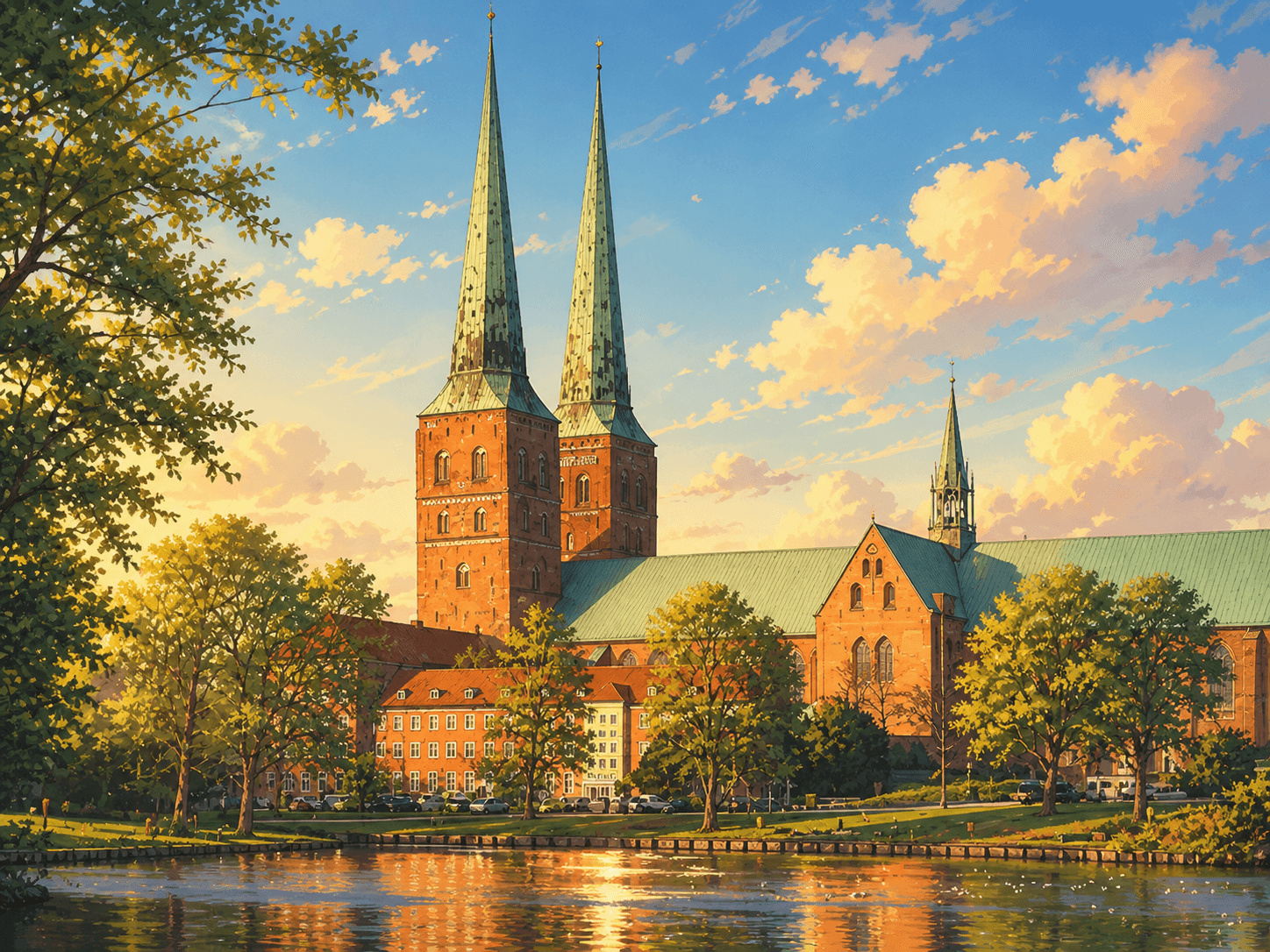
In February 2026, Lübeck made important decisions regarding the housing market, transport planning, and inclusion in urban space. The Construction Committee discussed and passed measures shaping the city for the future. An overview.
Housing Market: Strategy for Ensuring Affordable Housing
Lübeck reached a milestone in housing policy in February 2026: the Housing Market Strategy was unanimously adopted. The goal is to provide approximately 5,000 new residential units by 2045. Currently, 3,180 housing units have building rights and 1,680 are in planning. To meet demand, the city is relying on standardized building forms, streamlined construction, and municipal land acquisition.
Another focus is the provision of subsidized housing: 10,000 subsidized housing units are to be created by 2045, with at least 30% of new zoning plans including subsidized housing. In addition, the land lease right with more than 50% subsidized housing will be rewarded with a reduced land lease rate.
The strategy also includes social mixing and the development of attractive neighborhoods. Here, neighborhood concepts and the one-third mix (one-third social housing) play a central role. The city aims to create a stable and vibrant housing market in the long term that remains attractive for families, young people, and seniors.
Transport Planning: Safety and Accessibility in Focus
A central topic was the renovation of Mühlentorplatz. The Construction Committee decided in favor of Variant 2, which will transform the square into a signal-controlled intersection. The aim is to increase traffic safety – especially for bicycle and pedestrian traffic. The costs are estimated at 3 million EUR, and the measure is planned in conjunction with the bridge renovation in 2026–2027.
In addition, measures for bicycle path development were approved. The bicycle path along Dummersdorfer Str. will be renovated and extended to Kobaltstr.. A gap will also be closed in the Quadebekstraße, making the connection between Kronsforde and Rothenhausen safer.
At the Skandinavienkai station, the renovation of track 11 was also approved. Additional 700,000 EUR in costs arose, but were still approved in order to keep the infrastructure up to date.
Inclusion and Accessible Urban Space
Urban development in Lübeck is placing greater emphasis on accessibility and inclusion. The Schenkendorfstraße playground is being completely renovated, with inclusive equipment and barrier-free access taken into account. There was criticism regarding the lack of a spray installation and a sandbox, which will be considered in planning.
Accessibility is also a central topic in housing planning. In new buildings with at least three apartments per floor, barrier-free housing is legally required. TRAVE mbH, which manages around 7% of the city's housing stock, already focuses on low-barrier housing in new construction and renovation.
Outlook: Urban Development as an Adaptive Process
The decisions from February 2026 show that urban development in Lübeck is a long-term process that is oriented toward the needs of the population. The housing market strategy, transport planning, and the focus on inclusion are steps toward a liveable, sustainable, and socially cohesive city.
In 2026, further dialogue events and planning steps will take place, especially regarding the use of the former slaughterhouse site and urban development planning. The city aims to not only secure housing space but also further develop the city structure and preserve the World Heritage character of the old town.
NeoSearch analyses public council documents, committee minutes and municipal announcements. Source references appear automatically once verified meeting data is available.
What does this mean for businesses?
Urban development, zoning plans and commercial settlements create early construction and supply opportunities. Following council decisions reveals projects before they go to tender.
Track similar decisions in your region
Set up monitoring for economic development in Schleswig-Holstein — prefilled from this article.
Set up monitoring →More signals from Luebeck
Economic Boost for Lübeck: Belt Crossing, Energy Cooperation, and Land Policy in April 2026
In April 2026, Lübeck set economic impulses: The Fixed Fehmarn Belt Crossing was discussed as a central growth engine, energy cooperation with Denmark was deepened, and a centrally located plot of land was secured for the future.
Read more → Culture and Community in Lübeck: Outlook for April 2026
In April 2026, Lübeck will be focusing on its cultural outlook. Numerous museums and cultural projects shape the cityscape, while decisions on heritage protection, funding, and educational programs are being made. An overview of the most important developments.
Read more → Lübeck's Urban Development 2026: Where Urban Planning, Climate and Mobility Converge
In April 2026, important decisions on urban development were at the center of attention in Lübeck. From the redesign of Mühlentorplatz through the zoning plan for Moisling to the preservation of green spaces and the future of the Lümo night-time transport: The city's planning shows how closely traffic, infrastructure, climate protection and financial feasibility are interwoven.
Read more →