Education in Motion: Lübeck Expands Full-Day Support and Infrastructure
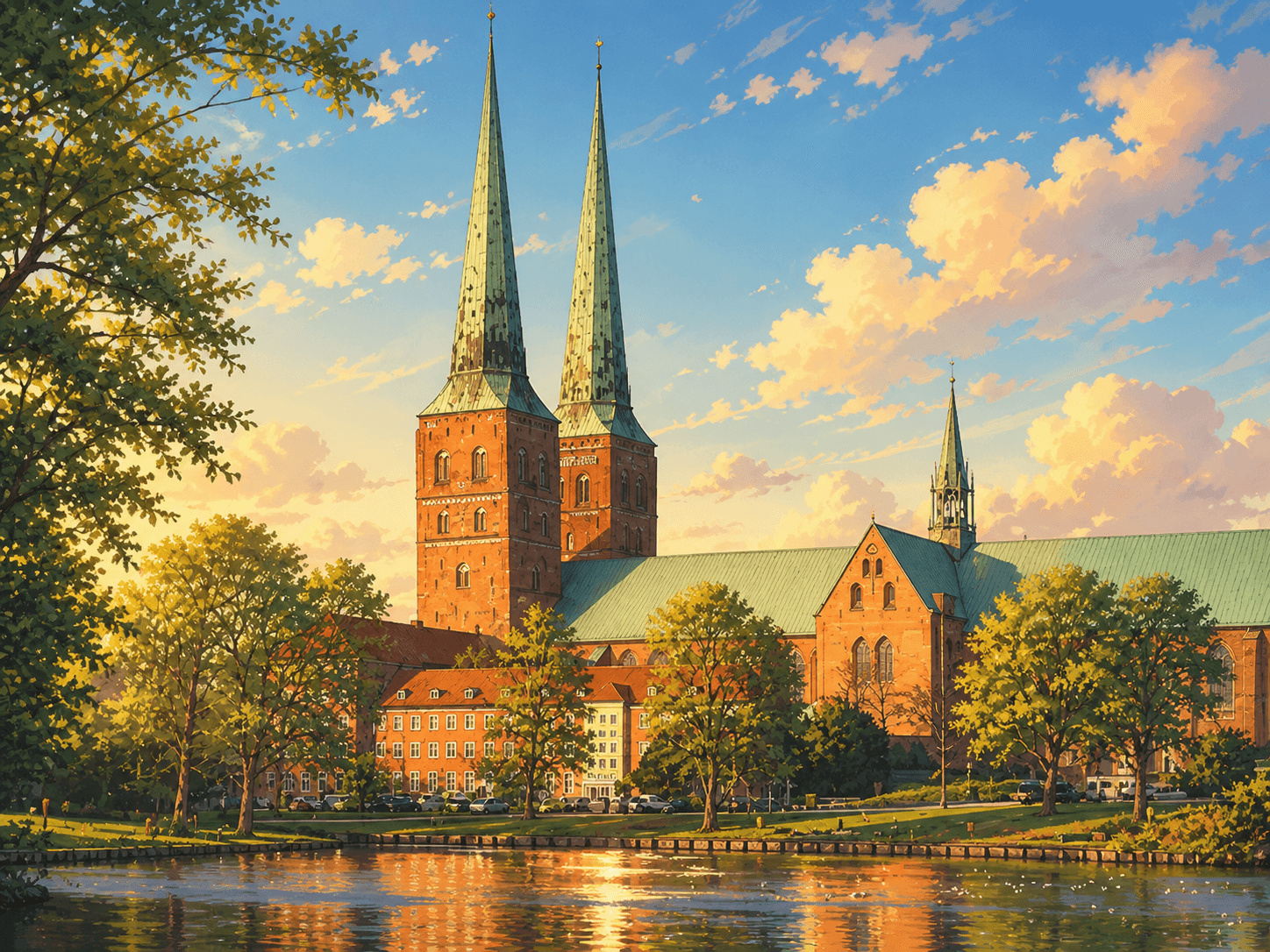
In April 2026, Lübeck took decisive steps toward modern educational policy. The expansion of full-day support, new school locations, and climate-friendly construction projects show how the Hanseatic city is reshaping its educational landscape.
Education in Motion: Lübeck Expands Full-Day Support and Infrastructure
Education is the key to a city’s future – and Lübeck has recently taken clear steps toward a modern, inclusive, and climate-friendly educational policy. In April 2026, important decisions were made during the urban development meeting that will significantly change both the school infrastructure and childcare offers for children. These measures are part of a long-term strategy aimed at ensuring educational quality, sustainability, and social justice.
Expansion of Full-Day Support: Legal Entitlement and Funding
Starting with the 2026/27 school year, Lübeck will implement a legal entitlement to full-day support for children in primary school up to grade 1. Expansion to higher grade levels is planned by 2029/30. The childcare hours will amount to eight hours on all five weekdays, including school hours. Additionally, there will be a summer childcare program with a maximum of four weeks of closure to support parents during school holidays.
Funding is a central topic: The state will cover 75% of the operating costs, while the city of Lübeck will cover 25%. This arrangement will remain in place at least until 2027 to ensure planning security for independent providers. Additional fees will continue to depend on income and will be regulated by the "Lübecker Beitragsdeckel" (Lübeck contribution cap).
In November 2026, a new funding guideline for the accounting of full-day support will be introduced, to be implemented from 2027/28. This guideline will be decisive in determining whether the expansion of full-day support remains financially viable in the long term – and whether Lübeck remains a model city for other municipalities.
School Infrastructure: New Locations and Missing Specialized Rooms
In addition to childcare infrastructure, the development of school buildings is also a central issue. In the discussion about an 8th Gymnasium location in Moisling, it was proposed to expand the Heinrich-Mann-Gemeinschaftsschule by two upper-level classes. Furthermore, a cooperative upper-level program with this school is planned.
However, the focus is not only on founding new schools: several existing locations lack specialized rooms – particularly in the subjects of biology, chemistry, physics, technology, computer science, music, and art. These gaps not only hinder teaching but also individual support. The city has therefore committed to paying particular attention to the equipping of modern specialized rooms during the planning of new buildings and renovations.
In addition, planning security for staffing needs, sports facilities, and infrastructure is being discussed – topics that are becoming increasingly relevant in a growing city like Lübeck.
Education at Ringstedtenhof: A Model for Sustainability and Practical Learning
Another highlight in the education sector is the Ringstedtenhof, which serves as a vibrant educational center for children, youth, and adults. Here, topics such as biodiversity, climate, fair trade, and food waste are conveyed through practical projects. Collaborations with schools like the Dorothea-Schlözer and Paul-Klee schools, as well as with partners such as the VHS and the BNUR, demonstrate how education can be anchored in practice.
The project "Frisch auf den Teller" has been reaching around 40 school classes and kindergarten groups annually since 2017. It is supported by foundations such as the Sparkassenstiftung Lübeck and the Landwege Umweltstiftung. In addition, educational materials such as "Kochen fürs Klima – Rezepte für die Zukunft" (Cooking for the Climate – Recipes for the Future) are being developed as part of an EU project.
Animal husbandry at the Ringstedtenhof – including Shetland ponies, fallow deer, and Galloway cattle – also offers educational opportunities that go beyond regular lessons. Hygiene measures due to avian influenza are necessary but highlight the challenges in organizing such projects.
Climate Protection in Educational Infrastructure: School Construction at Geniner Ufer
Lübeck is also making climate protection a focus in school construction projects. The planned new school building at Geniner Ufer will include comprehensive climate-friendly measures, such as thermal insulation, photovoltaics, and renewable heat generation. The additional costs for these measures will be covered by grants of approximately 1,000,000 €. In the long term, this will reduce heating costs by 650,000 €.
The renewable heating system, which combines geothermal energy and district heating, even provides an economic benefit of over a million euros. These measures are not only an investment in the city’s future but also a clear response to the legal requirements of the energy transition and climate protection laws.
Conclusion: Education as a Central Element of Urban Development
Lübeck’s educational policy is in motion. With the expansion of full-day support, new school locations, practical educational projects, and climate-friendly construction measures, the Hanseatic city is investing in a modern, sustainable, and inclusive educational landscape. These developments show not only how important education is for the city’s future, but also how closely it is linked to issues such as climate protection, social justice, and urban development.
In the coming years, it will be crucial to consistently further develop these impulses – and to ensure that Lübeck remains a pioneer in educational policy in ten years’ time.
NeoSearch analyses public council documents, committee minutes and municipal announcements. Source references appear automatically once verified meeting data is available.
What does this mean for businesses?
Schools, daycare centres and public buildings create early planning and construction opportunities. Following council agendas surfaces tenders for refurbishment, new builds and fit-out months before the official award — from shell construction to specialist planning to furnishing.
Track similar decisions in your region
Set up monitoring for education & public facilities in Schleswig-Holstein — prefilled from this article.
Set up monitoring →More signals from Luebeck
Economic Boost for Lübeck: Belt Crossing, Energy Cooperation, and Land Policy in April 2026
In April 2026, Lübeck set economic impulses: The Fixed Fehmarn Belt Crossing was discussed as a central growth engine, energy cooperation with Denmark was deepened, and a centrally located plot of land was secured for the future.
Read more → Culture and Community in Lübeck: Outlook for April 2026
In April 2026, Lübeck will be focusing on its cultural outlook. Numerous museums and cultural projects shape the cityscape, while decisions on heritage protection, funding, and educational programs are being made. An overview of the most important developments.
Read more → Lübeck's Urban Development 2026: Where Urban Planning, Climate and Mobility Converge
In April 2026, important decisions on urban development were at the center of attention in Lübeck. From the redesign of Mühlentorplatz through the zoning plan for Moisling to the preservation of green spaces and the future of the Lümo night-time transport: The city's planning shows how closely traffic, infrastructure, climate protection and financial feasibility are interwoven.
Read more →