Freiberg's Urban Development 2026: Construction Projects, Planning and Climate-Friendly Measures in Focus
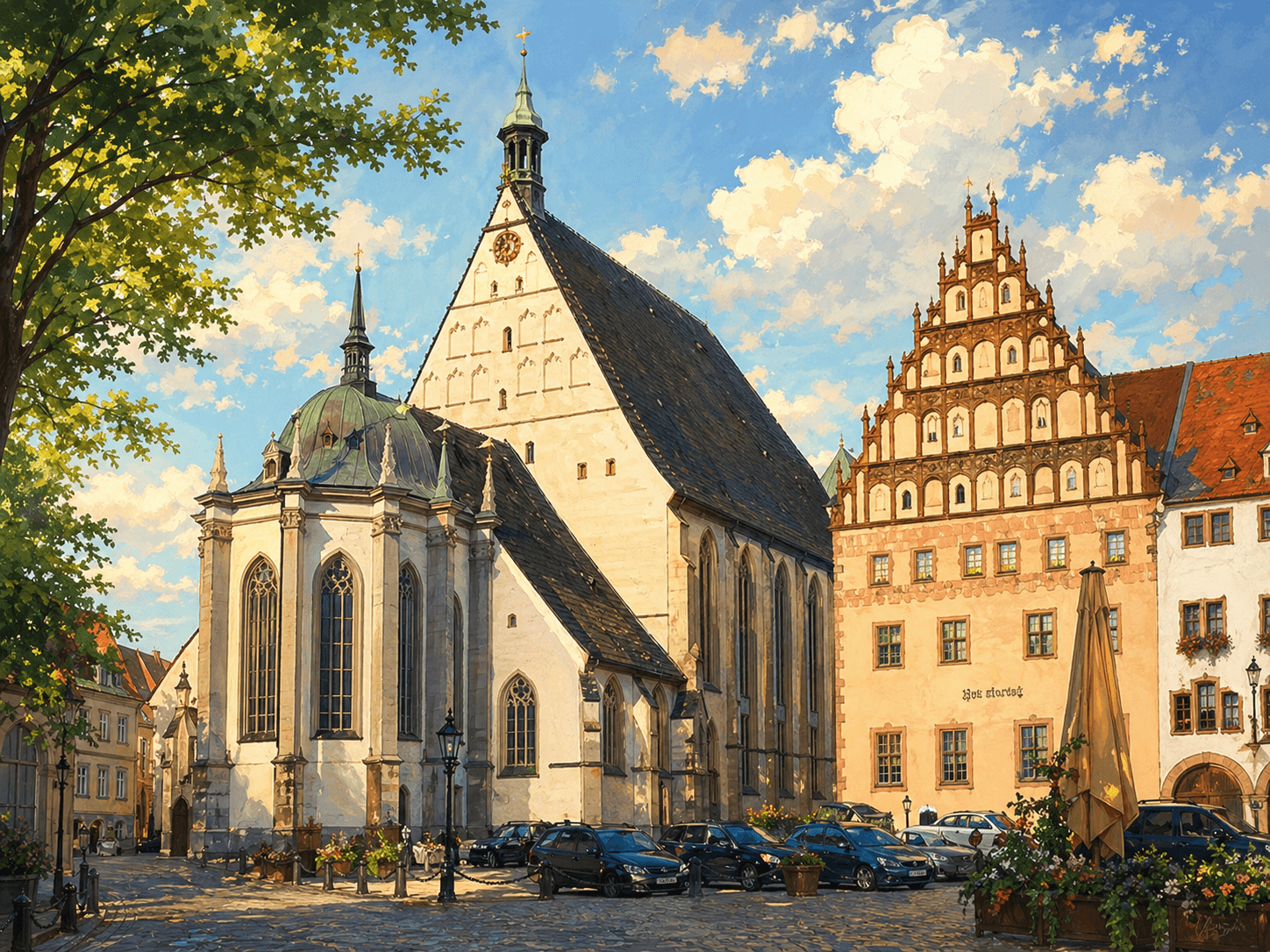
In April 2026, Freiberg focused on key measures in urban development and construction. From the creation of a municipal heat plan to the reorganization of the industrial area "Schwarze Kiefern" – the city is focusing on sustainable structures and responsible financial planning.
Freiberg's Urban Development 2026: Construction Projects, Planning and Climate-Friendliness in Focus
Urban development is a key topic for the future viability of cities – especially in mining-affected regions like Freiberg. In April 2026, the university city set a clear focus on sustainable planning, climate-friendly heating supply, and the development of new industrial areas. With a wide range of construction projects, statutory changes, and financial decisions, the city council demonstrated how Freiberg positions itself as a powerful and green economic city.
Municipal Heat Plan: A Step Toward Climate Neutrality
Following a CDU motion, the city of Freiberg has decided to create a municipal heat plan in accordance with the Heat Planning Act (WPG). The goal is to ensure a long-term, affordable, and climate-friendly heating supply for the coming decades. Freiberg Stadtwerke AG is responsible for coordination, supported by a steering committee composed of representatives from the administration, industry, and housing associations.
The heat plan includes the creation of an expert report that considers energy performance indicators, infrastructure, and the potential of renewable energy sources (e.g., geothermal energy, photovoltaics). At the same time, comprehensive public participation is planned to ensure transparency and acceptance. The administration will also evaluate funding from state programs to support implementation.
This measure is a crucial step toward climate protection and the energy transition – it shows how Freiberg wants to act as a model city for climate-friendly urban development.
Industrial Area "Schwarze Kiefern": Sustainability in Construction
Another focal point was the adoption of the zoning plan No. 039 for the industrial and commercial area "Schwarze Kiefern." The project includes three building plots covering a total area of 8.73 hectares and provides for a planned floor area ratio of 0.8. The maximum building height is 11 meters in the commercial areas and up to 23 meters in industrial zones, with exceptions for technical facilities.
In addition to the construction planning, extensive ecological and urban planning requirements were in the foreground:
- Stormwater retention basins to reduce sealing effects
- Facades and green roofs to improve the urban climate
- Compensation measures for lost habitat areas
- Species protection with protective measures for bats, common wall lizards, and breeding birds
- Noise protection through emission-limiting quotas
The planning takes into account not only economic interests but also ecological and social aspects – a clear commitment to sustainable urban development.
Construction Projects and Infrastructure: Investment in the Future
In April, several construction projects were approved that are intended to sustainably improve the city's infrastructure. These include:
- The expansion of Moritzstraße in two construction phases, with a total budget of approximately 1.5 million euros.
- The renovation of "Walterstal" Street, with a total budget of 1.05 million euros, funded from the 2025/26 budget.
- The demolition of bridge Bw21 and the construction of a temporary bridge in the area of Am Försterberg, with an approval of 106,100 euros in additional costs.
These measures are part of a comprehensive infrastructure program aimed at sustainably increasing traffic safety and quality of life in Freiberg. Particular attention should be paid to the financial planning, which structures the budget transparently and future-oriented.
Financial Planning: Calculation and Risk Assessment
In the context of the construction projects, the financing was also intensively discussed. The city has defined clear calculation assumptions:
- Interest rates of 3%
- Construction cost increases of 5% per year
- Funding from the Saxon Reconstruction Bank (SAB) will be examined
This planning security is crucial to enable long-term investments and minimize financial risks. At the same time, the sustainable use of resources is ensured – for example, by reducing operating costs through efficient construction methods.
Conclusion: Freiberg as a Model City for Sustainable Development
With the municipal heat plan, the zoning plan "Schwarze Kiefern," and the investment in infrastructure, Freiberg has set a clear course for the future in April 2026. The city shows that economic efficiency and sustainability are not opposites, but complements.
The decisions reflect a deep awareness of the challenges of climate change and urbanization. They make Freiberg not only a powerful economic city, but also a model city for climate-friendly and socially acceptable urban development.
NeoSearch analyses public council documents, committee minutes and municipal announcements. Source references appear automatically once verified meeting data is available.
What does this mean for businesses?
Urban development, zoning plans and commercial settlements create early construction and supply opportunities. Following council decisions reveals projects before they go to tender.
Track similar decisions in your region
Set up monitoring for economic development in Sachsen — prefilled from this article.
Set up monitoring →More signals from Freiberg
Freiberg invests in mobility: The purchase of a mobile Pumptrack
In April 2026, Freiberg decided to acquire a mobile Pumptrack for 70,000 EUR. This investment not only reflects a response to the growing demand for sports-related leisure activities, but also careful financial planning. This blog post examines the background, funding, and long-term effects of this decision.
Read more → Freiberg's Administrative Processes: Transparency, Citizen Participation, and Digital Innovations in April 2026
In April 2026, the city of Freiberg set benchmarks in governance and administration. With test sessions for online voting, open meetings, and a clear transparency policy, the municipality demonstrated how modern administration works. An overview.
Read more → Freiberg April 2026 – Focus on Infrastructure, Youth and Heat Planning
In April 2026, Freiberg saw important decisions in the areas of infrastructure, youth support, and forward-looking heat planning. The Building and Operations Committee initiated progress in sewer and road construction, the Administrative and Finance Committee brought more movement to the city with a mobile pump track, and the City Council decided to launch a municipal heat plan.
Read more →