Koblenz: Urban Development in Focus – Fortress City Concept and Housing Supply 2026
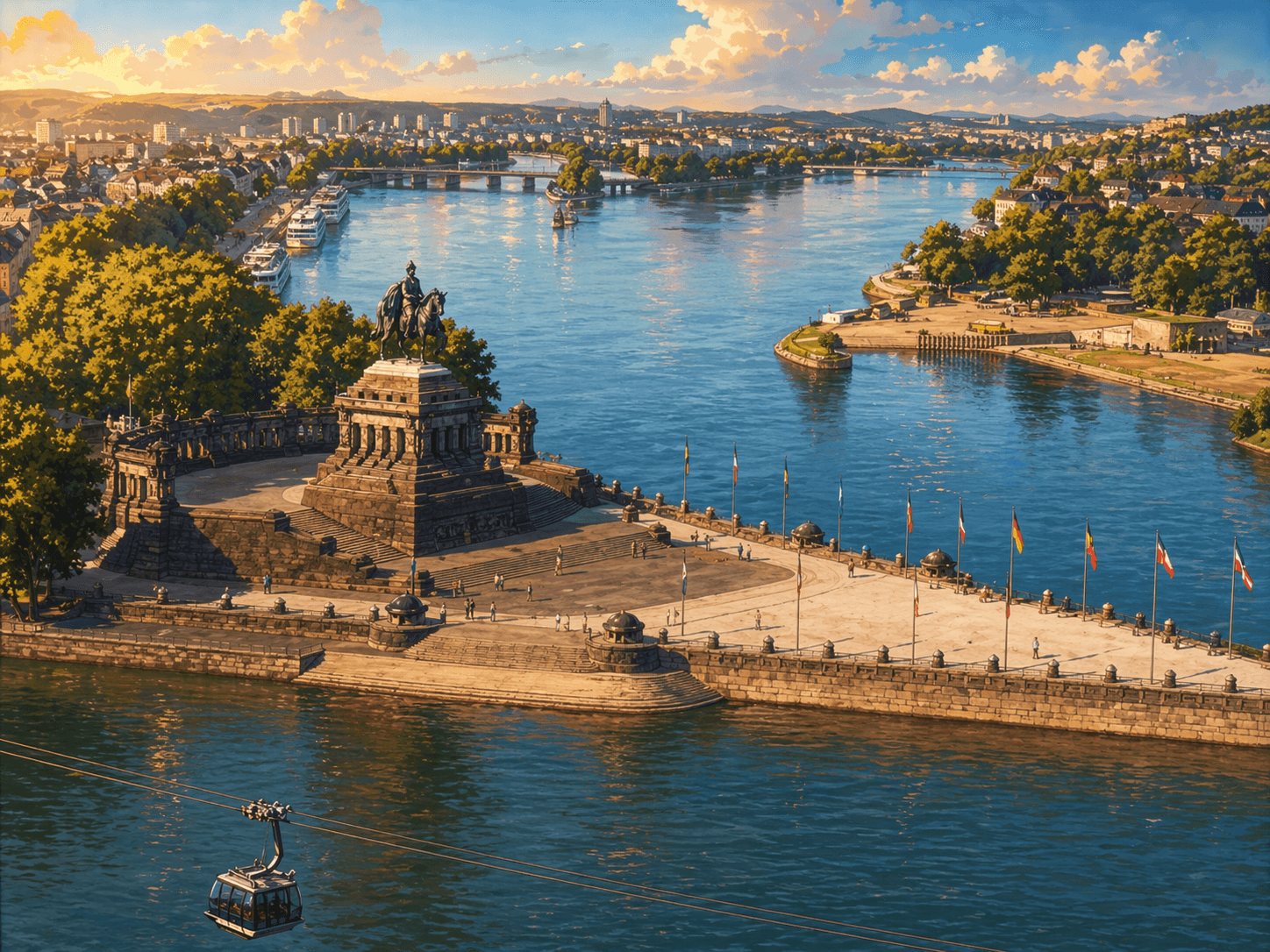
In Koblenz, key processes in urban development and construction planning are set to take place in 2026. With the Fortress City Concept and the update of the Housing Supply Concept, the city is pursuing forward-looking solutions for culture, housing, and mobility.
Koblenz: Urban Development and Construction Planning 2026 – Between Culture, Housing, and Sustainability
Urban development in Koblenz is a fascinating and multifaceted topic that is coming into focus in 2026. With the Fortress City Concept and the Update of the Housing Supply Concept (WRVK), the city is pursuing long-term solutions that take into account both cultural identity and social and ecological sustainability. In a month marked by numerous decisions and procedures, Koblenz is showing itself as a city in motion – on the way to becoming a vibrant, livable, and affordable city for all.
The Fortress City Concept – Culture and Tourism as Anchors
The fortified sites of Koblenz – including Fort Kaiser Franz, Fort Asterstein, and Fort Großfürst Konstantin – form a unique cultural and historical resource. With the Overall and Use Concept for the Fortress City, the city has initiated a long-term development process that is expected to span 10–15 years.
Central elements of the concept are pioneer measures and pioneer uses, which are intended to accelerate the urban development process and allow citizens to actively get involved in the use of the spaces. In this context, heritage protection is a decisive factor: the planning is carried out in close coordination with the Lower Heritage Protection Authority to ensure heritage-appropriate use.
Another focus is the "Visitor Economy" principle, which aims to connect the fortress installations as "destination sites" and thus strengthen the regional tourism sector. Priority areas of the concept are "Wine & Culinary", "Civil Society Engagement", "Regional Magnet", and "Refugium" – the latter emphasizing that the fortresses should not only be tourist but also social and cultural spaces.
Housing Supply – Challenges and Options for Action
In the area of housing supply, Koblenz shows a clear need for action. The city has a housing stock of around 62,700 units, 70% of which are in multi-family houses. However, the housing construction intensity is 24 units/1,000 inhabitants (2011–2023), significantly below the state average.
The rent price development is another interesting field: in 2024, the median rents were 10.00 €/m² (existing stock) and 12.18 €/m² (new construction). Compared to other independent cities in Rhineland-Palatinate, Koblenz is still relatively affordable, but the development shows an upward trend – with an increase of 66.7% (existing stock) and 50% (new construction) between 2012 and 2024.
The city plans to build 3,550 new apartments by 2040, of which 3,200 are intended to meet the demand. A special focus is on socially subsidized housing, of which only 750 units currently exist. To achieve the goal, approximately 150 social housing units must be created annually.
In this context, the 30% quota for social housing in zoning plans is a decisive lever, but it is also critically assessed. There is a discussion about whether the quota should be made more flexible to relieve the self-financed housing construction sector and motivate investors.
Another problem area is infrastructure financing. The buy-out sums for kindergarten places and play areas place a heavy burden on investors. In an example with 100 housing units, additional costs of 83,547 euros are incurred for play areas and 1.53 million euros for kindergarten places. These costs are significantly higher than in international comparisons (e.g., Stuttgart, Cologne) and hinder housing construction.
Road Construction and Infrastructure – 30 km/h and More
Mobility planning in Koblenz is closely linked to urban development. In April 2026, for example, several road construction projects were in the spotlight:
- Peter-Klöckner-Straße (Rauental): Full construction with 16 m width, 30 km/h zone, sidewalks, and longitudinal parking spaces.
- Pastor-Klein-Straße: Basic renovation in full construction, 65% of the construction costs to be borne by adjacent property owners.
- Ludwig-Ehrhard-Straße / Schlachthofstraße: 30 km/h zone approved, city share 35%, estimated revenue: 1,836,000 euros.
Here, too, a climate protection aspect becomes apparent: road construction projects such as in the Peter-Klöckner-Straße or the Gartenstraße have no climate-relevant impacts. At the same time, traffic trials such as the reduction of the Balduinbrücke to 3.00 m in width and the introduction of a roundabout at the An der Moselbrücke junction are being evaluated as measures for traffic calming and promotion of pedestrian and cycling traffic.
Conclusion and Outlook: A City in Motion
Koblenz faces a wide range of challenges and opportunities in urban development in 2026. With the Fortress City Concept, the city is focusing on a culturally strong, touristically attractive, and at the same time lively use of its historical resources. At the same time, housing supply is a central issue that requires both quantitative and qualitative solutions.
The implementation of the planned projects depends strongly on financing, citizen participation, and cooperation with investors. In this process, it is important not to lose sight of the aspect of sustainability – ecological, social, and financial.
In the coming months, it will be interesting to observe how the planned measures will develop – and what role citizens will play in this process.
NeoSearch analyses public council documents, committee minutes and municipal announcements. Source references appear automatically once verified meeting data is available.
What does this mean for businesses?
Municipal council decisions are early indicators: following the council agenda surfaces projects and tenders months before the official award — before they ever reach the procurement portals.
Track similar decisions in your region
Set up monitoring for Finance and Budget in Rheinland-Pfalz — prefilled from this article.
Set up monitoring →More signals from Koblenz
Climate Adaptation in the Koblenz City Forest: Innovations and Challenges in April 2026
The Koblenz City Forest is at the center of an intensive climate change adaptation process. In April 2026, key measures were implemented in the areas of forestry, biodiversity protection, and public outreach. An overview of the political, ecological, and financial background.
Read more → Sports Development in Koblenz: Expansion of Sportpark Oberwerth and Learning Exchange with Wattenscheid
In Koblenz, the expansion of Sportpark Oberwerth is a key focus. In April 2026, the Sports and Baths Committee decided to actively seek inspiration for the development of sports facilities, including a visit to the Lohrheide Stadium in Wattenscheid. The planned investment for the first construction phase is around 48 million euros.
Read more → Inauguration and Governance in Koblenz – A Month in Focus
In April 2026, central governance topics were at the forefront in Koblenz: the inauguration of Mayor David Langner for his second term and the work of local bodies such as district advisory committees and the Inclusion Advisory Council. An overview of political processes, decisions, and structures.
Read more →