Inauguration and Governance in Koblenz – A Month in Focus
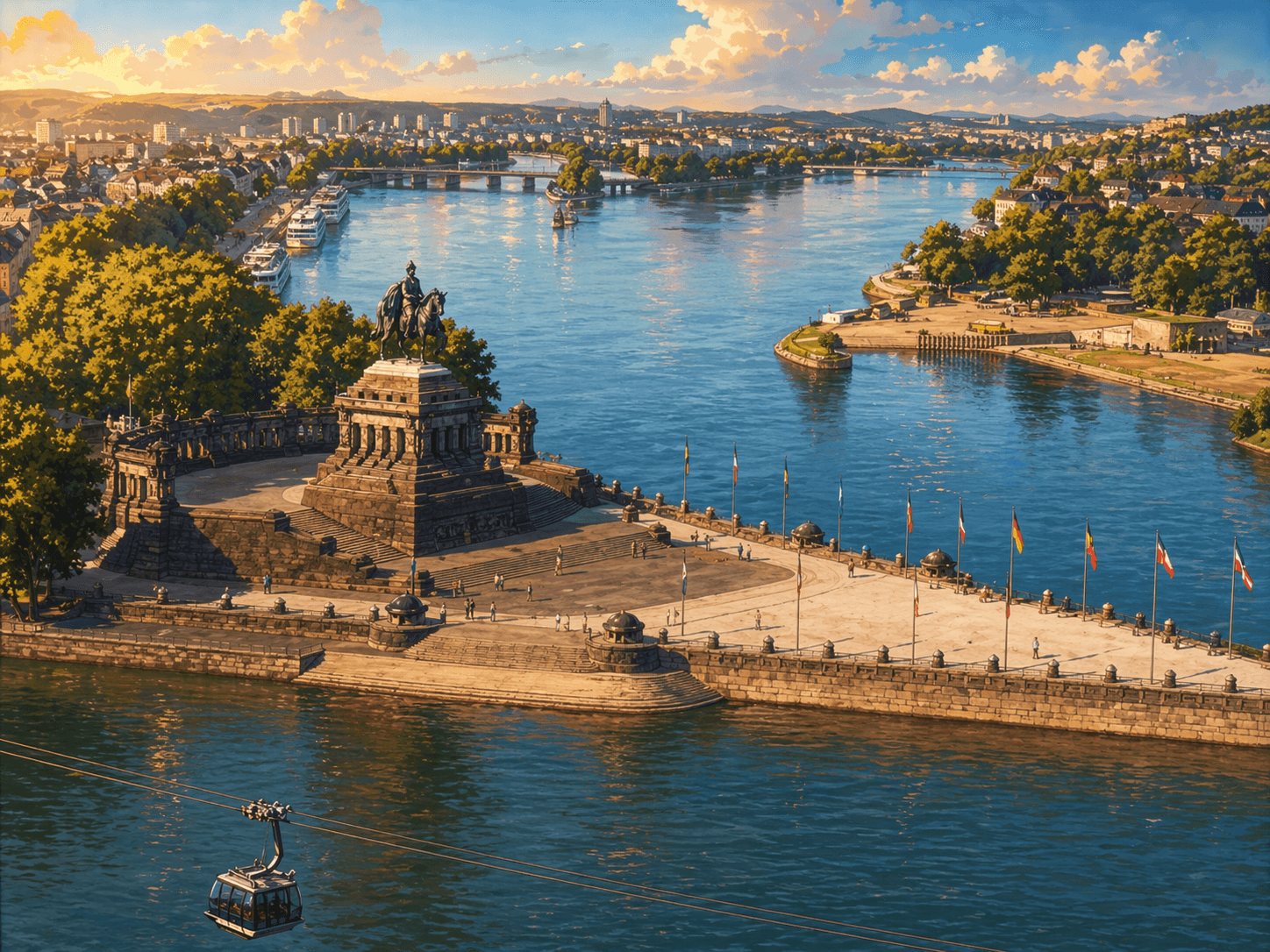
In April 2026, central governance topics were at the forefront in Koblenz: the inauguration of Mayor David Langner for his second term and the work of local bodies such as district advisory committees and the Inclusion Advisory Council. An overview of political processes, decisions, and structures.
Office Transition and Governance in Koblenz: A Governance-Focused Analysis
In April 2026, several governance-relevant events took place in the Rhineland city of Koblenz. In addition to the symbolically significant inauguration of Mayor David Langner, the work of local committees and inclusion-promoting initiatives also came into focus. These developments illustrate how governance in Koblenz functions both at a strategic level and in the city's day-to-day life.
The Inauguration of Mayor David Langner
On April 30, 2026, the official inauguration of Mayor David Langner for his second term took place. The ceremony occurred during a public city council session held in the theater tent on the plateau of Ehrenbreitstein Fortress. After an appointment and oath of office by Mayor Mohrs, Langner delivered an inaugural speech, followed by addresses from the Minister-President and a representative of Koblenz Sparkasse.
The inauguration marks not only a formal process but also a symbolic transition in the city’s political leadership. Langner, who had already taken on his duties on April 22, 2026, emphasized in his speech the topics of digitization, inclusive urban development, and climate change. His re-election reflects the confidence of the city council majority and demonstrates how governance in Koblenz relies on personnel continuity.
Another highlight was the preceding ecumenical church service in the fortress church, which underlined the symbolic nature of the ceremony. The reception that followed in the foyer of the theater tent served as a social networking event and illustrated the public character of the inauguration.
Local Governance: District Advisory Committees in Action
In addition to the central inauguration, the work of the district advisory committees also played a role. On April 20, 2026, the district advisory committee for Koblenz-Güls met at the Gasthaus "Zum Rebstock" for a public session. The agenda included the approval of the minutes, the presentation of the "Stadttaubenhilfe" association, and discussions on the Panorama Hiking Trail.
These meetings are a central part of participatory governance in Koblenz. They enable citizens to directly engage in decision-making processes and represent local interests. The district advisory committee for Koblenz-Güls, which plays a special role in the region, demonstrates how governance works at the municipal level and how districts are integrated into the political process.
Inclusion Advisory Council and Barrier-Free Governance
Another governance-related focus in April was the work of the Inclusion Advisory Council. On April 1, 2026, the council met at the Schängelcenter, where various organizations were presented and the annual report of the city’s spokesperson for persons with disabilities was introduced. Katharina Kubitza, the city’s spokesperson for persons with disabilities, leads the council and actively promotes inclusive structures.
A special project is the working group for the carnival in Koblenz and Olau, in which Kubitza is involved. The goal is to make the Rose Monday parade barrier-free and inclusive. This shows how governance in Koblenz is not only based on political processes but also actively assumes social responsibility.
Governance as a Process – Outlook
The events of April 2026 show that governance in Koblenz functions both symbolically and practically. The inauguration of David Langner underlines the stability of the political system, while the work of the district advisory committees and the Inclusion Advisory Council highlights the participatory dimension of governance.
In the future, it will be important to further strengthen these structures, especially in times when social diversity and inclusion are in the spotlight. With these initiatives, the city of Koblenz has shown that governance is not only a formal process but also a responsibility toward its citizens and the city's future.
NeoSearch analyses public council documents, committee minutes and municipal announcements. Source references appear automatically once verified meeting data is available.
What does this mean for businesses?
Town halls, fire stations, depots and administrative buildings create early construction and refurbishment opportunities. Following council agendas reveals projects before they go to tender.
Track similar decisions in your region
Set up monitoring for public buildings & administration in Rheinland-Pfalz — prefilled from this article.
Set up monitoring →More signals from Koblenz
Climate Adaptation in the Koblenz City Forest: Innovations and Challenges in April 2026
The Koblenz City Forest is at the center of an intensive climate change adaptation process. In April 2026, key measures were implemented in the areas of forestry, biodiversity protection, and public outreach. An overview of the political, ecological, and financial background.
Read more → Koblenz: Urban Development in Focus – Fortress City Concept and Housing Supply 2026
In Koblenz, key processes in urban development and construction planning are set to take place in 2026. With the Fortress City Concept and the update of the Housing Supply Concept, the city is pursuing forward-looking solutions for culture, housing, and mobility.
Read more → Sports Development in Koblenz: Expansion of Sportpark Oberwerth and Learning Exchange with Wattenscheid
In Koblenz, the expansion of Sportpark Oberwerth is a key focus. In April 2026, the Sports and Baths Committee decided to actively seek inspiration for the development of sports facilities, including a visit to the Lohrheide Stadium in Wattenscheid. The planned investment for the first construction phase is around 48 million euros.
Read more →