Wuppertal in March 2026: BUGA Progress, Budget Planning, and Investments in Focus
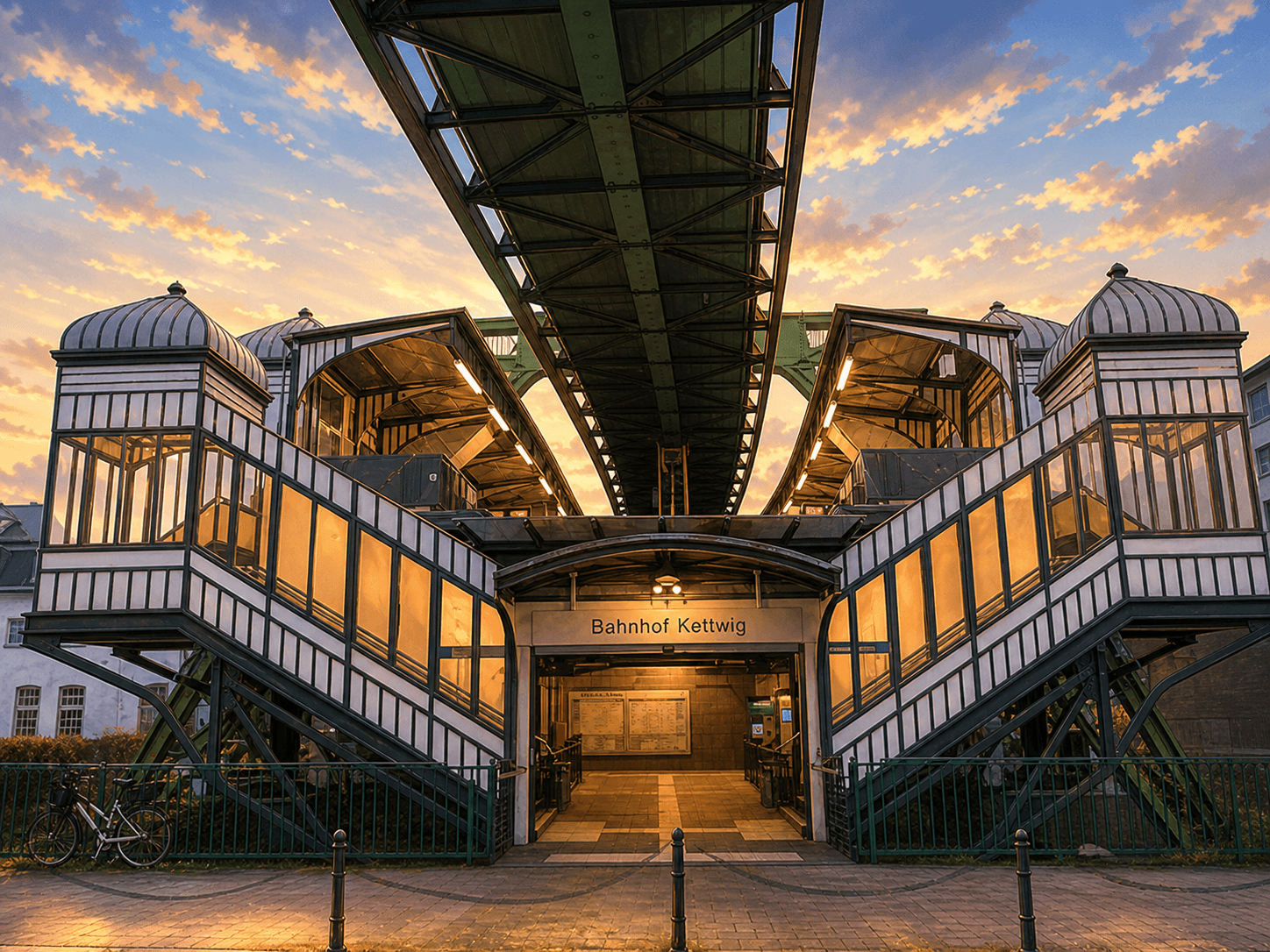
March 2026 brought decisive developments in Wuppertal regarding BUGA preparations, the budget plan for the district council Langerfeld-Beyenburg, and investment planning by the city. Learn what is particularly relevant for citizens.
BUGA 2031 – Preparations in the Final Stretch
BUGA 2031 is in full swing in Wuppertal. In March 2026, the founding meeting of the BUGA 2031 Planning Advisory Board was held, chaired by Mayor Miriam Scherff. Marc Schulz was unanimously appointed as secretary. Three citizen proposals, concerning topics such as parking concepts, collaborations, and future use of the Homannstraße Bridge, were rejected.
In terms of project progress, five urban development planning procedures were initiated, a city-building competition with a second prize winner was awarded, and the landscape planning competition was concluded with "relais Landschaftsarchitekten" as the winner. The mobility concept is in its final phase and is expected to be completed in the third quarter of 2026.
Non-public agenda items addressed property matters, future core areas, sustainability topics, and digital concepts. Citizen participation continues to be a central element of the planning process.
Budget Planning in the District Council Langerfeld-Beyenburg
The district council Langerfeld-Beyenburg has postponed the draft budget for 2026/2027 and the budget assurance concept (HSK) until March 16, 2026, to allow for further discussions within the factions and committees. The draft budget shows a deficit of 157.6 million euros for 2026 and 157.4 million euros for 2027. The city's credit obligations are expected to rise to 3.3 billion euros by 2030.
The HSK is mandatory under § 13 (1) of the NRW Local Government Budget Regulation and will be adopted in a council meeting in January 2026. The draft budget is available online and is expected to be finalized in a council session on March 16, 2026.
Investment Planning and Backlog of Renovations in the Building Stock
The operational committee of the Real Estate Management Office (GMW) addressed the approval of the management team for 2024 and the economic plan for 2026 in March 2026. The approval was granted unanimously. The backlog of renovations in the municipal building stock amounted to around 150 million euros as of the end of 2024.
The 2026 economic plan reflects the current status of project planning, including investment and consumption financial volumes as well as personnel capacity. Investment measures are prioritized according to criteria such as legal obligations, profitability, and personnel resources.
Concrete planning for new projects such as a bicycle parking facility, a museum, or VIP areas is not yet available. Fire protection measures at schools and container modular solutions are already in the planning phase. The rent calculation process is divided into three phases, and a unified project handbook for cost-saving potential analysis is being gradually integrated into projects.
Overview: What Was Important This Month
- BUGA 2031: Preparations in the final stretch, projects and mobility concepts in the final phase.
- Budget Planning: District council Langerfeld-Beyenburg postponed the draft budget until March.
- Renovation Backlog: Municipal building stock with approximately 150 million euros in renovation needs.
- Investment Planning: Prioritization based on criteria such as profitability and legal obligations.
- Citizen Participation: Active involvement in BUGA planning, including in non-public areas.
Trends and Challenges
March 2026 shows that Wuppertal is strongly focused on BUGA 2031, but also faces structural challenges such as the budget deficit and renovation backlog. The prioritization of investments and compliance with financial guidelines are crucial for the city's future viability.
At the same time, citizen participation remains a central aspect, especially in BUGA planning. The challenge lies in communicating transparently while ensuring long-term planning security.
Conclusion and Outlook
March 2026 was marked by progress in BUGA preparations, but also by challenges in budget planning and investment strategy. It is important that Wuppertal implements the planned projects in the coming months and minimizes financial risks through clear planning and prioritization.
With BUGA 2031, Wuppertal is moving into the spotlight as a cultural and urban center. The coming months will show whether the planning is sustainable in implementation and whether citizens are actively involved.
NeoSearch analyses public council documents, committee minutes and municipal announcements. Source references appear automatically once verified meeting data is available.
What does this mean for businesses?
Urban development, zoning plans and commercial settlements create early construction and supply opportunities. Following council decisions reveals projects before they go to tender.
Track similar decisions in your region
Set up monitoring for economic development in Nordrhein-Westfalen — prefilled from this article.
Set up monitoring →More signals from Wuppertal
Sport Policy in Wuppertal: Renovations, Rehabilitation Sports, and AI in April 2026
In April 2026, Wuppertal focused on key decisions regarding its sports infrastructure and promotion. The Sports Committee approved renovation measures for several swimming pools, discussed rehabilitation sports offerings, and laid the first groundwork for the introduction of AI in the Schwimmoper. An overview.
Read more → Wuppertal: Financial Policy in Focus – Replacement of the Executive Board and Budget Process in April 2026
In April 2026, Wuppertal made important decisions in the area of finance and budgeting. The City Council decided on the replacement of the head of the financial administration within the Executive Board, with political debates and amendment proposals influencing the process. This article highlights the background, decisions, and implications of these processes.
Read more → Wuppertal in April 2026: A Mobility Debate in Transition
In April 2026, numerous topics in the field of mobility were at the center of attention in Wuppertal: station modernizations, replacement rail traffic, bicycle infrastructure, and traffic calming measures. Numerous citizen proposals and infrastructure projects show how the city is responding to challenges in the transportation sector.
Read more →