Wuppertal April 2026 – Monthly Review and Current Developments
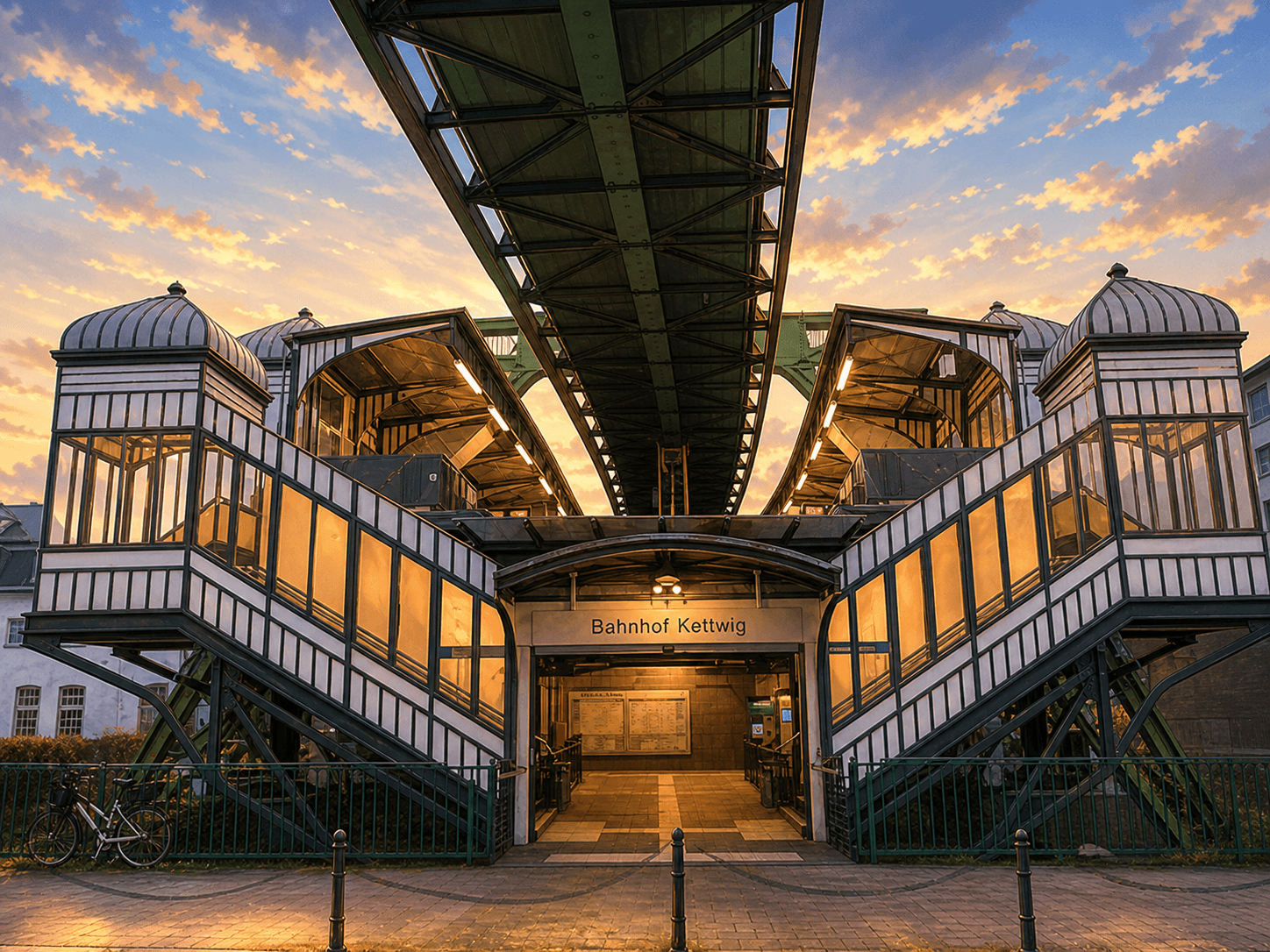
In April 2026, Wuppertal made important decisions in the areas of urban development, education, infrastructure, and integration. Here is an overview of the central topics and projects shaping the city.
Wuppertal Focuses on the Future and Sustainability in April 2026
What Was Important This Month
- New Construction and Renovation in Urban Development: Several amendments to zoning plans were approved, including the construction of new elevators in Oberbarmen and the renovation of the Fischertal Bridge.
- Education and Childcare in the Spotlight: Key decisions were made regarding the expansion of after-school programs and school development planning.
- Integration Remains a Challenge: Wuppertal exceeds the required quota for refugee admissions, but integration courses are being reduced due to federal funding cuts.
- Climate Protection and Heat Planning: The municipal heat plan was approved to make Wuppertal’s heating supply more climate-friendly.
- Infrastructure Projects in Motion: From train stations to playgrounds and bridges, the city is investing in its future transport and leisure infrastructure.
Urban Development and Construction: New Directions for Wuppertal
April brought several important decisions in urban planning. Several zoning plan amendments were unanimously or with broad majority approved, aiming to create new residential and commercial districts in the districts of Hilden, Uellendahl, and Elberfeld. Due to rising costs, the redesign of the Werth site was decided and will serve as a central leisure and recreation area in the future.
Special attention was given this month to the updated sewage disposal ordinance, which was unanimously revised. In addition, a proposal for a statement of position was drafted against the possible closure of the Department of Architecture at Bergische Universität Wuppertal to secure the city’s academic standing.
Education and Schools: On the Way to a City with Full-Day Services
In education policy, Wuppertal focused this month on expansion and inclusion. The decision to increase class sizes at the vocational college in Barmen was made to meet growing demands for vocational training. At the same time, the Open After-School Care (OGS) is being expanded to ensure that all children have a legal right to a full-day place by 2026/27. However, 4,460 additional places are currently missing, indicating increased demand and capacity constraints.
Milestones were also reached in school development planning. The final report was unanimously approved, and the school construction coordination now has the task of developing a first school construction program. In the long term, however, capacity constraints are still expected in primary and lower secondary levels, especially in grammar and comprehensive schools.
Integration and Refugee Policy: Challenges Remain
Wuppertal remains a city with a high level of refugee admissions in April 2026: With 7,938 refugees, including 7,468 from Ukraine, the city exceeds the mandatory refugee admission quotas. While this has contributed to a strong social diversity, it has also placed a strain on municipal resources.
The Free Voters faction called in this month for a halt to refugee admissions until the 100% quota is reached. At the same time, integration courses for around 600 people are being canceled due to federal funding cuts. Instead, B2 language courses for medical professions will be offered to provide refugees with better career prospects.
Environment, Climate, and Sustainability: Wuppertal Invests in the Future
The municipal heat plan is another milestone in the city’s climate policy. It includes measures such as district heat officers, heat networks, and integration into the land use plan to make the city’s heating supply greenhouse gas neutral by 2050. The updated sewage disposal ordinance was approved unanimously, showing that the municipality is committed to sustainability.
The fifth round of noise mapping is currently in implementation, and the noise action plan is expected to be completed by Q3 2027. In addition, public participation in the heat planning process was ensured through information forums, workshops, and digital platforms — a clear step toward greater citizen involvement.
Transport and Infrastructure: Building for the Future
In the transport sector, concrete planning steps were taken this month. The general renovation of the railway line from Hagen to Wuppertal to Cologne, which will last until the end of 2027, is well underway. Four Wuppertal train stations are being modernized, including the construction of 17 new elevators in Oberbarmen.
In addition, renovation work on several bridges was planned, including the Fischertal Bridge, which will be fully closed for 2–4 weeks. The coordination of municipal construction sites remains a key issue, as responsibility for federal roads and motorways lies with Straßen NRW and the Autobahn GmbH.
Sports and Leisure: Investment in Quality of Life
In the field of sports and leisure, decisions were made this month that aim to improve the quality of life for Wuppertal residents. The renovation of the Uellendahl public bath was approved with a budget of 5.72 million euros. In addition, playgrounds and football fields in several districts were renovated, including in Murmelbachtal, showing that the city is also taking the needs of its youngest citizens into account.
Integration and Accessibility: More Inclusion in the City
In the district councils, several projects to promote accessibility were approved, including the purchase of wooden houses for the Oberwall kindergarten and the development of a concept to improve public toilets. In addition, the new layout of the Murmelbachteich park area was approved, significantly expanding leisure opportunities in this district.
Outlook and Conclusion
April 2026 was a month marked in Wuppertal by concrete planning steps, investments in the future, and the addressing of current challenges. The city is focusing on sustainability, inclusion, and modern infrastructure. At the same time, issues such as refugee policy, educational shortages, and the funding of integration measures remain challenges that will continue to be in focus in the coming months.
May will center on the BUGA 2031 — an opportunity to present Wuppertal as a green and livable city. The city is on an exciting course that will lead it into the future.
NeoSearch analyses public council documents, committee minutes and municipal announcements. Source references appear automatically once verified meeting data is available.
What does this mean for businesses?
Urban development, zoning plans and commercial settlements create early construction and supply opportunities. Following council decisions reveals projects before they go to tender.
Track similar decisions in your region
Set up monitoring for economic development in Nordrhein-Westfalen — prefilled from this article.
Set up monitoring →More signals from Wuppertal
Sport Policy in Wuppertal: Renovations, Rehabilitation Sports, and AI in April 2026
In April 2026, Wuppertal focused on key decisions regarding its sports infrastructure and promotion. The Sports Committee approved renovation measures for several swimming pools, discussed rehabilitation sports offerings, and laid the first groundwork for the introduction of AI in the Schwimmoper. An overview.
Read more → Wuppertal: Financial Policy in Focus – Replacement of the Executive Board and Budget Process in April 2026
In April 2026, Wuppertal made important decisions in the area of finance and budgeting. The City Council decided on the replacement of the head of the financial administration within the Executive Board, with political debates and amendment proposals influencing the process. This article highlights the background, decisions, and implications of these processes.
Read more → Wuppertal in April 2026: A Mobility Debate in Transition
In April 2026, numerous topics in the field of mobility were at the center of attention in Wuppertal: station modernizations, replacement rail traffic, bicycle infrastructure, and traffic calming measures. Numerous citizen proposals and infrastructure projects show how the city is responding to challenges in the transportation sector.
Read more →