Redesign of the Apostelgarten: A New Living Space for Münster’s City Center
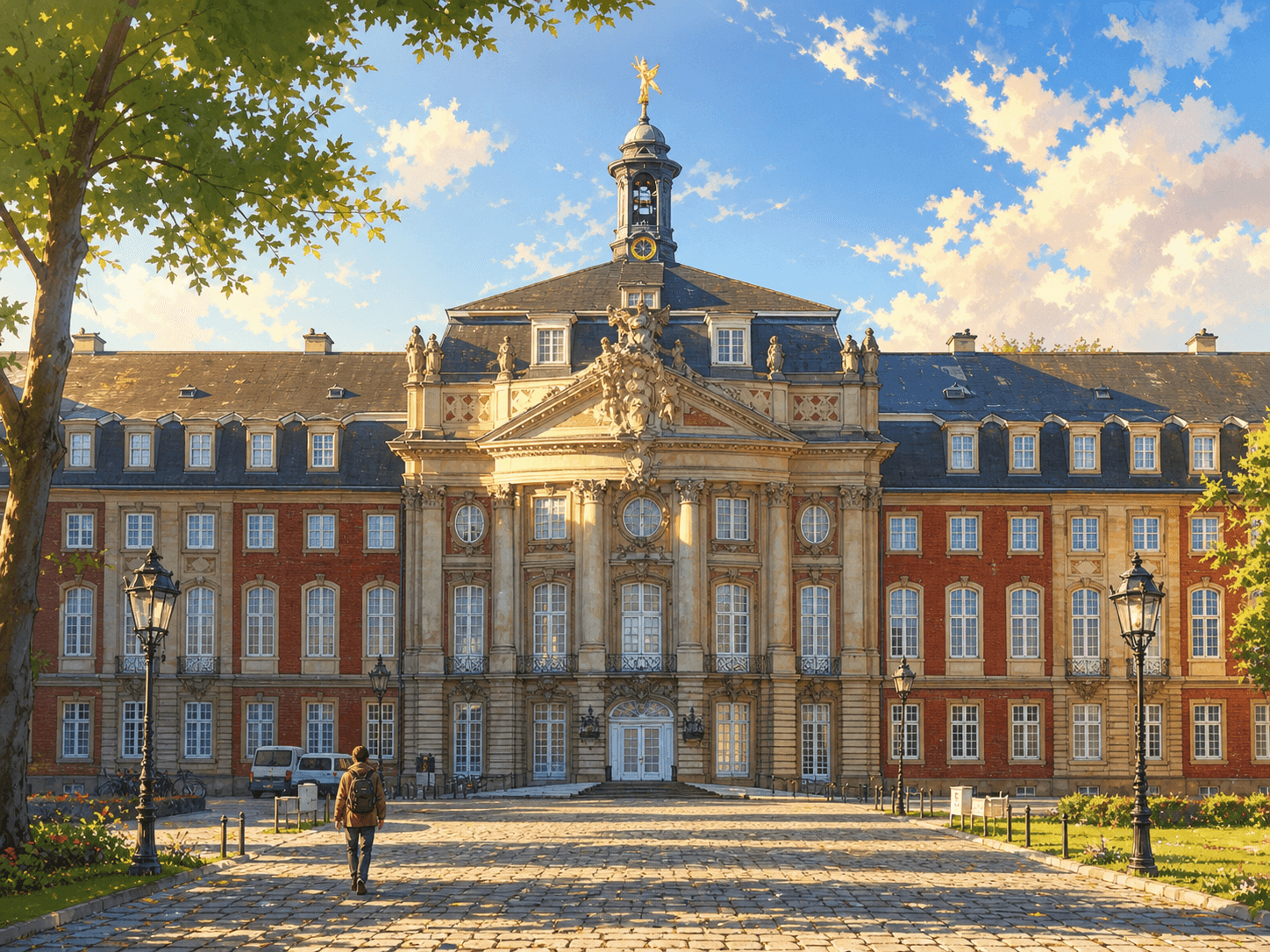
The Apostelgarten in Münster’s Old Town is the focus of a comprehensive and participatory redesign. A key step in the planning process will take place in February 2026. We analyze the background, objectives, and next planning steps.
A New Living Space for Münster’s City Center
The Apostelgarten, an area previously little known between Bergstraße, Bogenstraße, and the Apostelkirche in Münster’s Old Town, is at the center of a comprehensive urban redevelopment. The car park, which has mainly been used for resident parking permits, is to be transformed into a multifunctional place for staying and relaxing. The goal is to make the space accessible, barrier-free, and climate-appropriate for all generations and population groups.
Participation as a Key to Planning
The planning process for the Apostelgarten has been strongly participatory from the outset. In 2024, a process was launched in close cooperation with the Evangelical Apostelkirchengemeinde, Kiepenkerl e.V., local residents, experts, politicians, and civil society. In May 2025, the so-called “Apostelgarten Dialogue” took place – a five-day participation campaign with a participation market, expert discussions, and an online portal.
The results of this dialogue were incorporated into a draft, which was published in November 2025. Citizens contributed suggestions for inclusive use, sustainable planting, safety measures, and alternatives to resident parking. Not all suggestions could be implemented, but they significantly contributed to shaping the new concept.
Conceptual Focus of the Redesign
The overarching goal of the redesign is to transform the Apostelgarten into a green, multifunctional, and inclusive living space. The draft proposes a division into different usage areas that complement each other harmoniously. These include:
- Catering areas, which will be visually and functionally integrated into the Apostelgarten.
- Polygonal planting islands, which are ecologically valuable, climate-appropriate, and shape the space.
- An Apostelkirchplatz, serving as a central open space and equipped with a modern water feature and water-bound paving.
- A barrier-free access with seating edges, wooden platforms, and ergonomic backrests.
- A historical strip made of natural stone blocks, providing information about local history and also serving as seating.
In addition, the church garden will be redesigned to strengthen the connection to the Apostelgarten and highlight the west portal area of the Apostelkirche. The lighting will be designed to be insect-friendly, energy-efficient, and anxiety-reducing. Waste bins, drinking water fountains, and bicycle parking spaces will complement the offering.
Funding and Next Steps
The redesign of the Apostelgarten is part of the INSEK Münster-Innenstadt (Integrated Urban Development Concept), which was adopted in 2023. The goal of the INSEK is the long-term, future-oriented development of the city center. The Apostelgarten is defined as a key area in this context.
Funding is provided by federal and North Rhine-Westphalia urban development funds. An urban development application was submitted in September 2024 and approved in the summer of 2025. By summer 2027, the planning for the Apostelgarten and other city center squares must be completed up to the 6th performance phase of the HOAI.
In February 2026, the Commission for the Promotion of Inclusion of People with Disabilities in Münster will be convened for a meeting that will also address the Apostelgarten. In addition, the Münster City Council will be informed about the further planning steps in the coming weeks.
Outlook: A New City Center Space for Everyone
The Apostelgarten will not only be an urban architectural highlight but also a central social and cultural meeting place in the Old Town. With its redesign, Münster will send another signal for sustainable, inclusive, and participatory urban development. The focus on climate justice, barrier-free access, and green space development makes the Apostelgarten a model for similar projects in other cities.
NeoSearch analyses public council documents, committee minutes and municipal announcements. Source references appear automatically once verified meeting data is available.
What does this mean for businesses?
Urban development, zoning plans and commercial settlements create early construction and supply opportunities. Following council decisions reveals projects before they go to tender.
Track similar decisions in your region
Set up monitoring for economic development in Nordrhein-Westfalen — prefilled from this article.
Set up monitoring →More signals from Munster
Culture and Community in Münster: Theater and Historical Preservation in Focus
In April 2026, important decisions and developments in the field of culture and community were at the center of attention in Münster. The Cultural Committee intensely addressed the future of Theater Münster and the expansion of the expert advisory board for the historical site Villa ten Hompel.
Read more → Münster's Youth Policy in April 2026: Leisure Spots, Demonstrations, and Future Visions
In April 2026, youth policy topics such as leisure meeting points, demonstrations, and collaborations with political parties were at the center of the Youth Council's focus in Münster. This deep dive reveals which decisions were made and what challenges remain.
Read more → Münster Invests in Resuscitation and Care: Where State, Technology, and Society Must Collaborate
In April 2026, Münster will discuss key measures to strengthen the resuscitation chain and care provision. The goal is to increase survival rates in cases of cardiac arrest while securing the care infrastructure for the future.
Read more →