Culture and Community in Münster: Theater and Historical Preservation in Focus
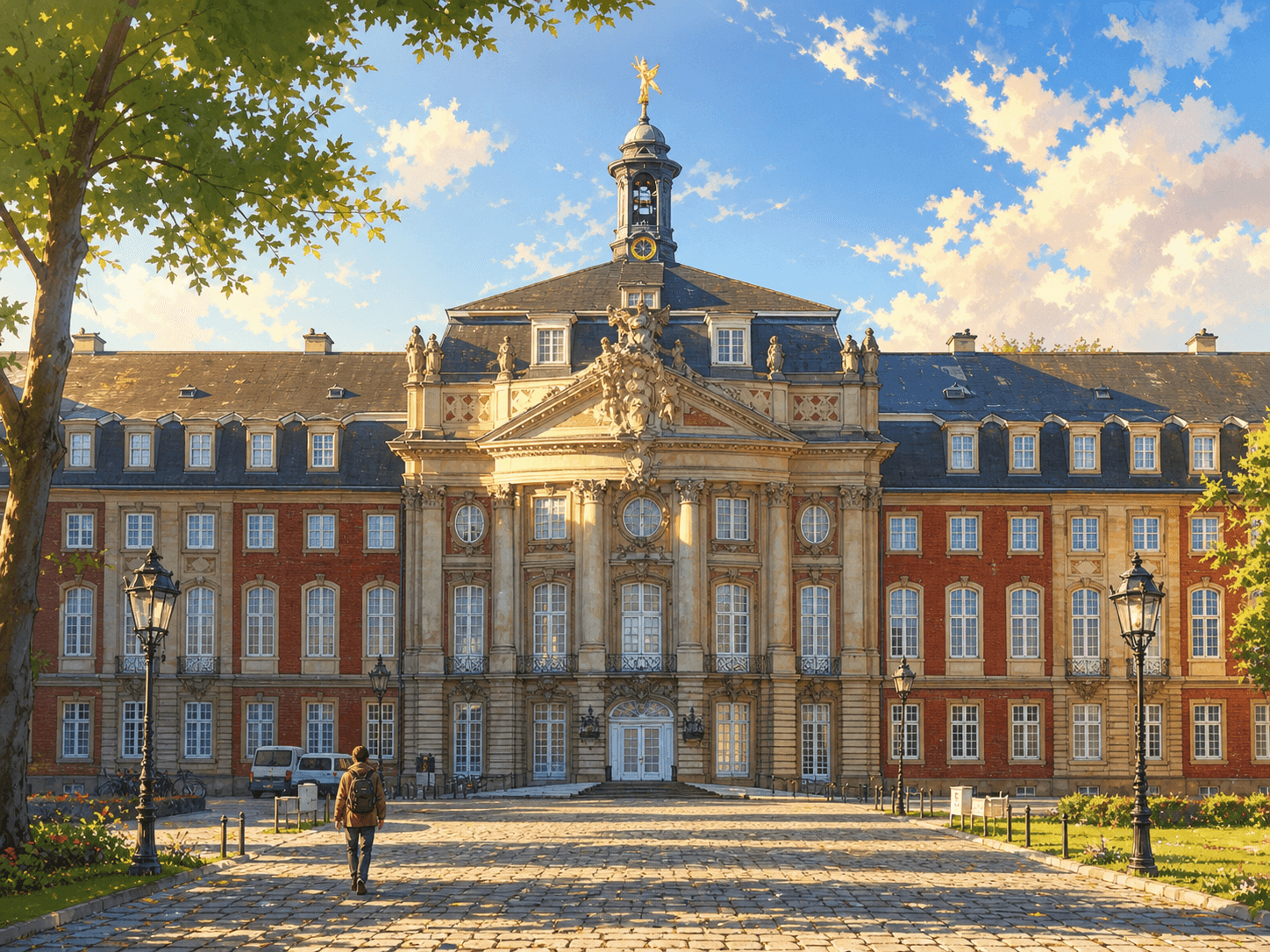
In April 2026, important decisions and developments in the field of culture and community were at the center of attention in Münster. The Cultural Committee intensely addressed the future of Theater Münster and the expansion of the expert advisory board for the historical site Villa ten Hompel.
Theater Münster: Between Funding, Cost Coverage, and Future Prospects
Theater Münster remains a central actor in the city's cultural life. In the 2024/2025 season, it attracted a total of 117,861 visitors to its stages, with a cost coverage rate of 20.39%. A slight decline compared to the previous year, but one that must be understood within the long-term recovery process following the Corona pandemic.
The city has established the theater as an institution similar to a self-operating enterprise, meaning it enjoys a certain degree of financial independence but still relies on external funding. The budget for the 2025/2026 season already shows a deficit of 1,198 TEUR, and without measures, the equity capital is expected to drop below 400,000 EUR by 2026/2027.
Financial support from the city is therefore crucial. However, the new management contract from 2027/2028 plans a reduction in municipal subsidies of approximately 1.1 million EUR. To ensure financial stability, an external economic and organizational review is planned. The goal is to further develop the repertoire and increase visitor numbers to 200,000 by 2026/2027 – a challenge that requires both cultural and economic strategy.
The Cultural Committee: Decision-Making Body for Cultural Policy
On April 15, 2026, the Cultural Committee met in Neubrückenstraße, directly at Theater Münster. The meeting focused on several key issues: the approval of the theater's annual financial statement, the presentation of the repertoire for the coming years, and the appointment of PD Dr. Imanuel Baumann to the expert advisory board of Villa ten Hompel.
The annual financial statement for the fiscal year 2024/2025 was audited by the auditing firm BDO Concunia and showed a deficit of over 443,000 EUR. Despite the financial difficulties, the managing director was cleared of responsibility. The audit for the fiscal year 2025/2026 was assigned to the CURACON GmbH – a sign of the city's continued attention to the financial transparency and stability of the theater.
Expert Advisory Board Villa ten Hompel: New Expertise for Historical Preservation
Another focus of the Cultural Committee was the appointment of PD Dr. Imanuel Baumann to the expert advisory board of the historical site Villa ten Hompel. The historian brings extensive experience in NS research and memorial site work. Most recently, he led the Documentation Center of the Nuremberg Party Rally Grounds and is a member of the network "Against Forgetting For Democracy."
The appointment was made on the recommendation of the current advisory board members and underscores the importance of scientific expertise for the work at Villa ten Hompel. The expert advisory board acts as a consultative body for the City Council, the Cultural Committee, and the leadership of the historical site. It provides impulses from a scientific perspective and supports the work at the Villa, which serves as a place of remembrance and clarification of the NS era.
Future of Cultural Policy in Münster
The developments in April 2026 show that Münster views its cultural institutions not only as leisure offerings, but as central elements of community and memory culture. Theater Münster is facing financial challenges that, however, are to be overcome through strategic planning, external reviews, and a clear repertoire development. At the same time, historical preservation is strengthened by the inclusion of experts such as Dr. Imanuel Baumann, thereby further profiling the Villa ten Hompel as a central site for historical analysis.
Münster thus demonstrates that cultural policy is not only about the theater, but also about social identity, remembrance, and future shaping – topics that were discussed and decided on in the city in April 2026.
NeoSearch analyses public council documents, committee minutes and municipal announcements. Source references appear automatically once verified meeting data is available.
What does this mean for businesses?
Municipal council decisions are early indicators: following the council agenda surfaces projects and tenders months before the official award — before they ever reach the procurement portals.
Track similar decisions in your region
Set up monitoring for Culture and Community in Nordrhein-Westfalen — prefilled from this article.
Set up monitoring →More signals from Munster
Münster's Youth Policy in April 2026: Leisure Spots, Demonstrations, and Future Visions
In April 2026, youth policy topics such as leisure meeting points, demonstrations, and collaborations with political parties were at the center of the Youth Council's focus in Münster. This deep dive reveals which decisions were made and what challenges remain.
Read more → Münster Invests in Resuscitation and Care: Where State, Technology, and Society Must Collaborate
In April 2026, Münster will discuss key measures to strengthen the resuscitation chain and care provision. The goal is to increase survival rates in cases of cardiac arrest while securing the care infrastructure for the future.
Read more → Münster in April 2026: Urban Development at the Crossroads of Preservation, Sustainability, and Growth
In April 2026, Münster took decisive steps in urban development. The city addressed a wide range of topics – from integrating renewable energies in protected historic areas to rethinking retail. Below is an overview of the key developments and their significance for the city's future.
Read more →