Urban Development in Bocholt: Urban Planning, Mobility, and Climate in March 2026
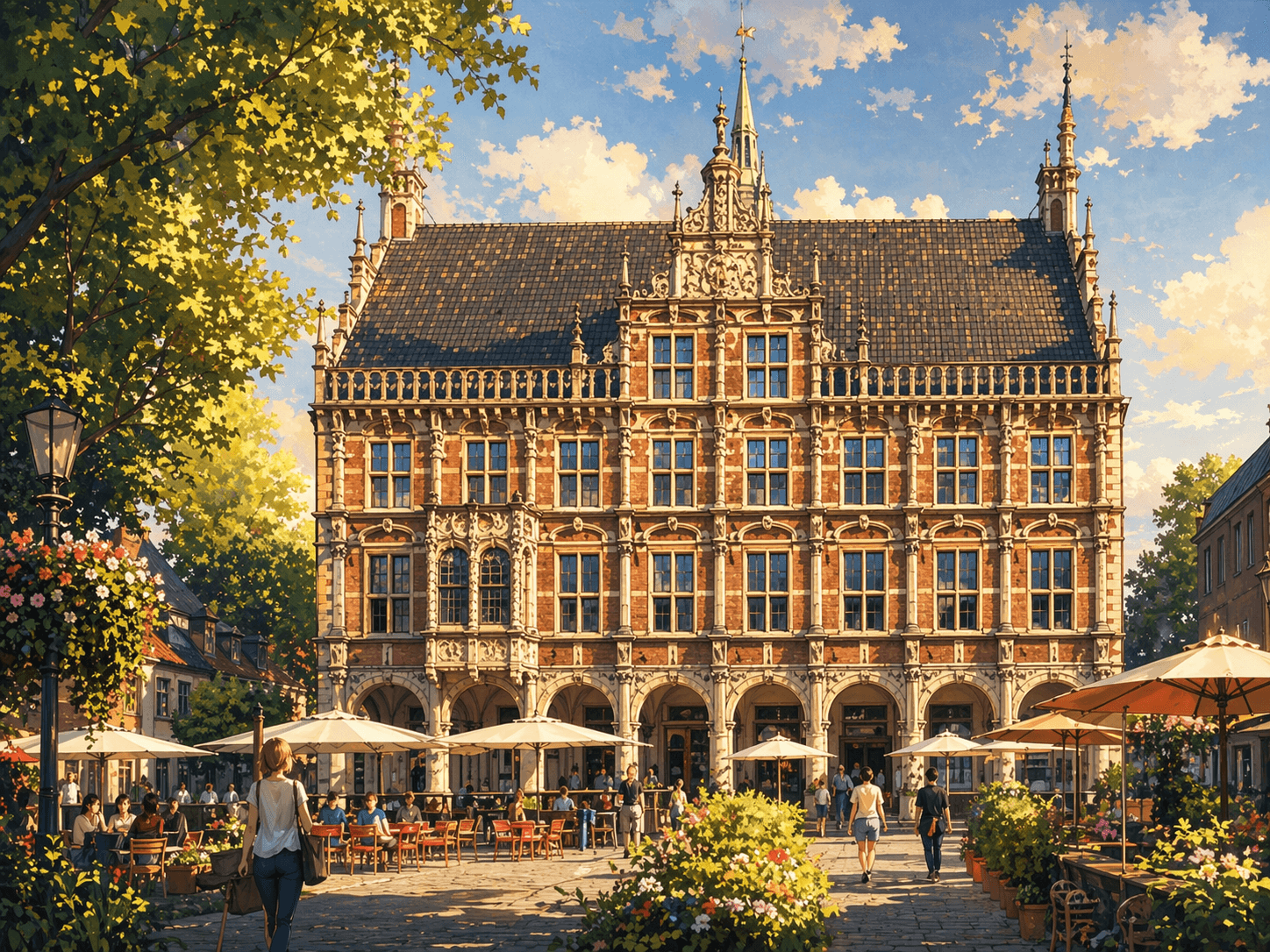
In March 2026, Bocholt made a wide range of decisions on urban development and urban planning. The focus was on changes to building regulations, mobility projects, and climate protection measures – with long-term effects on the city structure, traffic, and sustainability.
Urban Development in Bocholt: Urban Planning, Mobility, and Climate in March 2026
The city of Bocholt has engaged intensively in March 2026 with its future as a vibrant, sustainable, and traffic-friendly city on multiple levels. At the center were changes to building regulations, the development of mobility, and climate protection measures. The decisions range from the design of urban centers to infrastructural improvements in cycling and pedestrian traffic – with a clear focus on sustainability and inner-city development.
Urban Planning: From the City Center to the Industrial Area
Bocholt passed several changes to building regulations in the meeting of the Committee for Planning, Construction, and Transport on March 18, 2026, which will shape the city’s development in the coming years. A central project was the Third Amendment to Building Plan K 10 in the city center. This plan affects the district around Markt 8 and the Manes-Schlatt-Platz and aims at creating an urban mix of residential, commercial, catering, and cultural uses.
The planning followed the accelerated procedure under § 13a of the Building Code (BauGB) and considers climate protection aspects such as roof greening, sealing reduction, and emission reduction through a basement garage. The construction regulations are strict: a maximum of four floors, a ground floor area ratio of 1.0, and a floor area ratio of a maximum of 3.0. In addition, façades made of red-brown brick are prescribed, with up to 20% alternative materials.
Another project was the Seventh Amendment to Building Plan 7-N1 along the Werther Straße. The goal was to strengthen inner-city development and to make use of non-buildable areas. Particularly noteworthy is the requirement for roof greening on flat roofs as well as the inclusion of noise protection measures. The planning also considers the requirements of the Climate Protection Concept 3.0 and promotes greater biodiversity through ecological measures.
Mobility: Bike Lanes, Roads, and Increased Traffic Safety
Mobility development in Bocholt has become significantly more sustainable. In March, several projects were approved to strengthen cycling and increase traffic safety. The reconstruction of the roundabout at Franzstraße/Ruhrallee is a central project. Here, cyclists will in the future be guided together with motor vehicles on the roundabout, significantly improving traffic safety for cyclists and pedestrians.
Further projects concern the Aaradweg and the Hemdener Weg, where wider bike lanes and barrier-free sidewalks are planned. In the Hemdener Weg, a conversion to a bike street is also planned, which will be financed through funding. The city has also decided to expand the Aaradweg between Westring and Lowick to a minimum width of 2.50 meters to strengthen the cycling infrastructure and reduce CO₂ emissions from individual traffic.
Another highlight is the reconstruction of the bus stop at the Fachhochschule into a mobility station. It will be equipped with waiting shelters, bike boxes, and tactile guidance systems and is intended to serve as a multimodal hub. The costs for this project are estimated at 890,000 euros, with 90% covered by funding.
Climate Protection: Greening, Roofs, and CO₂ Reduction
In the course of urban planning and mobility measures, Bocholt has clearly focused on climate protection. The EU Regulation on the Restoration of Nature (WVO) has sparked an intense discussion on measures such as sealing reduction, green roofs, and new plantings. These topics are anchored in several building plans, such as Building Plan 10-14 (New Center Stenern), which prescribes mandatory roof and façade greening.
In addition, the city decided in March to increase the share of cycling to 45% (currently 41%). This increase would mean about 20,000 fewer car trips per day – a clear CO₂ reduction. Further measures include the preservation of hawthorn trees along cycle paths and the examination of bike bridges over rivers to further expand the infrastructure.
Financing and Investments
Financing the projects is a decisive aspect. Bocholt is relying strongly on grants. For example, the expansion of the Aaradweg is supported by 590,000 euros in state funds, the mobility station at the Fachhochschule receives 90% funding, and the bike street in the Hemdener Weg is financed with 270,000 euros from North Rhine-Westphalia funding.
In addition, a real estate market report 2025 was presented, reflecting the development of the real estate market in Bocholt. According to this, the turnover amounted to 185 million euros, with a price index of 117.5 (base year 2020 = 100) and a median purchase price of 397,000 euros for freestanding houses.
Conclusion: A City in Transition
Bocholt is moving toward a sustainable, traffic-friendly, and climate-friendly urban development. The March decisions show that the city is not only focusing on growth, but also on high-quality planning, ecological responsibility, and social integration. With projects such as roof greening, the cycling network, and the strengthening of inner-city development, Bocholt has set a clear course for the future – one that is oriented towards innovation, sustainability, and quality of life.
NeoSearch analyses public council documents, committee minutes and municipal announcements. Source references appear automatically once verified meeting data is available.
What does this mean for businesses?
Municipal council decisions are early indicators: following the council agenda surfaces projects and tenders months before the official award — before they ever reach the procurement portals.
Track similar decisions in your region
Set up monitoring for Finance and Budget in Nordrhein-Westfalen — prefilled from this article.
Set up monitoring →More signals from Bocholt
Bocholt's Economic Development: Between Structural Change and Local Stabilization
In April 2026, key meetings of the Committee for Economy, Trade, and Tourism were in focus in Bocholt. Discussions surrounding the company Rent.Group/Partyrent Bocholt, the development of the city center, and Germany's economic situation reveal how the city is addressing the challenges of structural change and the decline in retail.
Read more → Legal Disputes in Bocholt: From the Cycling Expressway to the Aasee Festival
In April 2026, Bocholt faced several legal challenges. The discussion surrounding the planned cycling expressway RS2 and the security measures at the Aasee Festival highlight the need for complex and transparent decision-making in local governance.
Read more → Bocholt in April 2026: Climate and Environment in the Spotlight
In April 2026, several central topics from the fields of environment and climate were in focus in Bocholt. The Committee for Climate, Environment and Energy addressed photovoltaic projects, tree felling, and ecological measures at the Aasee. An overview of the decisions, background, and implications.
Read more →