Bielefeld's Urban Development 2026: From the City Center to the Neighborhood of the Future
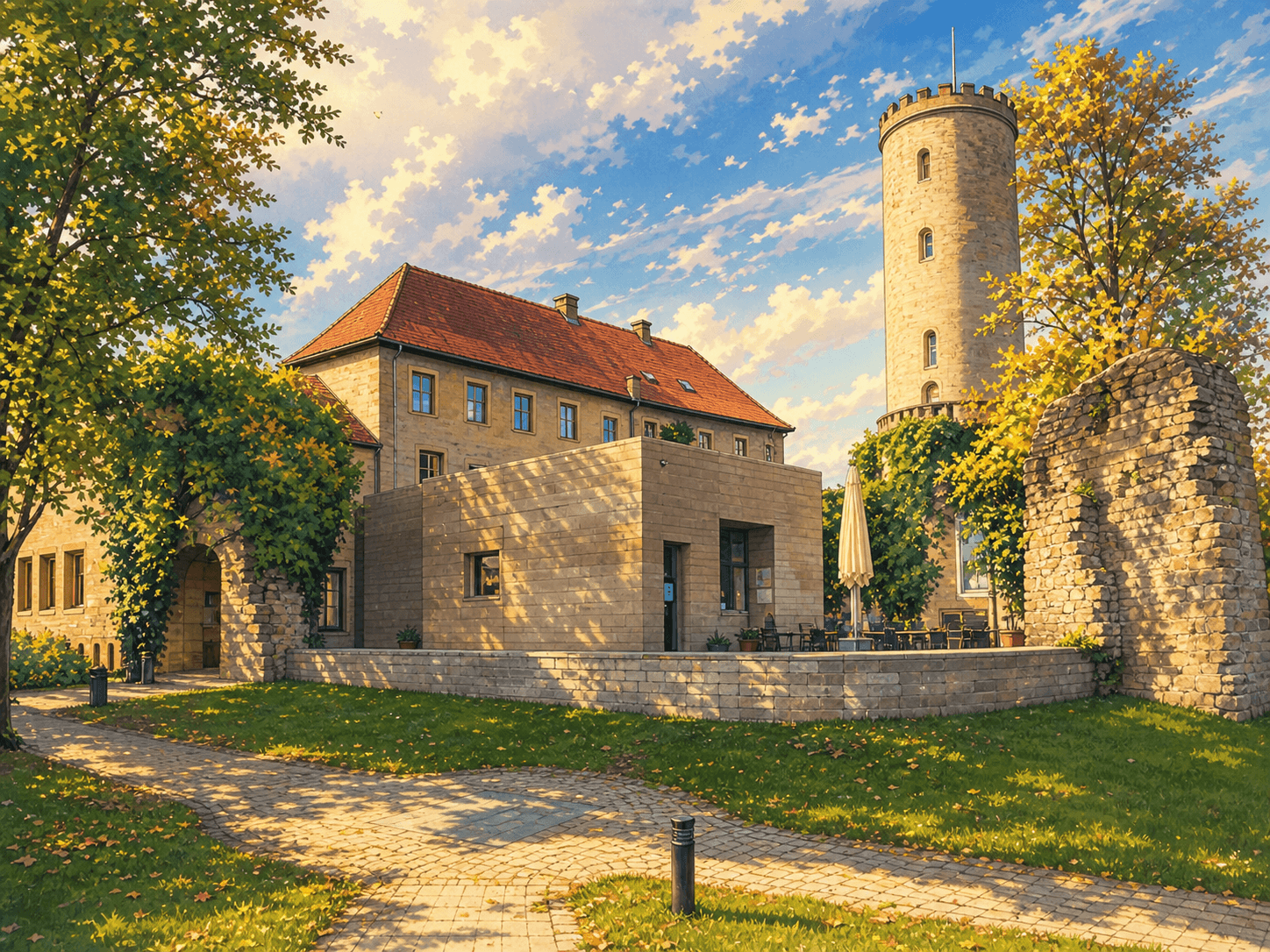
In May and June 2026, Bielefeld took decisive steps in urban development – from joining NRW.URBAN to the general renovation of the Kunsthalle and the redesign of the Karstadt site. The focus was on sustainability, mobility, and social housing.
Bielefeld's Urban Development 2026: A Review of the Second Quarter
In May and June 2026, Bielefeld set the course for future urban development through a wide range of decisions and plans. The city focused on the preservation of historical structures as well as on modern, sustainable approaches. Particularly noteworthy are the plans for the former Karstadt site in the city center, the general renovation of the Kunsthalle, and measures to strengthen public local transport.
Neighborhood Development: A New Beginning in the City Center
The most significant urban development decision of the quarter was the redevelopment of the former Karstadt department store on Bahnhofstraße. After several meetings of the Urban Development Committee, a development plan was approved that will transform the site into a multifunctional "City Quarter." The goal is to create a vibrant mix of retail, gastronomy, hotel, and residential uses.
Building Plan No. 02.1 stipulates that the quarter will be divided into 3 to 5 independent sub-volumes, each distinguished by its materials, color, and design. The facades will consist of natural stone, shell limestone, and brick, harmoniously integrating into the surrounding Bahnhofstraße, Friedenstraße, and Arndtstraße. The planning also includes green roofs, inner courtyards, and a plaza to enhance the quality of public space.
In addition, the development will include a hotel with up to 200 rooms, restaurants, senior housing, and service apartments. The infrastructure will include an underground garage with 100 parking spaces, a fitness terrace, and a sky bar. The realization of the project is planned for the coming years, with a focus on climate neutrality and sustainability – such as the use of CO₂-reduced building materials and photovoltaic systems.
Culture and Education: The Kunsthalle Is Being Renovated
Another significant project is the general renovation of the Kunsthalle Bielefeld. On June 30, 2026, a decision was made to proceed with variant C of the renovation plan (without expansion). With a budget of 44.7 million euros, the existing buildings will be restored in a manner consistent with their heritage status, while creating additional space for cultural education and exhibition areas.
The architects Caruso St John Architects AG have been commissioned to carry out the planning. Construction is expected to begin in 2028 and will last two years. The renovation will not only be a cultural milestone but also a step towards strengthening the cultural identity and quality of life in Bielefeld.
Mobility and Public Transport: Expansion of the Public Transport Network
In the field of transport and mobility, Bielefeld set priorities in the second quarter of 2026 to strengthen public local transport. In 2026, the city received a public transport lump sum of 4,066,717.02 euros, of which 813,200 euros will be used for municipal measures such as barrier-free bus stops and 3,253,500 euros will be paid as an operating cost subsidy to moBiel GmbH.
In addition, an early transport network was developed that will reach 14,000 new residents and include 57 new stops. The forecast for passenger numbers suggests an increase to 157,000 per year. In the accident analysis committee, 9 accident hotspots were analyzed to improve safety in local transport.
Social Infrastructure and Housing: For All Population Groups
In the area of housing and social infrastructure, Bielefeld focused on the creation of affordable and social housing. For example, housing entitlement certificates were discussed and rent controls were acquired. In addition, urgent classroom space requirements at several primary and secondary schools were met using modular wooden classroom units.
Another central topic was the redesign of Ravensberger Park. A landscape architectural competition was announced, and the first proposal by the jury (Club L94, Cologne) was commissioned to continue the planning. The goal is to make the park barrier-free, create play areas for children, and optimize the lighting.
Conclusion: Bielefeld on the Way to the Future
The decisions made in May and June 2026 show that Bielefeld is actively committed to a sustainable, livable, and diverse urban development. With a focus on neighborhood development, culture, mobility, and social housing, the city has set the course for a future-oriented development. The coming months will show how these plans can be implemented in reality.
NeoSearch analyses public council documents, committee minutes and municipal announcements. Source references appear automatically once verified meeting data is available.
What does this mean for businesses?
Municipal council decisions are early indicators: following the council agenda surfaces projects and tenders months before the official award — before they ever reach the procurement portals.
Track similar decisions in your region
Set up monitoring for kommunale Projekte in Nordrhein-Westfalen — prefilled from this article.
Set up monitoring →More signals from Bielefeld
Bielefeld's Kita Landscape: Structural Adjustments and Challenges in the Second Quarter of 2026
In May and June 2026, fundamental decisions about the future of the city's childcare facilities are set to be made in Bielefeld. Due to oversupply and demographic change, the administration plans closures and group reductions. At the same time, the focus will be strengthened on the quality of care, including nutrition and early childhood education.
Read more → Bielefeld's Environmental Services: Price Reforms, Budgets, and Climate Protection in Focus
In the second quarter of 2026, Bielefeld's Environmental Services made far-reaching price changes to adapt to rising costs. At the same time, the 2025 budgets were presented — a mix of surpluses and deficits. In this in-depth blog post, we analyze the background, effects, and goals of these decisions.
Read more → Bielefeld's Economic Strategy in the Restoration of the Kunsthalle
In the second half of 2026, the general restoration of the Kunsthalle Bielefeld came into the economic policy focus of the city. The Economic Promotion and Participation Committee engaged intensively with the financial and institutional implementation – also considering long-term economic promotion through culture.
Read more →