Bielefeld's Economic Strategy in the Restoration of the Kunsthalle
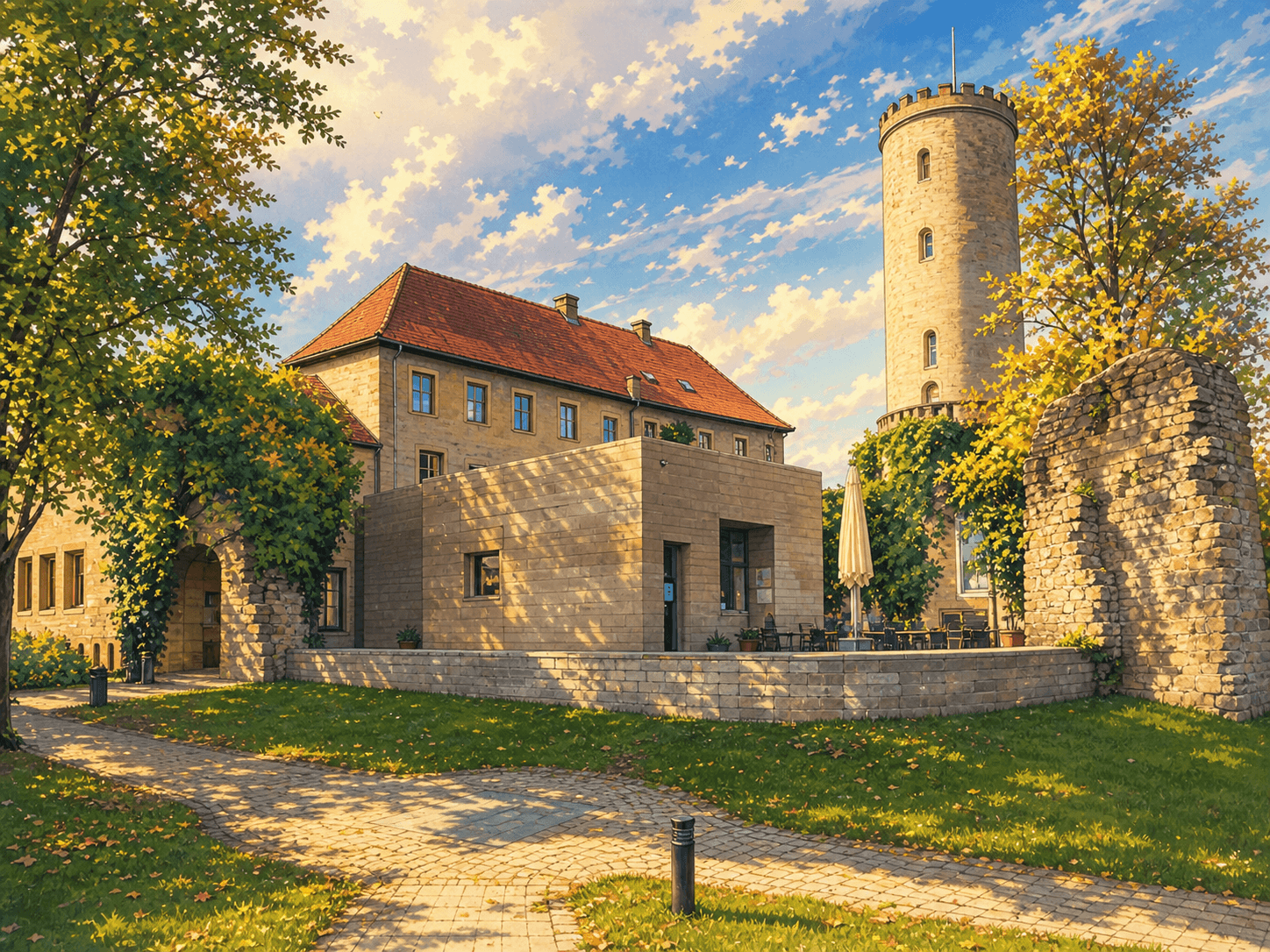
In the second half of 2026, the general restoration of the Kunsthalle Bielefeld came into the economic policy focus of the city. The Economic Promotion and Participation Committee engaged intensively with the financial and institutional implementation – also considering long-term economic promotion through culture.
Economic Impulses through Culture: The Restoration of the Kunsthalle Bielefeld
The Kunsthalle Bielefeld is not only a cultural heart of the city, but also a key player for the local economy. In May and June 2026, Bielefeld held intensive discussions on the museum’s general restoration – a project that encompasses not only artistic but also economic dimensions. The Economic Promotion and Participation Committee played a central role in this process, examining the costs, funding possibilities, and long-term structures in detail.
Financial Framework and Funding
The general restoration of the Kunsthalle Bielefeld is part of a long-term strategy to use culture as a driver of economic development. With costs of 44.7 million euros for variant C, currently considered the most economically viable option, the restoration is a project with significant financial implications. The property and services company (ISB) has already allocated funds in its economic plan, but the city also sees a crucial opportunity in applying for funding at state, federal, and EU levels.
In June 2026, the committee decided that the administration should submit a draft for the restoration by the end of 2026 at the latest – including a space and usage plan as well as a cost framework. In addition, a concept document is required by the end of the year, which is based on planning and financial fundamentals and enables a step-by-step implementation of the expansion.
The administration is tasked with making intensive use of funding programs such as "KulturInvest." Previously, a federal funding application failed due to insufficient planning. Now, other options are being examined – including third-party funding.
The Role of the Economic Promotion and Participation Committee
On June 11, 2026, a special session of the Economic Promotion and Participation Committee took place, involving several political groups. The general restoration was at the center, and amendment proposals from the CDU, SPD, FDP, Alliance 90/The Greens, and The Left were discussed. The decision to proceed with the restoration was eventually passed unanimously with abstentions.
Chair of the committee, Mayor Dr. Bauer, led the session, which took place in the council chamber of the New City Hall. The decision for variant C was not only a cultural, but also an economic policy step: it enabled an earlier start of construction and reduced the financial risk for the city budget.
Economic Impacts of the Restoration
The Kunsthalle Bielefeld is not only a cultural institution but also an economic beacon. A study shows that museums are location factors with high added value: every euro invested in museums generates 1.70 euros in added value, and through tourism-related spending, even 2.40 euros in additional turnover. The restoration is therefore not only an investment in the future of the Kunsthalle but also in the attractiveness of the entire city as a cultural and residential location.
The administration is also tasked with examining the possibility of establishing a foundation or association to ensure the long-term financial security of the Kunsthalle. This could also involve private investors and sponsors, thus broadening the economic horizon of the project.
Previous Developments
In March 2026, Bielefeld focused on topics such as social housing, traffic planning, and accelerated construction procedures in urban development. Important decisions were made, among others, on the city district plan, the bike lane, and participation in the OWL S-Bahn.
Conclusion: An Investment in the Future
The general restoration of the Kunsthalle Bielefeld is a project with far-reaching implications – not only for the museum itself, but also for the city's economic development. The decisions made in the second half of 2026 show that Bielefeld wants to strengthen its economic position through cultural impulses. With the selection of variant C, the establishment of a supporting working group, and the search for funding, the city has chosen a course that is both financially and strategically sustainable.
NeoSearch analyses public council documents, committee minutes and municipal announcements. Source references appear automatically once verified meeting data is available.
What does this mean for businesses?
Urban development, zoning plans and commercial settlements create early construction and supply opportunities. Following council decisions reveals projects before they go to tender.
Track similar decisions in your region
Set up monitoring for economic development in Nordrhein-Westfalen — prefilled from this article.
Set up monitoring →More signals from Bielefeld
Bielefeld's Kita Landscape: Structural Adjustments and Challenges in the Second Quarter of 2026
In May and June 2026, fundamental decisions about the future of the city's childcare facilities are set to be made in Bielefeld. Due to oversupply and demographic change, the administration plans closures and group reductions. At the same time, the focus will be strengthened on the quality of care, including nutrition and early childhood education.
Read more → Bielefeld's Environmental Services: Price Reforms, Budgets, and Climate Protection in Focus
In the second quarter of 2026, Bielefeld's Environmental Services made far-reaching price changes to adapt to rising costs. At the same time, the 2025 budgets were presented — a mix of surpluses and deficits. In this in-depth blog post, we analyze the background, effects, and goals of these decisions.
Read more → Education Policy in Bielefeld: Inclusion, Full-Day Schools, and Cultural Offerings in Focus
In the second quarter of 2026, Bielefeld prioritized decisions on school development planning, the promotion of inclusive educational offerings, and the renovation of the Kunsthalle (Art Hall). This blog analyzes the political debates, financial structures, and future challenges in the areas of education and public institutions.
Read more →