Mobility in Braunschweig: Safety, Traffic Adjustments, and Public Transport Developments in March 2026
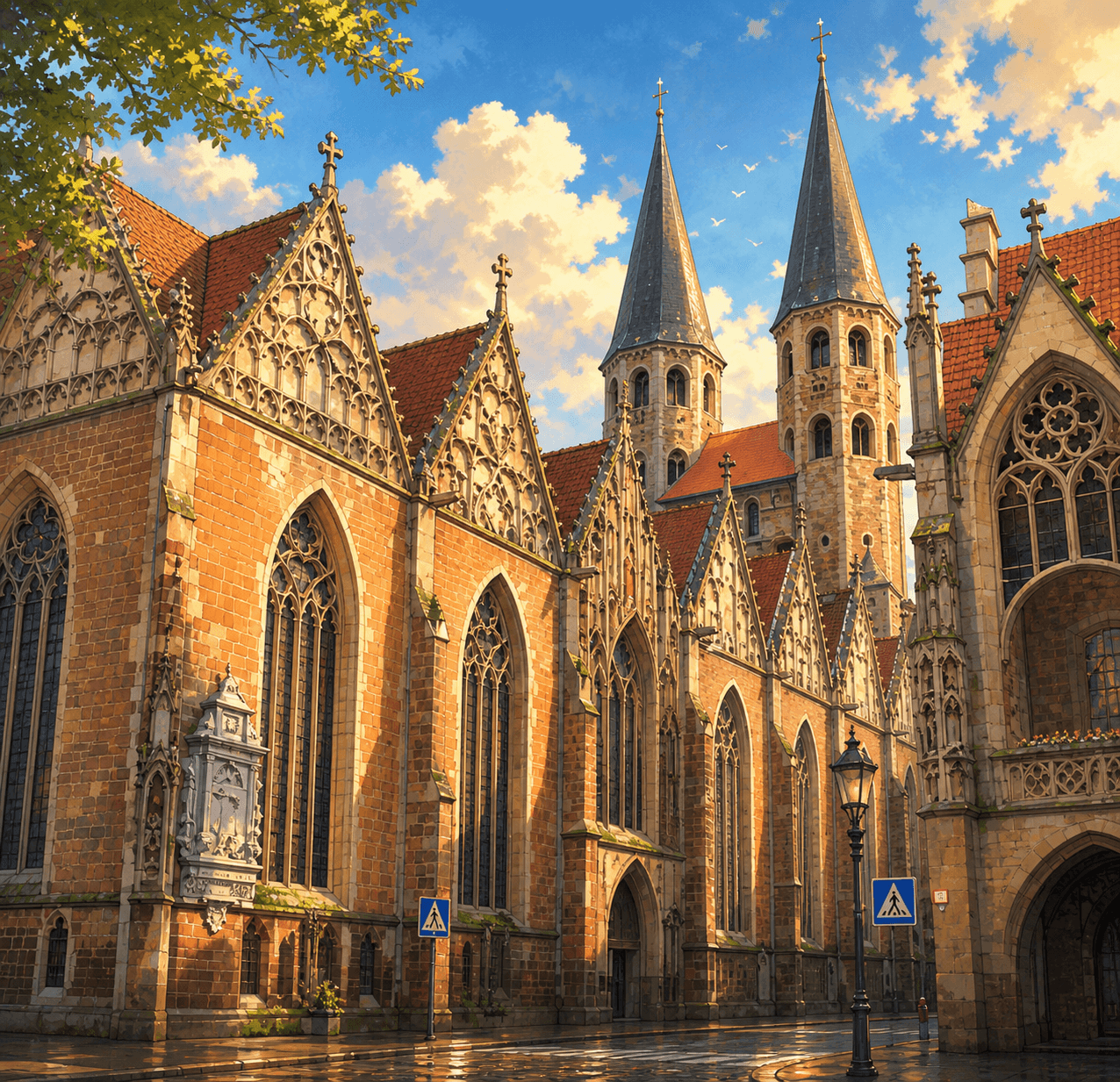
In March 2026, Braunschweig is focusing more on improving safety in the road space, 30 km/h zones, temporary pedestrian zones, and better winter services. At the same time, adjustments in public transport and another milestone in the expansion of the tram network are in the spotlight. An overview of the most important developments in the field of mobility.
Safety and Accessibility in the Road Space
In March 2026, the city of Braunschweig responded more strongly to safety and accessibility in the public space. A speed limit of 30 km/h was introduced on Rabenrodestraße due to a playground located in that area. In addition, path connections were reviewed and improved in terms of width, lighting, and overgrowth. However, the city refrains from lighting subordinate paths for nature conservation reasons.
Another focus was on school route safety at bus stops. Measures to improve crossing safety were examined in the area of the "Am Oberstiege" stop. Due to the street layout, the installation of zebra crossings was not permissible; instead, narrowing the bus stop serves as a crossing aid. Additionally, the activation of warning lights at bus stops is avoided as there is no accident hotspot.
Adjustments in Public Transport and Funding Conflicts
In March 2026, fundamental adjustments in the regional bus network were also at the center of discussions. The Regional Association Braunschweig Area (RGB) had decided on reduced frequencies for 2026 due to an annual funding gap of 12 million euros. After interventions by the state of Lower Saxony and additional funding from the city of Braunschweig, these cuts were largely averted. Nevertheless, there are consequences for lines 421 and 434.
Line 421 now runs between Heidberg and Wolfenbüttel in a 60-minute frequency, while the urban frequency remains unchanged. Line 434 is reduced to 120 minutes, supplemented by a new VLG circular route BS Wenden – Groß Schwülper. During the day, the line runs in a 15/45-minute frequency and hourly on weekends to Harxbüttel. The BSVG covers additional costs of 135,000 euros for frequency supplements. Criticism of these measures came from politics, as they are perceived as politically motivated. However, the administration emphasizes that a one-hour frequency in the local transport plan is considered a basic public service.
Winter Services and Everyday Mobility
Winter services remained a central topic. The city council demanded a significant improvement in clearing bike paths and sidewalks, particularly in central areas and at municipal properties. According to reports, the current winter service capacity is insufficient to ensure traffic safety. The administration is to clarify with ALBA Braunschweig GmbH whether an additional clearing and salting plan and a doubling of staff are feasible. In addition, it is suggested to include property management in communication regarding the obligation to clear snow, especially in multi-family buildings.
Expansion of the Tram Network and Infrastructure Projects
Another milestone in the expansion of the tram network was decided: the planning approval for the new route to Volkmarode Nord. The new construction is part of the Target Network Tram 2030 and a climate protection-relevant project. Following a recommendation from the planning approval authority, the section of the reserved track will be relocated again, including a pedestrian crossing. In the long term, a monitoring of noise measurements will be carried out, and a construction noise protection concept will be developed by an external engineering office.
In addition, plans for a temporary pedestrian zone for the 2026 Summer Street were presented in the Eastern Ring Area. No permanent arrangement is planned in the long term. In the Welfenhof, a local service center will be built, with deliveries via the Meinhardshof. To this end, the eastern sidewalk will be raised, parking areas and a lift platform will be constructed to reduce truck stop times. The measures are to be implemented in the first quarter of 2026.
Outlook: Mobility in the Future
The developments of March 2026 show that Braunschweig is increasingly focusing on safety, accessibility, and climate protection in the field of mobility. At the same time, the challenges in public transport and winter service organization are in the focus. The city is working on a balance between financial constraints and the need for attractive and safe transport offers. With the tram expansion and the reorientation of regional transport, a key step towards a sustainable mobility concept is being taken.
NeoSearch analyses public council documents, committee minutes and municipal announcements. Source references appear automatically once verified meeting data is available.
What does this mean for businesses?
Municipal council decisions are early indicators: following the council agenda surfaces projects and tenders months before the official award — before they ever reach the procurement portals.
Track similar decisions in your region
Set up monitoring for kommunale Projekte in Niedersachsen — prefilled from this article.
Set up monitoring →More signals from Braunschweig
Education Policy in Braunschweig: Digitalization, Full-Day Schools, and Energy Efficiency in April 2026
In April 2026, Braunschweig focused on a range of educational policy topics. The School Committee discussed the implementation of the legal entitlement to full-day school care, the digitalization of schools through state-wide available devices, and the development of energy efficiency in school buildings. An overview.
Read more → Health Policy in Braunschweig: Challenges in April 2026
In April 2026, Braunschweig saw decisive discussions in the health sector, focusing on demographic change, recruitment of care staff, and the future of day care services. This deep dive analyzes the background, decisions, and impacts of these political measures.
Read more → Daycare Centers in Braunschweig: Staff Shortages and Care Gaps in Focus
In April 2026, the dramatic care gaps in Braunschweig’s daycare centers became the focus. Parents report significant undercoverage, severely impacting daily routines. How is the city responding, and what solutions are on the horizon?
Read more →