Climate Protection in Braunschweig – Progress and Challenges in April 2026
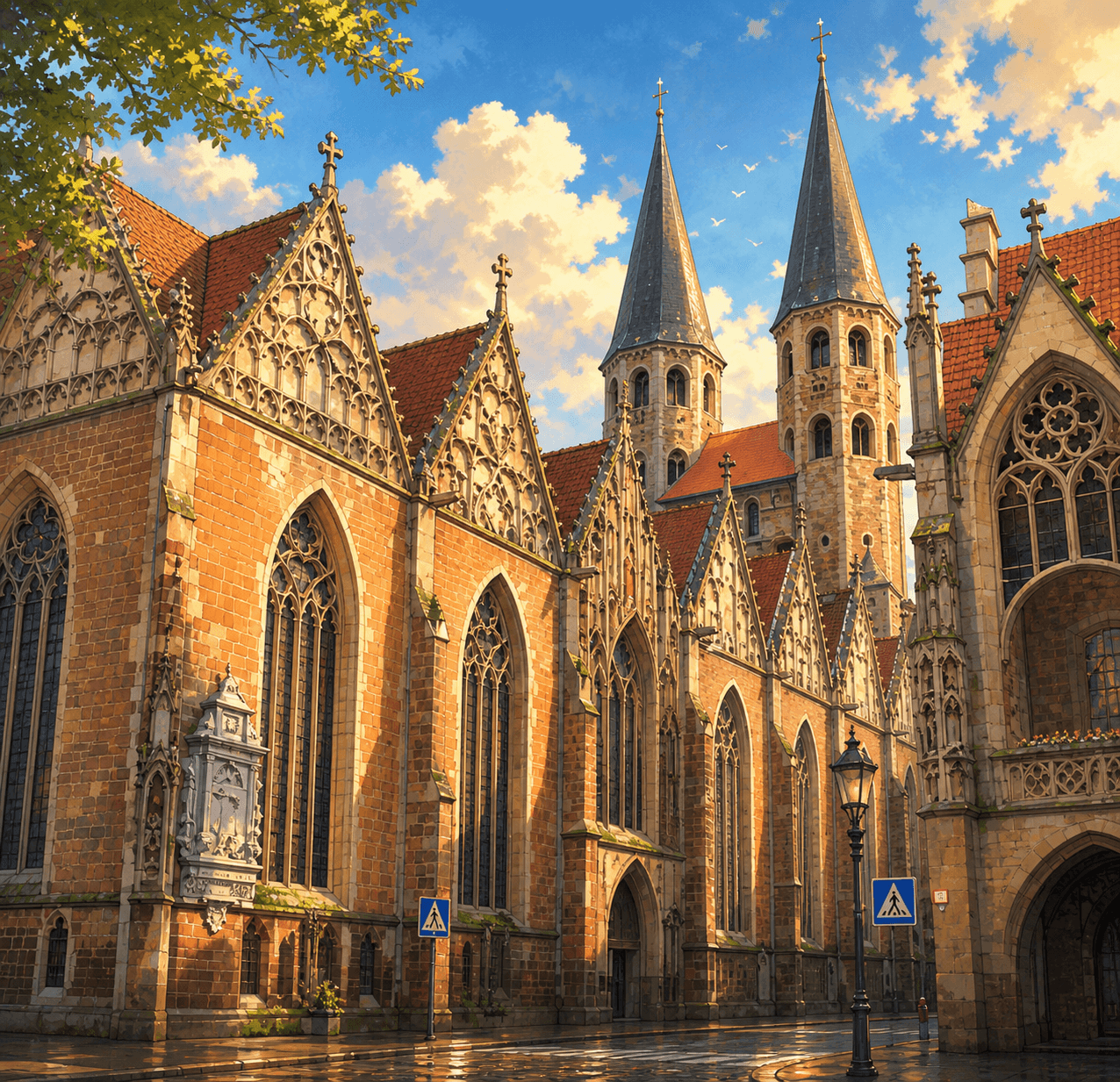
In April 2026, Braunschweig made progress in several key areas of climate policy – from updating the greenhouse gas inventory to the municipal heat planning. At the same time, challenges such as the burning of old wood and traffic emissions remain in the focus.
Climate Protection in Braunschweig: Between Inventory, Planning, and Pilot Projects
April 2026 was a month of intense climate policy work in Braunschweig. Numerous decisions and discussions in the Environmental and Green Spaces Committee reflected the pace at which the city is working toward its climate goals. At the same time, open questions and critical debates showed that the path to a climate-neutral city is not yet complete.
Update of the Greenhouse Gas Inventory – An Interim Report with Limitations
In April 2026, Braunschweig updated its greenhouse gas inventory (THG-Bilanz) up to 2023 and presented it to the Environmental and Green Spaces Committee. The inventory covers the period from 2020 to 2023, but relevant developments such as the coal phase-out in 2024 are still not reflected. In addition, external factors such as the COVID-19 pandemic and the gas price crisis in 2022/2023 have influenced the results.
The data show that natural gas still plays a significant role in the heating supply. Here, Braunschweig is acting with the municipal heat plan (KWP) – a topic that reached a decisive milestone in April.
Municipal Heat Planning (KWP) – The Key to Climate-Neutral Heating
In April 2026, the final report on the KWP was adopted. In accordance with the requirements of the Federal Heat Planning Act (WPG) and the Lower Saxony Climate Act (NKlimaG), Braunschweig is required to submit a heat plan by 2026. The city has fulfilled this obligation and has scrutinized the future of heating supply.
The plan provides for a significant expansion of the district heating network – the share of total heat should increase to 50% by 2040. At the same time, the electrification of the heating supply through heat pumps is addressed as a central lever. Local renewable energies such as solar, wind, geothermal and waste heat from industrial processes play a decisive role. With full use of the potentials, a climate-neutral heating supply is possible.
The KWP will be updated over the next five years and is a central component of Braunschweig's climate protection strategy. For implementation, 18 concrete measures have been defined in the areas of heat networks, decentralized supply and energy saving.
Natural Forest Development in the Querumer Forest – A Pilot Project for Greater Climate Resilience
Another highlight of April was the continuation of the project "Natural Forest Development in the Querumer Forest." Initiated by the SPD and Greens faction, it aims to link each birth in Braunschweig in the future with the purchase of 10 m² of forest area to be taken out of forestry use. In 2025, 2,768 births were registered, corresponding to a usage waiver of 27,680 m².
The project is not only a symbolic act, but also a step toward greater biodiversity and climate resilience. In addition, the city plans to install information boards in the Querumer Forest to inform the population about the project.
Challenges: Burning of Old Wood and CO₂ Emissions
Despite the positive developments, challenges remain. In April, there were also critical discussions about the burning of old wood at the combined heat and power plant. The combustion of old wood, especially of A2 and A3 wood, leads to significant CO₂ emissions. In addition, the LKW transport of old wood from Lengede to Braunschweig is an emissions-relevant factor.
The response to the inquiry emphasized that alternatives such as electric trucks, hydrogen drives, or rail transport are being considered. In addition, A2 wood, which could be used as a raw material for new wood panels in the timber industry, is preferred. The central questions of the share of A2 wood in combustion and the planning of a climate-friendly transport transition remain the subject of further debate.
Conclusion: Braunschweig on Course – with Room for Optimization
April 2026 has shown that Braunschweig is actively working toward its climate goals. The municipal heat plan, the update of the greenhouse gas inventory and the pilot project in the Querumer Forest are clear signals for sustainable urban development. At the same time, challenges remain, especially in the area of traffic emissions and wood combustion, which must be addressed in the next step.
Braunschweig has taken the right course – now it is important to consistently implement the planned measures and remain transparent. Only in this way can the city achieve its goals of climate-neutral heating supply and climate-resilient urban culture by 2040.
NeoSearch analyses public council documents, committee minutes and municipal announcements. Source references appear automatically once verified meeting data is available.
What does this mean for businesses?
Municipal heat planning, photovoltaics and climate measures create early project indicators. Following council decisions surfaces sites and tenders before they are publicly advertised.
Track similar decisions in your region
Set up monitoring for environment & climate in Niedersachsen — prefilled from this article.
Set up monitoring →More signals from Braunschweig
Education Policy in Braunschweig: Digitalization, Full-Day Schools, and Energy Efficiency in April 2026
In April 2026, Braunschweig focused on a range of educational policy topics. The School Committee discussed the implementation of the legal entitlement to full-day school care, the digitalization of schools through state-wide available devices, and the development of energy efficiency in school buildings. An overview.
Read more → Health Policy in Braunschweig: Challenges in April 2026
In April 2026, Braunschweig saw decisive discussions in the health sector, focusing on demographic change, recruitment of care staff, and the future of day care services. This deep dive analyzes the background, decisions, and impacts of these political measures.
Read more → Daycare Centers in Braunschweig: Staff Shortages and Care Gaps in Focus
In April 2026, the dramatic care gaps in Braunschweig’s daycare centers became the focus. Parents report significant undercoverage, severely impacting daily routines. How is the city responding, and what solutions are on the horizon?
Read more →