Offenburg's Energy and Climate Policy: Progress and Challenges in February 2026
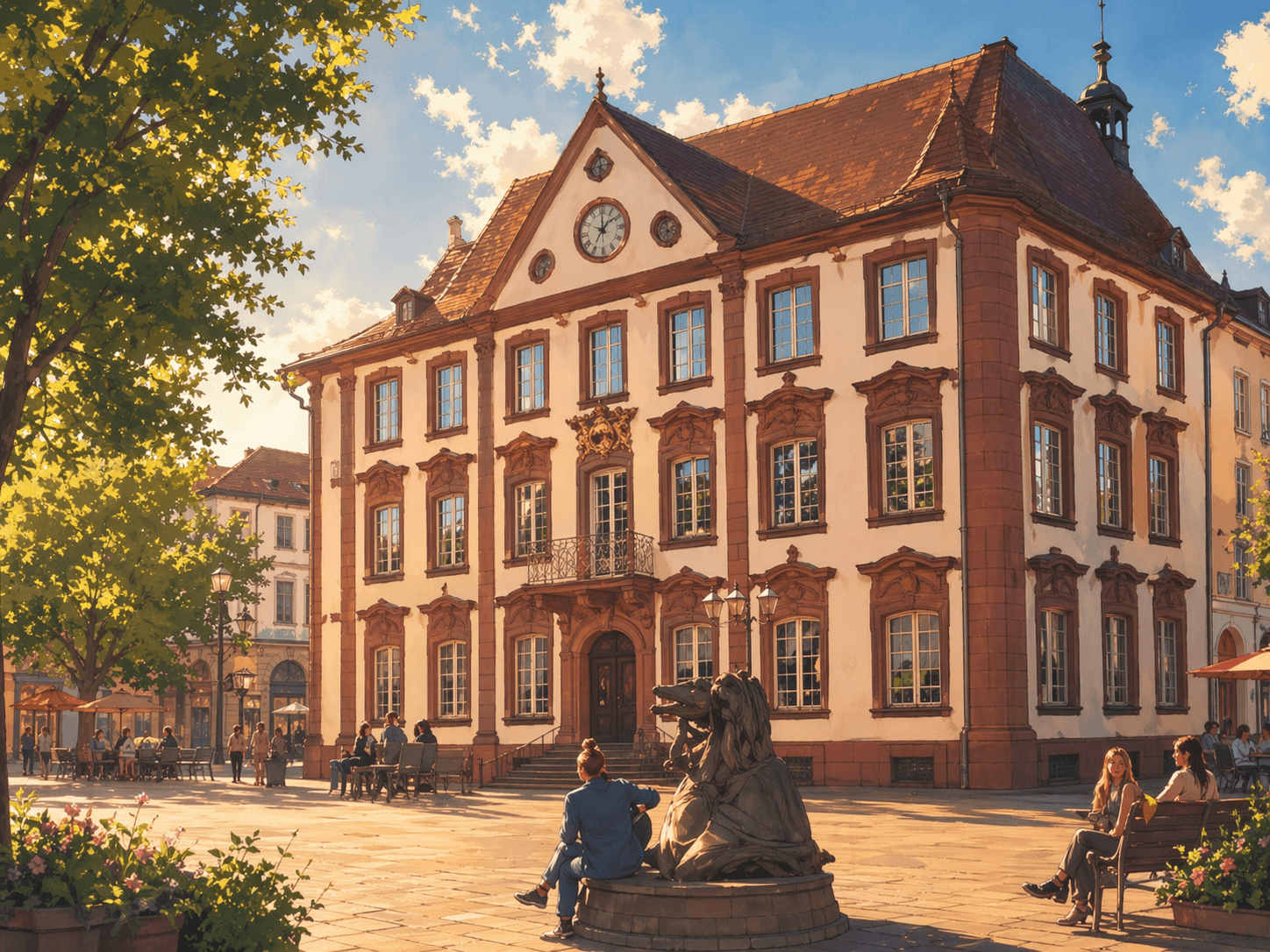
In February 2026, the city of Offenburg set further milestones in its energy and climate policy. The focus was on implementing the climate neutrality goal by 2040, expanding district heating, the photovoltaic strategy, and climate adaptation in the city.
Progress on the Path to Climate Neutrality
In 2026, Offenburg is on a clear course to achieve its climate neutrality goal by 2040. The 2024 Energy Report, adopted in February 2026, shows that the city is continuously increasing its energy efficiency. Heat consumption remained stable at around 12.6 million kWh, while electricity consumption slightly increased, partially offset by photovoltaic systems. A central success is the development of a new energy management system, which from 2026 enables detailed, building-specific monitoring.
Expansion of District Heating: Step by Step Toward Climate Neutrality
District heating is a key issue in Offenburg's energy policy. The city has decided to assess and implement economically viable connections for buildings whenever district heating lines are laid in municipal streets. The current expansion of the district heating network is proceeding at a rate of 4 to 5 kilometers per year, with the share of renewable energy currently at 27 percent. By 2040, the goal is to increase this to 100 percent, among other things through the commissioning of a heat pump power plant in Burda and a combined heat and power plant in Kreuzschlag.
Photovoltaic Strategy and Renovation Projects: Energy Efficiency in the Municipal Building Stock
The city's photovoltaic strategy provides for the installation of PV systems in all new renovation and construction projects. In February 2026, five new PV projects were examined in feasibility studies, with the city also relying on storage and pooling models to maximize self-consumption. Particularly successful were renovation measures at schools: the Georg-Monsch and Eichendorff schools reduced their heating energy demand by 46 and 60 percent, respectively.
Climate Adaptation: From Green Roofs to Stormwater Management
In addition to energy efficiency, climate adaptation is a central field of action. Offenburg plans the climate-adapted renovation of Werder and Zeppelin streets, the planting of trees along cycle paths, and the redesign of the market square with 15 new trees. In the area of stormwater prevention, retention basins have been created in Zunsweier, and an emergency plan for heat events is being developed in cooperation with the KIT.
Public Relations and Citizen Participation: Climate Protection for Everyone
The city of Offenburg is relying on broad public relations to raise awareness among the population about climate protection issues. In cooperation with kindergartens and schools, climate protection programs for children and young people have been implemented. In addition, monthly electricity-saving checks are offered for low-income households, and a new online training tool for staff in municipal buildings is under development.
Outlook: 2026/2027 as a Decisive Phase
The action plan for 2026/2027 provides for the further development of the climate protection strategy, with a focus on monitoring, financing, and citizen participation. Offenburg remains on course to be climate neutral by 2040 – with investments in renovation, PV, district heating, and digital control systems.
NeoSearch analyses public council documents, committee minutes and municipal announcements. Source references appear automatically once verified meeting data is available.
What does this mean for businesses?
Municipal council decisions are early indicators: following the council agenda surfaces projects and tenders months before the official award — before they ever reach the procurement portals.
Track similar decisions in your region
Set up monitoring for Energy and Utilities in Baden-Württemberg — prefilled from this article.
Set up monitoring →More signals from Offenburg
Offenburg's Financial Policy in April 2026: Tax Reforms, Budget Planning, and Investments
In April 2026, Offenburg made important decisions in financial policy, including the introduction of an overnight stay tax, the adoption of the double budget for 2026/2027, and investments in education and heritage protection. This blog analyzes the background, impacts, and future perspectives of these measures.
Read more → Offenburg's Mobility Transformation: The Master Plan and its Implementation
Offenburg has set out on an ambitious path with its Traffic Master Plan 2035 to shape urban mobility in a climate-friendly and future-ready way. In April 2026, several decisions were made that set the direction – from the electrification of the bus fleet to the modernization of traffic light control.
Read more → Offenburg April 2026: Traffic, Finances, and Integration in Focus
In April 2026, Offenburg made key decisions on traffic, financial planning, and integration. The Traffic Committee laid the groundwork for 30 km/h zones and sidewalk parking concepts, the Municipal Council approved the overnight stay tax, and the Integration Advisory Board discussed language support and civic engagement.
Read more →