Offenburg's Educational Policy in Focus: Youth Participation, Youth Work, and Kindergarten Planning in February 2026
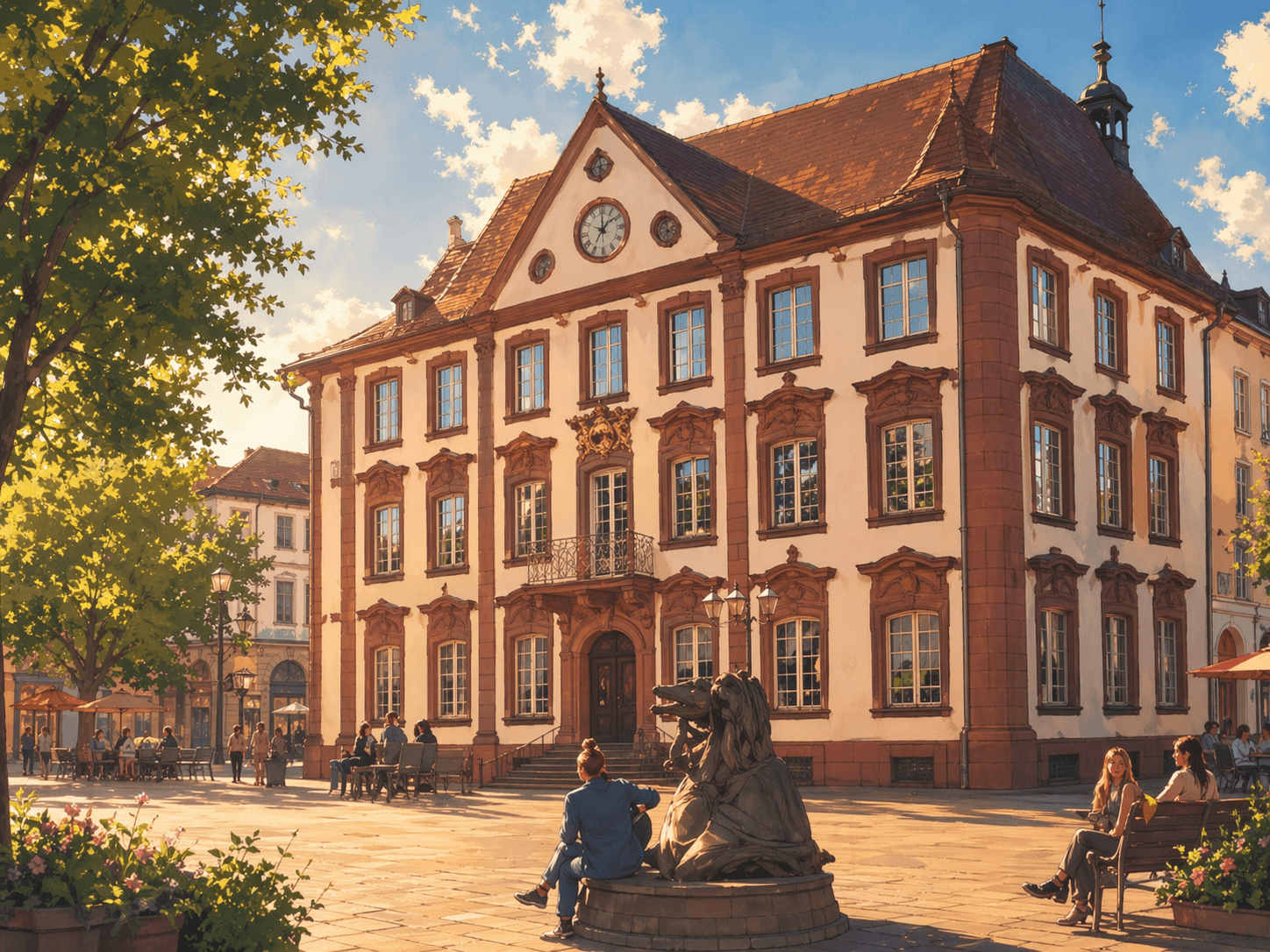
In February 2026, Offenburg addressed decisive topics in the fields of education and public institutions. The Committee for Education, Social Affairs, and Sports reviewed reports on youth work, youth participation, and kindergarten planning – with far-reaching consequences for urban development.
Offenburg's Educational Policy: Youth Participation and Kindergarten Planning in February 2026
In February 2026, Offenburg's Committee for Education, Social Affairs, and Sports discussed several central topics shaping the future of municipal youth work, the development of kindergartens, and the involvement of young people in urban planning. These decisions not only reflect current demographic developments but also demonstrate how Offenburg is orienting its educational and social policy toward the future.
Youth Work: A Dynamic Further Development
Municipal youth work in Offenburg has undergone two years of intensive development. The report reviewed by the committee on February 23, 2026, emphasizes the central role of youth work for young people aged 12 and above. This work is based on the principle of interest orientation and is anchored in three spatial dimensions: traditional youth spaces, public space, and virtual space.
In recent years, numerous projects have been carried out, including the redesign of the Zauberflötenbrücke bridge, rap song recordings, clothing exchanges, and football tournaments. The Youth Fair 2025 on the Lindenplatz was another milestone, made possible through collaborations with institutions such as Young Caritas or the Evangelical Youth Work.
Another highlight is political education, supported by initiatives such as volunteer youth guides and digital formats like Instagram and online forums. In addition, the city is implementing a so-called social space survey to better reach hard-to-reach youth.
Youth Participation: From "Top-Down" to "Bottom-Up"
Youth participation in Offenburg has become significantly more professional in recent years. The report on the conceptual implementation of youth participation, also reviewed on February 23, shows that Offenburg is pursuing a holistic approach: both "top-down" and "bottom-up" participation are central to the strategy.
A central instrument is the student/SMS (Student Council) Forum "Sag's laut" ("Speak Up"), which was held twice in 2025. Here, young people can actively introduce topics, moderate workshops, and implement ideas. Projects such as the Youth Fair have already emerged from these forums, directly stemming from suggestions by young participants.
In addition, the digital tool "Submit Your Ideas" (formerly "Sag's uns einfach" – "Just Tell Us") has been established, allowing young people to submit proposals for urban development projects. This platform is further supported by a peer-to-peer approach, in which former participants inspire new youth to get involved.
Kindergarten Planning: Expansion on Hold – Due to Declining Birth Rates
Another central topic was the planning for the expansion of kindergartens. The committee decided to postpone the construction of the new Kreativ-Kita in the CANVAS+ area and the expansion of the Waltersweier Kita until after 2030. This decision is based on the observation that the number of births in Offenburg has decreased by about 11% since 2022 – a trend also seen nationally.
The current occupancy of kindergarten places is below projections, and there are currently sufficient capacities. In total, 2,405 kindergarten places are available, while the average utilization in the forecast period 2026–2032 is expected to be 2,215 children. At 95% occupancy, the capacity is therefore sufficient to meet the demand.
The originally planned Kita with 130 places for the CANVAS+ area and the expansion of the Waltersweier Kita are therefore no longer urgently needed at this time. Instead, the city will focus on the quality and flexibility of its kindergartens in the coming years, for example by evaluating the branch of the Catholic Kita "Am Mühlbach" in the Kittelgasse, which will be dissolved by August 31, 2027.
Outlook: Stability and Adaptation to Demographic Change
The decisions of the Committee for Education, Social Affairs, and Sports in February 2026 show how Offenburg is adapting its educational policy to changing demographic realities. While youth work and youth participation are actively further developed, kindergarten planning is being approached cautiously and based on data. The city is thus balancing the need to ensure services with responsible resource planning.
In the coming years, it will be important to see whether birth rates remain stable or continue to decline. At the same time, the city must ensure that its existing kindergartens and youth programs remain attractive and high-quality in this new demographic situation. Offenburg's policy shows: flexibility and closeness to the target group are key to sustainable educational and social policy.
NeoSearch analyses public council documents, committee minutes and municipal announcements. Source references appear automatically once verified meeting data is available.
What does this mean for businesses?
Schools, daycare centres and public buildings create early planning and construction opportunities. Following council agendas surfaces tenders for refurbishment, new builds and fit-out months before the official award — from shell construction to specialist planning to furnishing.
Track similar decisions in your region
Set up monitoring for education & public facilities in Baden-Württemberg — prefilled from this article.
Set up monitoring →More signals from Offenburg
Offenburg's Financial Policy in April 2026: Tax Reforms, Budget Planning, and Investments
In April 2026, Offenburg made important decisions in financial policy, including the introduction of an overnight stay tax, the adoption of the double budget for 2026/2027, and investments in education and heritage protection. This blog analyzes the background, impacts, and future perspectives of these measures.
Read more → Offenburg's Mobility Transformation: The Master Plan and its Implementation
Offenburg has set out on an ambitious path with its Traffic Master Plan 2035 to shape urban mobility in a climate-friendly and future-ready way. In April 2026, several decisions were made that set the direction – from the electrification of the bus fleet to the modernization of traffic light control.
Read more → Offenburg April 2026: Traffic, Finances, and Integration in Focus
In April 2026, Offenburg made key decisions on traffic, financial planning, and integration. The Traffic Committee laid the groundwork for 30 km/h zones and sidewalk parking concepts, the Municipal Council approved the overnight stay tax, and the Integration Advisory Board discussed language support and civic engagement.
Read more →