Offenburg's Financial Policy in April 2026: Tax Reforms, Budget Planning, and Investments
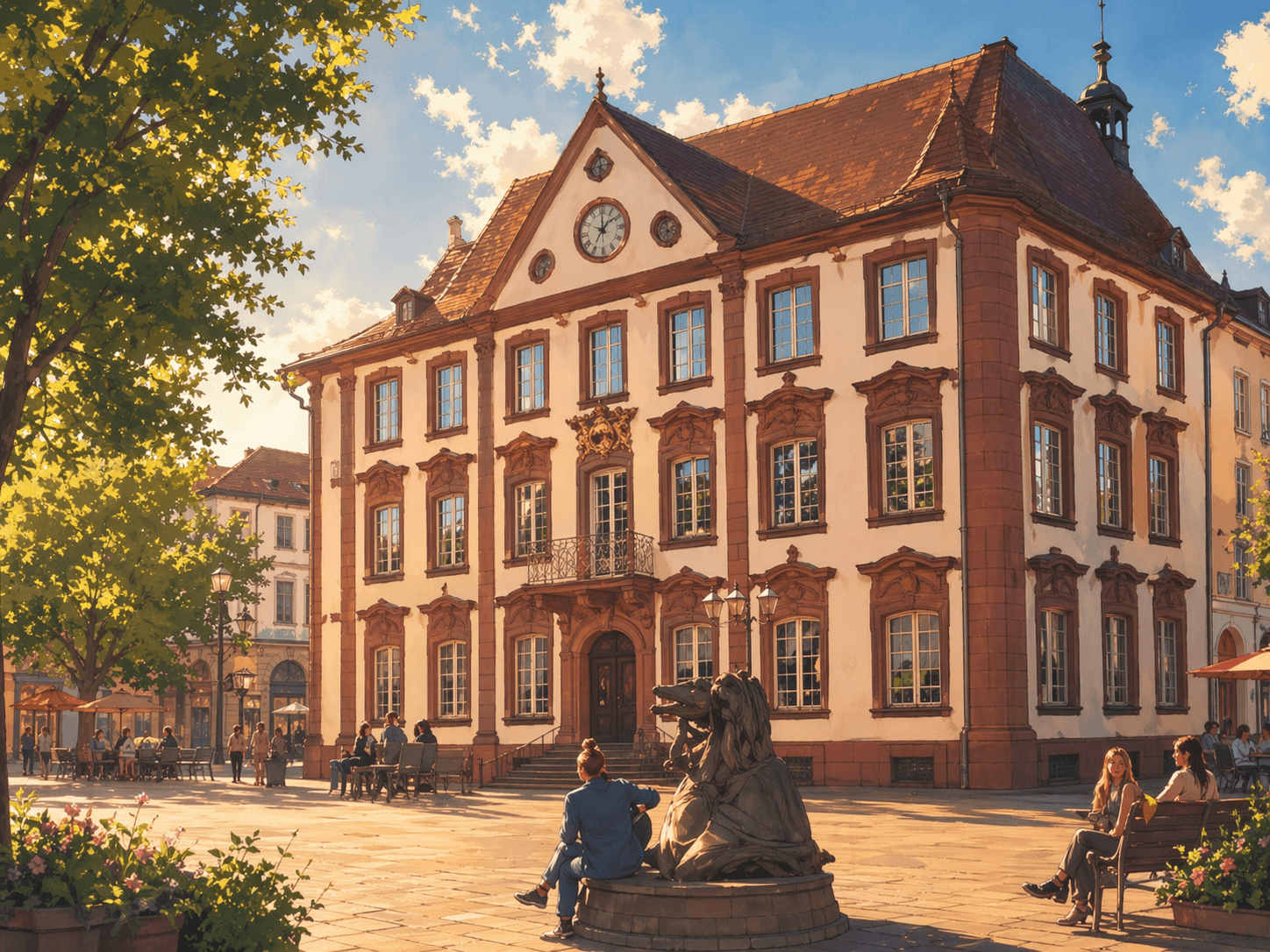
In April 2026, Offenburg made important decisions in financial policy, including the introduction of an overnight stay tax, the adoption of the double budget for 2026/2027, and investments in education and heritage protection. This blog analyzes the background, impacts, and future perspectives of these measures.
Offenburg's Financial Policy 2026: Taxes, Budget, and Investments
The city of Offenburg has established itself as financially stable and forward-looking in recent years, a trend that continued in April 2026. In this month, decisive measures in financial policy were adopted, including new revenue sources as well as investments in education, infrastructure, and heritage protection. These decisions reflect not only the current economic situation but also the municipality's long-term strategy to adapt to changing conditions.
The Introduction of the Overnight Stay Tax
One of the central decisions in April 2026 was the introduction of an overnight stay tax, which will take effect on 01.07.2026. The tax is a flat rate of 3.50 EUR per overnight stay per guest, and 2.00 EUR for camping and motorhome sites. Children and young people under 18 are exempt. Annual revenues are projected to be around 500,000 EUR.
This measure is part of a strategy to generate additional revenue for the municipal budget, particularly in the tourism sector. The tax will not be passed on directly to accommodation providers but will remain as a municipal cost-based tax within the overall budget. It will be kept stable for five years, with a review and potential adjustment planned for the double budget 2030/2031.
The introduction was examined following a proposal by the Free Voters of Offenburg and ultimately unanimously approved by the Municipal Council on 20.04.2026. It demonstrates Offenburg's willingness to use innovative financing models to strengthen the municipal treasury.
The Double Budget 2026/2027: Security and Flexibility
The double budget for 2026/2027 was adopted in April 2026 and includes a wide range of investments and financing measures. A central point was the securing of funds for the acquisition of the property at Weingartenstraße 173 in Zell-Weierbach and the construction of a roundabout. For this, 1 million EUR was allocated, to be financed from the free surplus of financing funds.
In addition, a comprehensive action program for the years 2026–2030 was adopted, covering investments in education, infrastructure, and urban development. A particular challenge was the financing of the renovation of the Max-Wenk Staircase with total costs of 900,000 EUR. Here, a grant of 250,000 EUR was approved by the State Office for Monument Preservation, reducing the city's share to 650,000 EUR.
The renovation and expansion measures at three primary schools (Fessenbach, Griesheim, Zunsweier) were also part of the double budget. The total costs amount to over 5.25 million EUR, with an individual financing plan defined for each school. The funds were already included in the budget draft, and funding applications have been submitted to the state of Baden-Württemberg.
Financial Retrospective: Stability Despite Challenges
The financial foundation for the new measures was supported by the positive 2023 annual accounts. These showed a regular result of 20.3 million EUR and a total result of 20.95 million EUR. Revenues amounted to 237.35 million EUR, while expenses were 217.02 million EUR, resulting in a clear surplus.
The balance sheet total amounted to approximately 557 million EUR as of 31.12.2023, of which 68% was tied up in tangible assets. This shows that Offenburg has a solid foundation for investments. At the same time, the free financing fund at the end of 2023 was around 3 million EUR, which will be reduced to 2 million EUR through the adopted investments.
Another important element was the approval of contract agreements totaling 900,000 EUR by the administration before the adoption of the double budget for 2026/2027. These measures allow the city to ensure planning security and advance projects without waiting for the budget.
Outlook: Offenburg as a Model for Sustainable Financial Policy
The decisions of April 2026 show how Offenburg balances financial stability with a willingness to invest. The introduction of the overnight stay tax provides new revenue sources, while the double budget for 2026/2027 offers security for investments in education, infrastructure, and heritage protection. In addition, the city benefits from a stable financial foundation that allows it to cope with unforeseen challenges.
Offenburg thus proves that forward-looking financial policy not only leads to treasury stability but also creates the foundation for future-oriented urban development. The coming years will show how these measures prove themselves in practice and what adjustments may be necessary—in particular for the adjustment of the overnight stay tax in 2030/2031.
NeoSearch analyses public council documents, committee minutes and municipal announcements. Source references appear automatically once verified meeting data is available.
What does this mean for businesses?
Municipal council decisions are early indicators: following the council agenda surfaces projects and tenders months before the official award — before they ever reach the procurement portals.
Track similar decisions in your region
Set up monitoring for Finance and Budget in Baden-Württemberg — prefilled from this article.
Set up monitoring →More signals from Offenburg
Offenburg's Mobility Transformation: The Master Plan and its Implementation
Offenburg has set out on an ambitious path with its Traffic Master Plan 2035 to shape urban mobility in a climate-friendly and future-ready way. In April 2026, several decisions were made that set the direction – from the electrification of the bus fleet to the modernization of traffic light control.
Read more → Offenburg April 2026: Traffic, Finances, and Integration in Focus
In April 2026, Offenburg made key decisions on traffic, financial planning, and integration. The Traffic Committee laid the groundwork for 30 km/h zones and sidewalk parking concepts, the Municipal Council approved the overnight stay tax, and the Integration Advisory Board discussed language support and civic engagement.
Read more → Offenburg's Integration Policy in April 2026: Challenges and Initiatives in Focus
In April 2026, important decisions and initiatives in the field of integration policy were at the forefront in Offenburg. The Integration Advisory Board, new educational offerings, and challenges posed by federal decisions shaped the developments.
Read more →