Urban Development in Karlsruhe: Innovation, Green Spaces, and Housing in March 2026
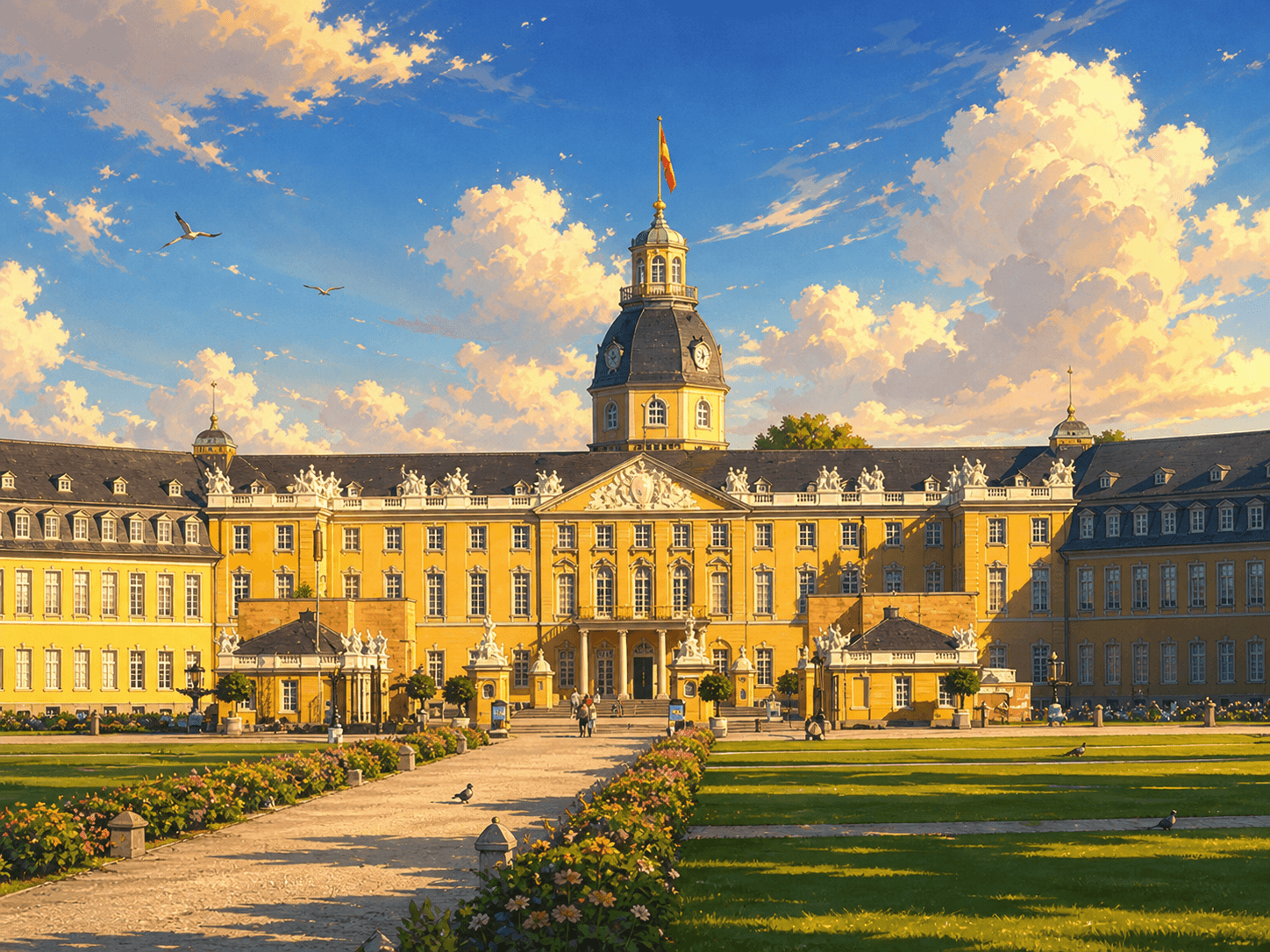
In March 2026, Karlsruhe has seen a variety of urban and construction projects shaping the discussions. From the redesign of the Westbahnhof surroundings to the use of the Garnisonskirche in Knielingen – the city is pursuing a wide range of initiatives aimed at innovation, sustainability, and social justice. This blog article provides an in-depth look at the central developments.
Urban Development in Karlsruhe: Innovation, Green Spaces, and Housing
Urban development in Karlsruhe in March 2026 is characterized by a multitude of projects aiming at innovation, sustainability, and social justice. The city is pursuing a broad spectrum of initiatives – from the redesign of the Westbahnhof surroundings to the use of the Garnisonskirche in Knielingen. These projects are not only architectural milestones but also responses to the challenges of a growing city in the context of climate change.
WestBahnHUB – Neighborhood Development and Sustainable Mobility
The WestBahnHUB project in the Grünwinkel is a prime example of Karlsruhe’s vision for future-oriented urban development. The aim is to enhance the station environment through an urban and landscape architectural redesign. The architectural team Studio Vulkan/Pool has developed a step concept that reorganizes the public space underneath the bridge. Green spaces, light installations, and bicycle parking areas are intended to make the neighborhood more vibrant and accessible.
The project planning includes a total investment of around 4.7 million euros, with funding provided through urban development subsidies. Particularly noteworthy is the promotion of sustainable mobility through the connection to the S- and regional train station. The WestBahnHUB is not only a transportation hub but also a central meeting place that strengthens local amenities and social interaction.
Garnisonskirche Knielingen – Housing Conversion and Monument Preservation
Another central topic was the discussion concerning the Garnisonskirche in Knielingen. The Volkswohnung GmbH submitted a request to demolish the dilapidated cultural monument in order to create housing. The church, which appears unviable as a renovation object due to its poor condition, is registered with the State Monument Office. As no investor has been found so far, demolition is currently the only viable option.
Despite the symbolic significance of the church for the local community and the cultural identity of the district, the decision for demolition is necessary to offer housing opportunities to people in housing need. The application was considered concluded at the meeting, as current sales intentions are already in place. This illustrates how delicate the balance between monument preservation and social housing can be.
City Forest and Green Spaces – Climate Protection and Recreational Proximity
The importance of green spaces for the quality of life in Karlsruhe was confirmed once again in the 2025 citizen survey. Over 80% of the population rated green spaces as very important, with the city forest being highlighted as a particularly significant habitat. The survey also showed that adapting green spaces to climate change is a central issue – especially concerning heat stress and heavy rainfall.
The city therefore pursues initiatives such as the natural mowing of urban green spaces, which provides habitat for insects, and the creation of pocket parks, which serve to compensate for closed construction areas. In projects such as the Hildapromenade, green spaces are not only upgraded but also designed to be climate-resilient. New trees, shady seating areas, and irrigation systems are part of a comprehensive strategy to make cities in the climate change era livable.
Housing Promotion and Social Justice
In the debate on affordable housing, Karlsruhe has set clear priorities. The Volkswohnung GmbH plays a central role in creating price-reduced housing, particularly for staff of the federal, state, and municipal authorities. For example, a new residential quarter is being developed on the BImA site at Kriegsstraße 200, planned with a rent tariff (12 EUR/m² cold) and a mix of residential and commercial use.
In addition, the Gründungs- und Gewerbezentrum (GGZ) at Michelinstraße 4 is used as a platform for young businesses in the trades and small production industries. Up to eight units with shared spaces are planned to provide start-ups with ideal and spatial support. The funding through an annual operational cost subsidy of 375,000 euros and the integration of chamber organizations show how Karlsruhe combines economic and social goals.
Future-Oriented Planning – From Zoning to Citizen Participation
Urban development in Karlsruhe is always a process that takes into account both technical and social dimensions. In March 2026, for example, the zoning plans for the BImA site were in the focus. Here, CPTED principles (Crime Prevention Through Environmental Design) were applied to provide crime-preventive design measures. At the same time, security technology such as video surveillance and automatic lighting control was used.
Karlsruhe also uses innovative methods for citizen participation. For the Hildapromenade project, idea days were held, tree patronage was offered, and urban gardening areas were created. These measures not only strengthen the identification of citizens with their urban spaces but also social cohesion.
Conclusion – A City in Transition
The developments in March 2026 show how Karlsruhe remains a city in transition. It is not standing still, but adapting to the challenges of climate change, housing shortages, and social inequality. The projects discussed and decided in the past weeks show a clear course: Innovation, sustainability, and social justice are not only visions, but fields of action that are concretely implemented in urban development.
In April 2026, the focus will be on the further development of these projects and new initiatives. The city of Karlsruhe thus proves that urban development is not only a technical, but also a social and cultural task – with a clear orientation towards the future.
NeoSearch analyses public council documents, committee minutes and municipal announcements. Source references appear automatically once verified meeting data is available.
What does this mean for businesses?
Municipal council decisions are early indicators: following the council agenda surfaces projects and tenders months before the official award — before they ever reach the procurement portals.
Track similar decisions in your region
Set up monitoring for kommunale Projekte in Baden-Württemberg — prefilled from this article.
Set up monitoring →More signals from Karlsruhe
Sports and Safety in Karlsruhe: The Debate on Lighting the Calisthenics Facility
In April 2026, Karlsruhe is intensively discussing the lighting of the Calisthenics facility on Karl-Hubbuch-Weg. The SPD is calling for an evaluation, while the city utility company and experts raise concerns. An overview of the background, costs, and alternatives.
Read more → Mobility in Hohenwettersbach: Challenges and Opportunities in April 2026
In April 2026, several mobility-related decisions were in focus in Hohenwettersbach, a district of Karlsruhe, aiming at climate-friendly alternatives and better school connectivity. The local council discussed proposals for the expansion of car-sharing and bicycle rental stations as well as improvements to the school bus service.
Read more → Financial Policy in Karlsruhe: Budget Decisions and Investments in April 2026
Karlsruhe’s Main and Finance Committee made important decisions regarding the city’s budget in April 2026. In this deep dive, we explore the background, the involved actors, and the long-term implications of these measures.
Read more →