Climate Protection in Karlsruhe: PV Expansion, Climate City Membership, and Biotop Network Planning
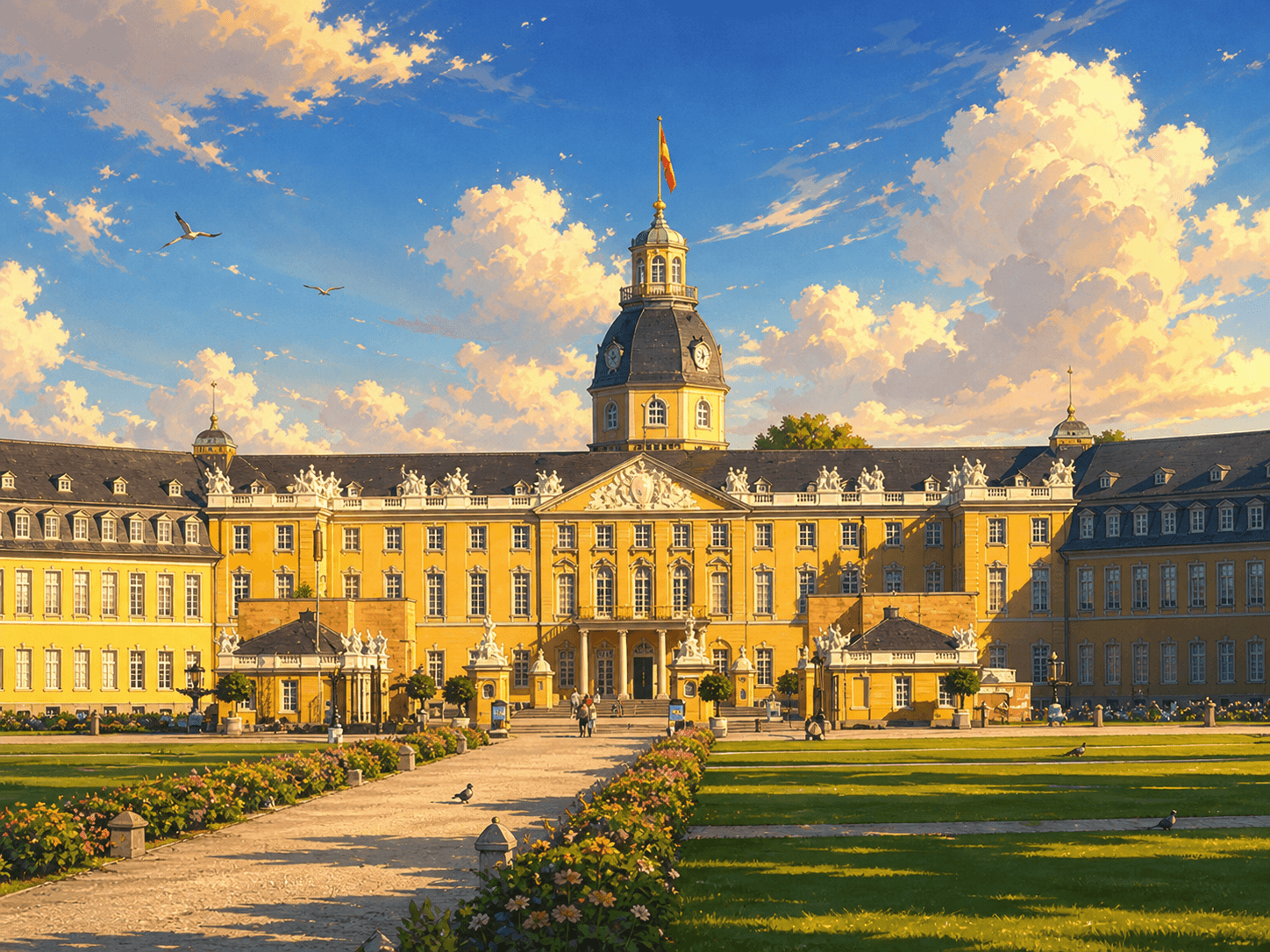
In March 2026, Karlsruhe focused on key environmental and climate topics. The Committee for Environment and Health discussed the expansion of photovoltaics, the continuation of membership in the Klimakommune Deutschland e.V. association, and the current status of the biotope network planning. These topics are essential components of the city's climate protection program and reflect both the challenges and progress made.
Photovoltaics: Between Goals and Reality
Karlsruhe has set the ambitious goal of achieving an installed photovoltaic capacity of 342 megawatt peak (MWp) by 2030. As of March 2026, the current capacity stands at 127 MWp, with a significant decline in the 12-month addition of 18 MWp. To meet the target, approximately 215 MWp would need to be added in the next five years—equating to an average annual addition of 43 MWp.
The city is particularly counting on the expansion of large-scale installations, several of which are already in planning or under construction. The housing company HGW plans to add 1.5 MWp in 2026, and the municipal authority DRV has up to 14 installations planned in areas such as Branddirektion, TSK, FBA, and the Zoo. However, technical obstacles remain, especially with older buildings, where insulation, structural integrity, and shading hinder PV installation.
In addition, Karlsruhe is experimenting: The Solar Canal is being built in two construction phases, with the first section already contributing 2 MWp of a total of 8.2 MWp. Vertical photovoltaics, a new building form, is being evaluated as a potential solution for urban areas, although it yields somewhat lower energy output.
Climate City: Renewal of Membership
The city of Karlsruhe has decided to renew its membership in the Klimakommune Deutschland e.V. association. Since 2025, this association has taken over the tasks of the European Energy Award (eea) in Germany and offers municipalities a structured audit and certification program for climate protection.
Karlsruhe was a participant in the eea until 2025 and achieved a gold certification in 2024. With the dissolution of the eea program and the establishment of the new association, the city is continuing this work. Membership costs 1,000 euros per year for cities with over 100,000 residents, while audit and consulting costs can reach up to 9,258 euros per certification step in the coming years.
The decision is part of the city's strategic theme "Green City" and is financed from the existing climate protection budget. The goal is to continue meeting internationally recognized climate protection standards and to retain the "Gold Climate City" label.
Biotop Network Planning: Protection of Biodiversity
Biotop network planning is a central element of nature conservation in Karlsruhe. The goal is to create a network of biotopes, core areas, and stepping stones that enable species to exchange and adapt to climate change. According to the requirements of the state of Baden-Württemberg, an expansion of open land areas to 15% is required by 2030—a milestone of 10% was already achieved in 2023.
The current biotope network planning from 2009 is undergoing revision in Karlsruhe. A new version is expected to be available by April 2026 and will then be presented to the Committee for Environment and Health by September 2026. The final decision is planned for the fourth quarter of 2026.
The city's biotope mapping has identified 626 biotopes, of which only about 19% are classified as of medium importance. Only three biotopes are considered of high ecological significance, and none are rated as very high value. Nevertheless, measures such as nature-friendly mowing, documentation of scattered orchards, and the fallow land concept are central components of the biodiversity strategy.
Outlook: Karlsruhe on the Path to a Climate Protection Model
The decisions made in March 2026 show how Karlsruhe is positioning itself as a pioneer in climate protection. The photovoltaic offensive, the renewal of the Klimakommune membership, and the revision of the biotope network planning are not only technical challenges, but also political and financial decisions with long-term consequences.
The city is navigating a complex path between target specifications, resources, environmental conditions, and citizen interests. Success depends on how effectively the various actors—from politics through administration to citizens and companies—can be coordinated. With these measures, Karlsruhe has set a clear course and remains an active player in the regional debate on climate protection and sustainability.
NeoSearch analyses public council documents, committee minutes and municipal announcements. Source references appear automatically once verified meeting data is available.
What does this mean for businesses?
Municipal heat planning, photovoltaics and climate measures create early project indicators. Following council decisions surfaces sites and tenders before they are publicly advertised.
Track similar decisions in your region
Set up monitoring for environment & climate in Baden-Württemberg — prefilled from this article.
Set up monitoring →More signals from Karlsruhe
Sports and Safety in Karlsruhe: The Debate on Lighting the Calisthenics Facility
In April 2026, Karlsruhe is intensively discussing the lighting of the Calisthenics facility on Karl-Hubbuch-Weg. The SPD is calling for an evaluation, while the city utility company and experts raise concerns. An overview of the background, costs, and alternatives.
Read more → Mobility in Hohenwettersbach: Challenges and Opportunities in April 2026
In April 2026, several mobility-related decisions were in focus in Hohenwettersbach, a district of Karlsruhe, aiming at climate-friendly alternatives and better school connectivity. The local council discussed proposals for the expansion of car-sharing and bicycle rental stations as well as improvements to the school bus service.
Read more → Financial Policy in Karlsruhe: Budget Decisions and Investments in April 2026
Karlsruhe’s Main and Finance Committee made important decisions regarding the city’s budget in April 2026. In this deep dive, we explore the background, the involved actors, and the long-term implications of these measures.
Read more →