Karlsruhe's Energy Networks in March 2026: Robustness, Redundancy, and Resilience
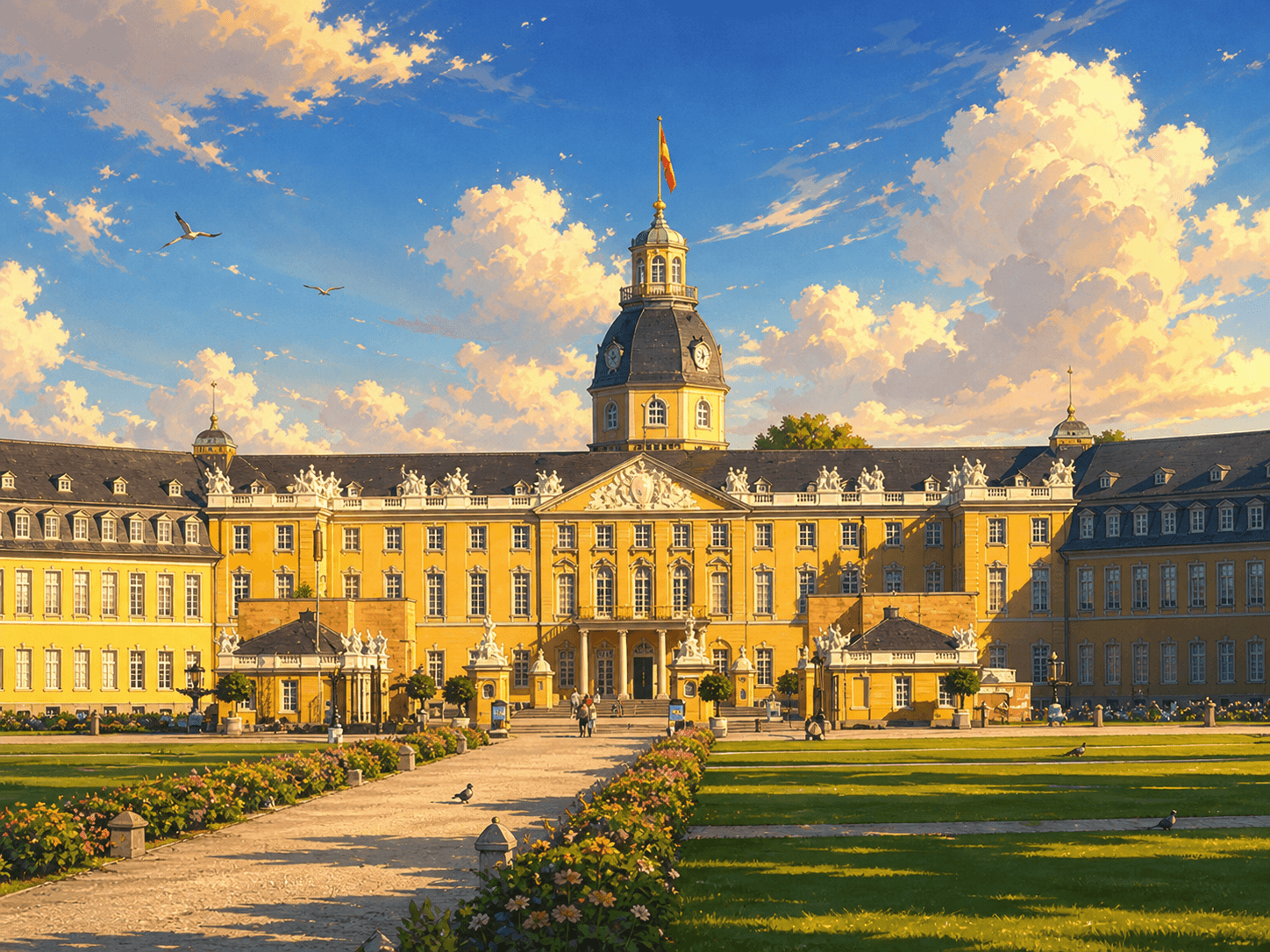
Amid geopolitical tensions and growing security threats, Karlsruhe has demonstrated in March 2026 that its energy and supply infrastructure is designed to the highest standards. An overview of the security concepts, redundancies, and crisis preparedness measures.
Security in Focus: Karlsruhe's Energy and Supply Networks in March 2026
The security of critical infrastructure has gained increasing importance in recent years—not least due to attacks on power grids and the energy crisis in Europe. In this context, Karlsruhe has clearly shown in March 2026 that the city and its municipal utility company are well-prepared on a broad level. The Karlsruhe Stadtwerke Netzservice GmbH has explained its strategies for fault tolerance, resilience, and coordination in crisis scenarios in various statements and reports.
Redundancy and Security Concepts in the Power Grid
Karlsruhe's power grid follows the so-called n-1 principle, where the failure of one component is compensated for by other systems. This is made possible by ring circuits in the 20-kV network, which allow for short-term switching in the event of disturbances and ensure continuous supply. In addition, there is 24/7 readiness in the power grid to coordinate switching measures.
Another security feature is the four network coupling points in the high-pressure gas network, which enable redundant feeding in and out. This redundancy is crucial for minimizing supply disruptions, especially in times of increased uncertainty.
Fault Tolerance in the Drinking Water Supply
The drinking water supply in Karlsruhe is also designed for robustness. The Wolfartsweier waterworks is supplied via two connections—one directly from the Karlsruhe network and one via a water tower. If the western connection fails, lower-lying areas can be supplied via a pressure-reducing shaft. If the eastern connection fails, higher-lying areas can be supplied via the Karlsruhe network.
To ensure drinking water supply in crisis situations, emergency power generators (NEAs) are installed in the waterworks. In addition, there are mobile units and a stationary emergency generator in the water tower to ensure continued filling of the water reservoirs. In total, 58 collapsible water containers (each 1,000 liters) and filling stations are prepared for emergency supply.
Emergency Plans and Crisis Coordination
Karlsruhe Stadtwerke has developed a multi-level security and resilience concept that is regularly validated through crisis exercises. This includes concrete emergency plans for power outages, gas supply shortages, and drinking water shortages. There is also a crisis team and crisis management structure that works closely with the city of Karlsruhe, the fire department, and other organizations.
A particular focus is placed on coordination with neighboring water supply companies, which can provide alternative supply if needed. In addition, 7 million chlorine tablets are in stock to ensure disinfection of drinking water if required.
Outlook: Stability Despite Uncertainty
Karlsruhe's security strategies show that the city is well-equipped to ensure reliable energy and supply security even in times of crisis. Geopolitical tensions and natural disasters remain challenges, but through redundancy, modern infrastructure, and coordinated crisis planning, Karlsruhe is setting standards for regional infrastructure resilience.
In April 2026, it will be interesting to observe whether these strategies are confirmed in practical tests or whether new challenges emerge that will require further adjustments.
NeoSearch analyses public council documents, committee minutes and municipal announcements. Source references appear automatically once verified meeting data is available.
What does this mean for businesses?
Municipal council decisions are early indicators: following the council agenda surfaces projects and tenders months before the official award — before they ever reach the procurement portals.
Track similar decisions in your region
Set up monitoring for Energy and Utilities in Baden-Württemberg — prefilled from this article.
Set up monitoring →More signals from Karlsruhe
Sports and Safety in Karlsruhe: The Debate on Lighting the Calisthenics Facility
In April 2026, Karlsruhe is intensively discussing the lighting of the Calisthenics facility on Karl-Hubbuch-Weg. The SPD is calling for an evaluation, while the city utility company and experts raise concerns. An overview of the background, costs, and alternatives.
Read more → Mobility in Hohenwettersbach: Challenges and Opportunities in April 2026
In April 2026, several mobility-related decisions were in focus in Hohenwettersbach, a district of Karlsruhe, aiming at climate-friendly alternatives and better school connectivity. The local council discussed proposals for the expansion of car-sharing and bicycle rental stations as well as improvements to the school bus service.
Read more → Financial Policy in Karlsruhe: Budget Decisions and Investments in April 2026
Karlsruhe’s Main and Finance Committee made important decisions regarding the city’s budget in April 2026. In this deep dive, we explore the background, the involved actors, and the long-term implications of these measures.
Read more →