Karlsruhe in March 2026: Highlights from Politics, Infrastructure, and Education
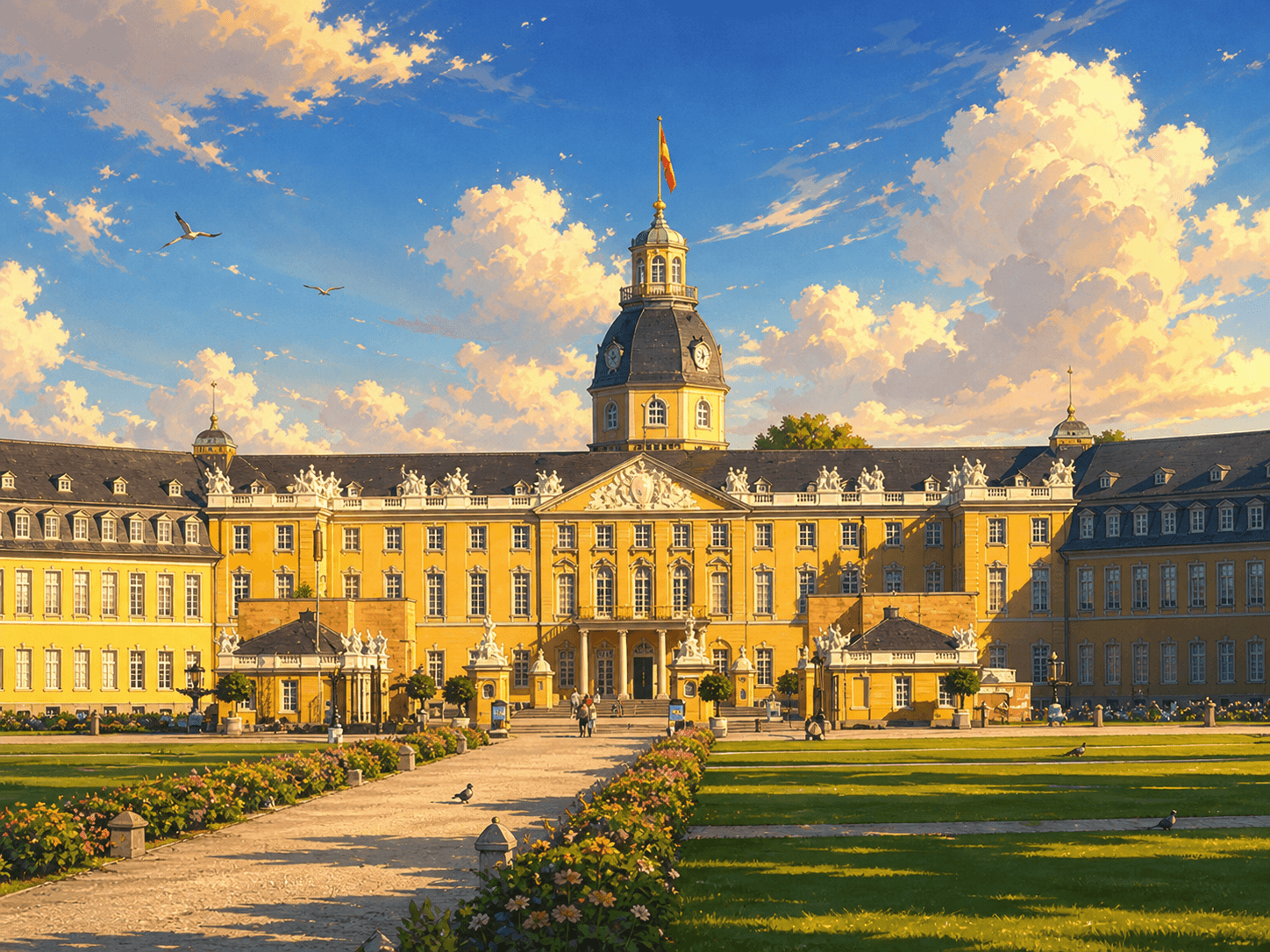
In March 2026, Karlsruhe took decisive steps in several areas: from the renovation of historical buildings to investments in local services and the future of education. Here is the monthly review.
Citizen-Relevant Decisions in March 2026
- WestBahnHUB in Knielingen: The Planning Committee presented a phased concept for the WestBahnHUB, which will redesign the public space area under the bridge and create barrier-free access.
- High-Performance Sports Funding: The Sports Committee decided on the allocation of funds for high-performance sports support for 2026/2027, including a reduction of 10,000 euros and a temporary suspension of the Olympic Hopefuls Support.
- Broadband Expansion in Wettersbach: The Local Council announced the cancellation of the broadband project by Deutsche Glasfaser and has now opted for cooperation with SWK and Telekom.
- Climate Protection Goals: The Committee for Environment and Health set clear objectives for achieving the European Energy Award in Gold and expanding photovoltaic (PV) capacity by 2030.
Education and School Development
In March 2026, Karlsruhe addressed forward-looking educational issues. The School Committee decided to gradually transform the one-year vocational qualification program (VAB-R) into the preparatory work program (AV). This transition is set to be completed by the school year 2026/27 and will allow for better integration into the regular educational framework. Additionally, the closure of the Heinz-Barth-School's branch at the Waldenserschule Palmbach location was approved, while the name will remain unchanged.
In the Durlach Local Council, a proposal for the preservation of long-distance train stops at Durlach Station was discussed and submitted for further debate. The city sees these stops as an important connection for commuters and tourists and will continue to exert pressure on transportation planning.
Infrastructure and Local Services
In Wolfartsweier, the focus was on supply reliability and security. The city utilities confirmed that the power grid is operated using ring lines and the n-1 principle, enabling quick restoration in the event of outages. Additionally, the emergency water supply in the district was detailed: 58 folding containers with 1,000 liters each and 7 million chlorine tablets are available as backup stock.
In the Grötzingen Local Council, an urban development concept for Eisenbahnstraße was approved, aiming to optimize access for pedestrians and cyclists. Again, the goal is to create a livable and permeable district.
Climate Protection and Energy Policy
In March 2026, Karlsruhe set a clear course for climate protection. The Committee for Environment and Health decided to achieve an installed PV capacity of 342 MWp by 2030. The current status is at 127 MWp, meaning another 215 MWp must be added in the next five years.
Another project is the Solar Canal in the first construction phase, which will unlock 2 MWp of the total possible 8.2 MWp capacity by 2027. These measures are part of the European Energy Award program, which Karlsruhe has already achieved in Gold and now aims to attain once more.
Cross-Topic: Structural Challenges and Opportunities
An overarching trend is the increasing attention to barrier-free and inclusive urban planning. Whether in the WestBahnHUB project or the renovation of Friedrich-Ebert Elementary School, accessibility and sustainability play a central role. At the same time, several committees have made it clear that the funding of projects, particularly in broadband expansion and local services, remains a challenge. The city is relying on partnerships and funding programs to meet these needs.
Another aspect is the future of educational programs. With the transition from VAB-R to AV and the gradual phasing out of daycare centers at elementary schools, it is evident that the city is acting flexibly and future-oriented in the education sector.
Conclusion and Outlook
March 2026 in Karlsruhe was marked by concrete steps toward sustainability, education, and infrastructure. The city has opted for long-term planning in several areas – whether in the renovation of historical buildings or in energy policy. In the coming months, the focus will be particularly on the implementation of these projects, as well as on continuing the discussions on local services and mobility. Looking at the upcoming committee meetings shows that Karlsruhe remains in motion – for its citizens and for the future.
NeoSearch analyses public council documents, committee minutes and municipal announcements. Source references appear automatically once verified meeting data is available.
What does this mean for businesses?
Schools, daycare centres and public buildings create early planning and construction opportunities. Following council agendas surfaces tenders for refurbishment, new builds and fit-out months before the official award — from shell construction to specialist planning to furnishing.
Track similar decisions in your region
Set up monitoring for education & public facilities in Baden-Württemberg — prefilled from this article.
Set up monitoring →More signals from Karlsruhe
Sports and Safety in Karlsruhe: The Debate on Lighting the Calisthenics Facility
In April 2026, Karlsruhe is intensively discussing the lighting of the Calisthenics facility on Karl-Hubbuch-Weg. The SPD is calling for an evaluation, while the city utility company and experts raise concerns. An overview of the background, costs, and alternatives.
Read more → Mobility in Hohenwettersbach: Challenges and Opportunities in April 2026
In April 2026, several mobility-related decisions were in focus in Hohenwettersbach, a district of Karlsruhe, aiming at climate-friendly alternatives and better school connectivity. The local council discussed proposals for the expansion of car-sharing and bicycle rental stations as well as improvements to the school bus service.
Read more → Financial Policy in Karlsruhe: Budget Decisions and Investments in April 2026
Karlsruhe’s Main and Finance Committee made important decisions regarding the city’s budget in April 2026. In this deep dive, we explore the background, the involved actors, and the long-term implications of these measures.
Read more →