Bollschweil April 2026: Infrastructure, Construction, and Administration in Focus
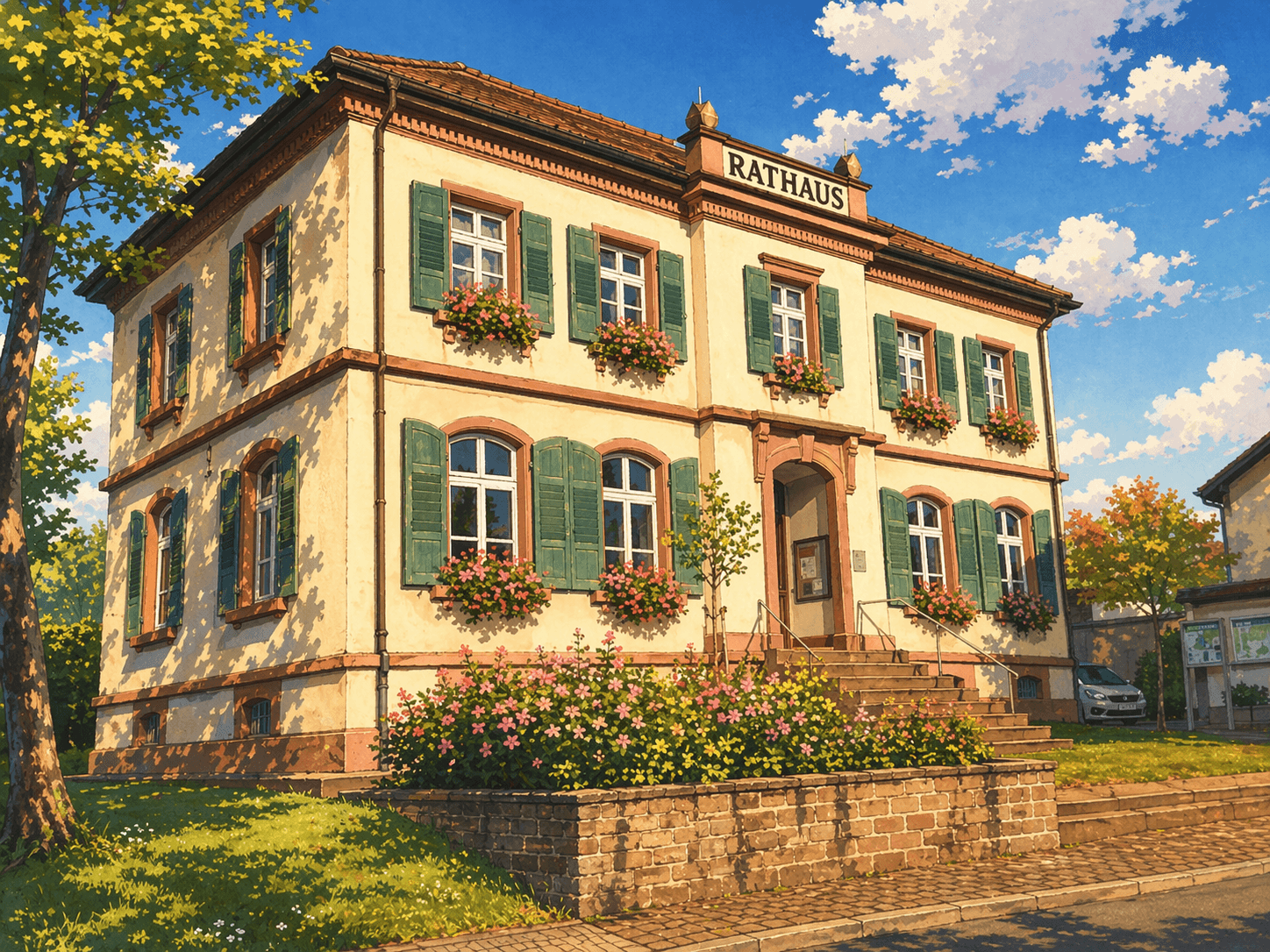
In April 2026, the municipality of Bollschweil made key decisions regarding infrastructure, construction planning, and administration. Here is the monthly review.
Building, Planning, and Administration: What Was Important This Month
- New Construction of the Bridge at the Sports Field (Eckbach): The municipality of Bollschweil has awarded the contract for the new bridge to the company Albert Kern Metallbau. The total cost is approximately 73,443.23 € (gross).
- Renovation of Kreisstraße K 4956 and the Main Water Supply Line St. Ulrich: The work will be carried out by the company Peter Hoch. The cost amounts to over one million euros (gross 1,049,816 €).
- New Cemeteries Ordinance and Cemeteries Fee Regulation: The new ordinance will be developed by the firm Weiher and sets clear rules for types of graves, resting periods, and site design.
- Changes to the Zoning and Land Use Plans: Specific points in the land use plan and building regulations have been defined, including the areas "Kleinfeldele neu – Sports Grounds" and "Kuckucksbadstraße II".
- Switch to the VOIS|GESO Business Software: The municipality is digitizing its administration and is transitioning to a new software system.
- Funding from Multiple Sources: The funds for the renovation of K 4956 and the main water line in St. Ulrich come from the municipal budget, the district administration, Möhlingruppe, and the wastewater utility association.
Infrastructure: New Bridge and Road Renovation
In April, Bollschweil made two important infrastructure decisions that directly affect the daily lives of its residents. The new construction of the bridge at the sports field is part of long-term planning to ensure the safety and usability of sports and leisure facilities in the municipality. The bridge is not only a connecting element but also a symbol of progress toward a modern, barrier-free sports infrastructure.
In parallel, the renovation of Kreisstraße K 4956 and the main water line in St. Ulrich was approved. With a total cost of over one million euros (gross), it is one of the largest single projects of the month. The road and the water line are of central importance for regional traffic and the supply of the local population. Particularly noteworthy is the funding from multiple sources, which shows how municipalities can collaborate with higher-level institutions to achieve common goals.
Construction and Land Use: Planning for the Future
In the area of construction planning, several decisions were made that will shape the future development of the municipality. The point-by-point amendment to the land use plan "Kleinfeldele neu – Sports Grounds" is a step toward a clearer urban framework for sports and leisure facilities.
In addition, a decision on the approval of the building regulations and local building codes for "Kuckucksbadstraße II" has been commissioned. This planning is significant for future construction in the eastern part of the municipality and could also provide important impulses in housing policy, especially in a time when housing is becoming increasingly scarce.
Another focus was the approval of a BG procedure for the expansion of a residential area on General-von-Holzing-Straße. Such individual approvals show how the municipality flexibly responds to private construction projects while adhering to construction regulations.
Administration and Software: Digitization in Focus
In April, the municipality also decided to switch its business software to VOIS|GESO. This step is part of a broader digitization strategy aimed at making administration more transparent and efficient. For residents, this means that future applications, approvals, and other administrative services can be processed faster and more easily.
In addition, the new cemeteries ordinance and cemeteries fee regulation was approved. The new ordinance sets clear rules for types of graves, resting periods, and the design of burial sites. Particularly noteworthy is the inclusion of § 15 Abs. 5 of the Burial Act, which provides protection against gravestones made by child labor. This shows how social values also play a role in traditional areas such as cemetery management.
Administration and Infrastructure: Synergies and Challenges
The decisions made in April show how closely infrastructure, construction planning, and administration are interlinked in a municipality like Bollschweil. Investments in bridges, roads, and water lines are not only technical measures but also investments in the quality of life for residents. At the same time, the digitization of administration shows that modern technologies also play a central role in smaller municipalities.
An interesting aspect is the funding from multiple sources. While the municipality itself bears the majority of the costs, it also benefits from support from the district administration, private companies, and utility associations. This underlines the importance of partnerships and co-funding in municipal politics.
Conclusion: Stability and Progress in April
April 2026 was a month of planning and investment for Bollschweil. The municipality has clearly positioned itself on several levels: in infrastructure, in construction planning, and in administration. The decisions show that Bollschweil is not only reacting to the present but also actively investing in the future.
For its residents, this means that they can rely on a secure, well-connected, and clearly structured municipality. At the same time, they benefit from a modernized administration that uses digital solutions to work more citizen-friendly and efficiently. April 2026 is a month that shows: Bollschweil is building bridges – not only over streams, but also into the future.
NeoSearch analyses public council documents, committee minutes and municipal announcements. Source references appear automatically once verified meeting data is available.
What does this mean for businesses?
Urban development, zoning plans and commercial settlements create early construction and supply opportunities. Following council decisions reveals projects before they go to tender.
Track similar decisions in your region
Set up monitoring for economic development in Baden-Württemberg — prefilled from this article.
Set up monitoring →More signals from Bollschweil
Urban Development in Bollschweil: From Bridge Construction to Land Use Planning – April 2026 in Focus
In April 2026, Bollschweil focused intensively on topics related to urban development and construction planning. From the renovation of a regional road to the introduction of new burial methods – the month brought numerous decisions with far-reaching consequences.
Read more → Governance in Bollschweil: Transparency, Processes, and Challenges in April 2026
In April 2026, the structures and processes of local administration in Bollschweil are under scrutiny. Although some meetings are planned, publicly accessible agendas are missing – a stumbling block for transparency and citizen participation.
Read more → Focus April 2026: Municipal Council Work in Bollschweil
In April 2026, recurring meetings and the transparency of local politics were in focus in Bollschweil. The municipal council met on April 24, but the absence of an agenda raised questions. An insight into current municipal council work and the role of citizens.
Read more →