Flensburg's Urban Development in February 2026: Neighborhood Center, Noise Protection, and Climate-Friendly Planning
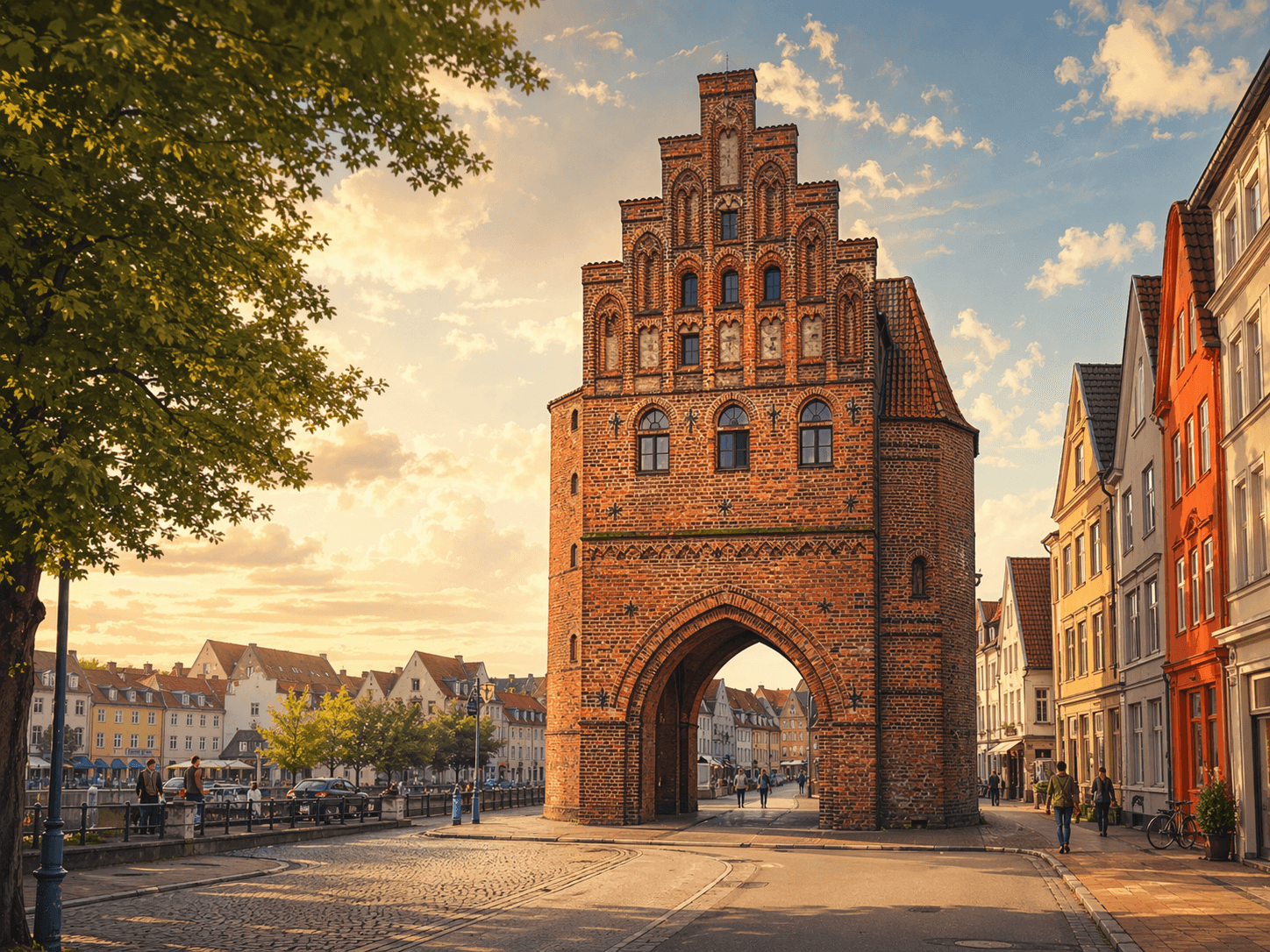
In February 2026, central topics of urban development were in focus in Flensburg: the expansion of the Walzenmühle neighborhood center, traffic planning along the K8, noise protection measures, and climate-friendly construction planning. These initiatives reflect Flensburg's strategic orientation toward creating a livable and sustainable city.
Neighborhood Center Walzenmühle: A Step Toward Local Services
With the revision of the master plan for the Neustadt redevelopment area and the planning of the Walzenmühle neighborhood center, Flensburg is clearly focusing on the creation of local amenities and urban connectivity. The goal is to develop 200 new residential units, accompanied by facilities such as health centers, pharmacies, retail shops, and social housing. Accessibility by foot and by bicycle plays a central role—representing a crucial step toward climate-friendly mobility.
The Flensburger Gesellschaft für Stadterneuerung mbH (Flensburg Society for Urban Renewal) is responsible for implementation. Public participation for the zoning plan 282 was already conducted in 2025. In the foreground is also the greening and de-sealing of the neighborhood, which brings not only aesthetic but also ecological benefits. The planning is also part of the federal program "Social City" and is supported by urban development funding.
Traffic Planning and Noise Protection: The K8 Extension as a Central Project
The extension of the district road K8 is another central topic that was intensively discussed in the meetings. The goal is to relieve the district of Tarup and at the same time to develop new residential and commercial areas. Noise protection and environmental compatibility play a decisive role here.
In zoning plan 321 ("Groß Tarup – K8"), noise protection walls with a minimum height of 3.50 meters are planned to reduce the noise burden on residents. In addition, a stormwater retention basin is planned to manage rainwater in a nature-friendly way. Species protection measures—especially for breeding birds and amphibians—are an integral part of the planning. A compensation area of 5 hectares of extensive grassland, ditches, and stormwater retention basins are intended to reduce ecological impacts.
Climate-Friendly Construction Planning and Energy Efficiency
Construction planning in Flensburg has become more focused on sustainability in recent years. New buildings in the neighborhood center Walzenmühle and in Groß Tarup include, for example, roof greening, facade retreats, and modern energy concepts. The city is relying on energy-efficient building concepts that not only meet the requirements of building regulations but also contribute to long-term CO2 reduction.
An example is the new building of the voluntary fire brigade in Tarup (zoning plan 317). It is equipped with a green roof, and noise protection measures have been planned to minimize environmental burden. In addition, a drainage basin is planned to reduce the inflow of rainwater into the sewer system.
Funding and Support: Key to Implementation
The implementation of the planned measures is strongly dependent on funding. Flensburg is using urban development funding specifically in the redevelopment areas of Westliche Altstadt, Neustadt, and Südstadt. For the year 2026, funding applications in the amount of around 13.9 million euros for the Neustadt district and 13 million euros for the station area are planned.
The city also ensures that the cost and financing plan (KoFi) remains up to date and takes into account adjustments due to rising construction costs. Funding is provided via special accounts supported by urban development funding and redemption amounts under §50 LBO.
Conclusion: A City in Transition
The meetings on urban development and construction in Flensburg show how strongly the city is oriented toward a sustainable, climate-friendly, and livable future. Through neighborhood development, traffic planning, and energy-efficient building concepts, Flensburg is not only becoming attractive in the present but also in the future. Challenges such as noise pollution, funding, and species protection are consciously considered and integrated into the planning.
Flensburg proves that urban growth is only sustainable when it takes into account social, ecological, and economic aspects equally. The coming months will show whether this strategy can be successfully implemented in practice—and how Flensburg will establish itself as a model city for sustainable urban development.
NeoSearch analyses public council documents, committee minutes and municipal announcements. Source references appear automatically once verified meeting data is available.
What does this mean for businesses?
Municipal council decisions are early indicators: following the council agenda surfaces projects and tenders months before the official award — before they ever reach the procurement portals.
Track similar decisions in your region
Set up monitoring for kommunale Projekte in Schleswig-Holstein — prefilled from this article.
Set up monitoring →More signals from Flensburg
Flensburg's Open After-School Program: Structural Adjustments and Legal Right of Access from 2026
In April 2026, Flensburg's Education Committee approved significant changes to the framework concept of the Open After-School Program at primary schools and special education centers. The adjustments aim to implement the legal right of access to after-school care, simplify the module structure, and adapt parental contributions. We analyze the background, implications, and future perspectives.
Read more → Social Justice in Flensburg: A Month in Focus on Social and Housing Policy
April 2026 in Flensburg was marked by decisive steps in social and housing policy. From the fee increase in homeless support to the strengthening of queer counseling services – the city is focusing on inclusive structures and long-term perspectives.
Read more → Kindergartens in Flensburg: Support, Catering, and Inclusion in Focus
In April 2026, important decisions and discussions regarding kindergartens (KiTas) were at the center of attention in Flensburg. The Youth Welfare Committee decided on adjustments to the support for KiTas and discussed the future of catering, inclusion, and the impact on socially disadvantaged families. In this blog post, we examine the background, decisions, and their implications for the city of Flensburg.
Read more →