Flensburg in March 2026: Budget, Social Affairs, and Urban Development in Focus
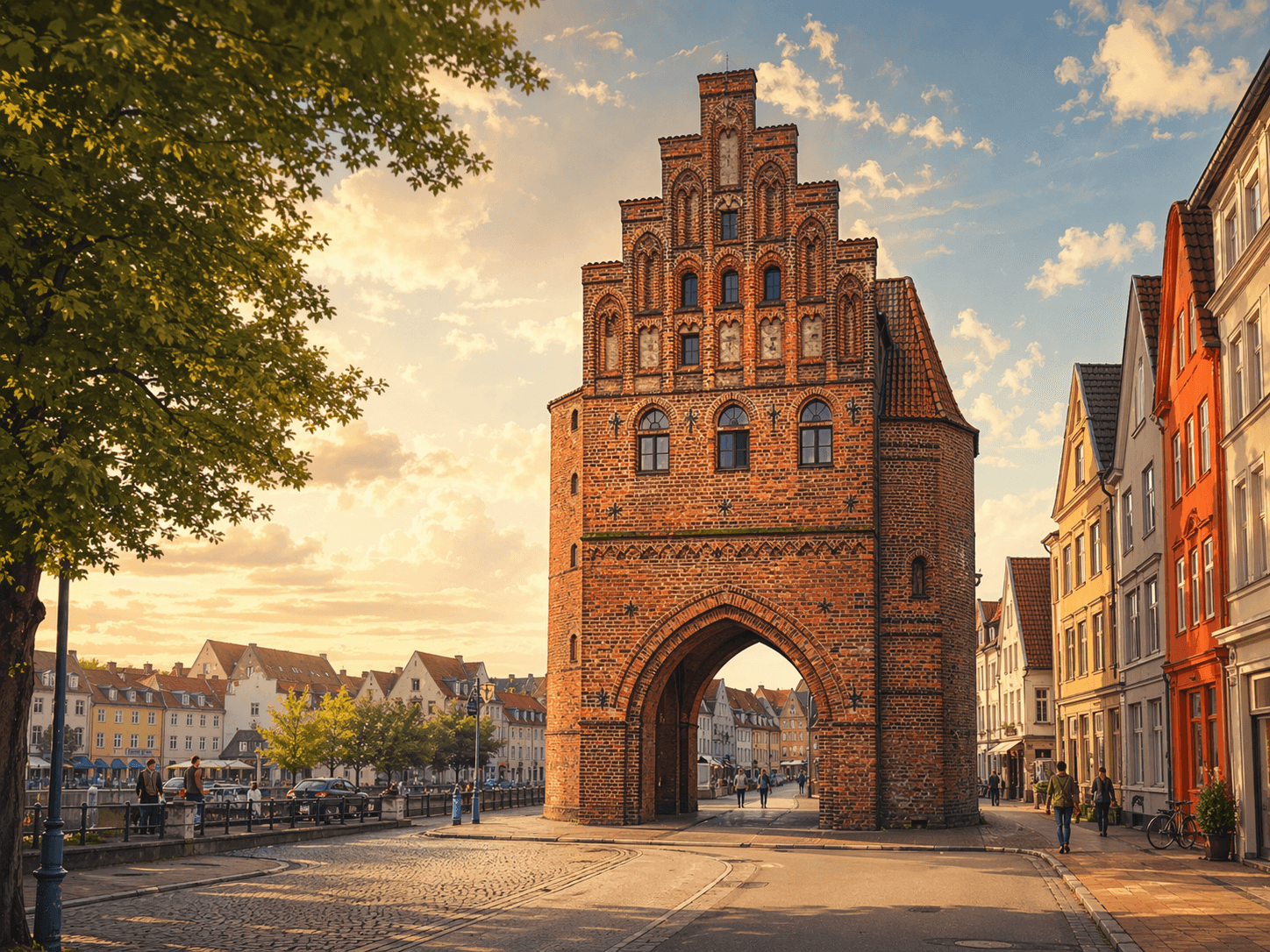
In March 2026, the city of Flensburg made key decisions: The budget until 2030 was fixed, a new expert group for seniors was established, and urban development was aligned with several future projects. An overview.
Budget 2027 and Financial Discipline until 2030
What was important this month
- The 2027 budget provides for an investment volume of 70 million € and a loan increase of 48 million €.
- The city aims to achieve a balanced budget by 2030 – 32 million € in annual savings are required.
- The Seniors' Advisory Council is being dissolved and replaced by an expert group for senior women and men.
- A Social Fund will be established to provide financial support for women who have had an abortion.
- The Flensburg Development Company will be founded to advance investment projects.
Budget Planning and Financial Discipline: 32 Mio.€ Savings by 2030
In March 2026, Flensburg made key decisions for financial planning until 2030. The 2027 budget provides for an investment volume of 70 million € and a loan increase of 48 million €. The city aims to achieve a structured improvement in results of 32 million € per year – 22 million € through structural changes and 10 million € through efficiency gains.
The Finance Committee approved the principle decision, with the CDU/WiF faction submitting a moratorium proposal on investments. The City Council also decided on the establishment of a Flensburg Development Company to advance investment projects and create structures for economic development.
Budget planning will be a central topic for urban development in the coming years and is described by Mayor Christoph Schmidt as a pivotal step for financial stability.
Social Innovations: Support for Pregnant Women and New Contributions in Kindergartens
In March 2026, a Social Fund was established to provide financial support for women facing unintended pregnancies. The fund provides a travel cost subsidy of up to 80 € and a childcare subsidy of up to 50 €, with an annual budget of 15,000 € planned.
Additionally, parental contributions in municipal kindergartens were adjusted. The parental contribution increases by 0.14 € per weekly care hour. For daily care of 8 hours, this results in a monthly contribution of 226.40 €. The city also approved a subsidy of 2 € per meal for lunch in municipal kindergartens.
These measures are part of the Parental Contribution Guidelines 2026, which will take effect from August 1, 2026. The financial impact is significant – for Alternative a, 202,800 € in additional costs are planned from 2026, and for Alternative b, 600,500 € in additional costs.
Urban Development: Kindergarten Places, Health Campus, and Alcohol Bans
Urban development in March 2026 was strongly influenced by three topics: kindergarten places, the Health Campus, and alcohol bans.
The Health Campus Peelwatt will be expanded with an Outpatient Surgery Center (AOZ). In the southern part of B-Plan 305, a 3,000 m² area will be set up for outpatient gynecological care. The administration is tasked with drafting a proposal by December 31, 2026, and engaging in discussions with potential stakeholders.
In the Committee for Citizens' Services, Protection, and Order, it was decided to examine the establishment of an alcohol ban zone in the city center area. Additionally, regulations for demonstrations were tightened to improve coordination – a mandatory cooperation meeting, parliamentary observation, and a binding follow-up meeting were mandated.
The docks at "Schiffbrücke" will also be renovated. With 19 million €, the renovation will be implemented by 2030. The measure is funded under the "Immediate Assistance for the Baltic Sea Flood Disaster" program.
Trends and Tensions: Budget Discipline vs. Investment Needs
The financial planning until 2030 brings a clear tension between discipline and investment needs. While the City Council is focusing on savings and efficiency gains, an investment volume of 70 million € is planned for 2027. The city must therefore set priorities to ensure financial stability without neglecting future-oriented projects.
In the social sector as well, a balance is evident: On the one hand, parental contributions are increasing, on the other hand, a Social Fund is being established. This reflects the effort to uphold social justice while maintaining budget discipline.
Conclusion and Outlook
March 2026 was a month of decisions in Flensburg. The city has decided on a clear budget plan, social innovations, and future-oriented urban development. The coming months will show whether the 32 million € savings by 2030 are feasible and how new structures such as the Expert Group for Senior Women and Men or the Flensburg Development Company will function.
Residents are invited to get actively involved – whether in schoolyard access, the Flensburg Movement Summer initiative, or the revision of the Flensburg Sports Award guidelines. The city of Flensburg is in motion – and that is a good thing.
NeoSearch analyses public council documents, committee minutes and municipal announcements. Source references appear automatically once verified meeting data is available.
What does this mean for businesses?
Municipal council decisions are early indicators: following the council agenda surfaces projects and tenders months before the official award — before they ever reach the procurement portals.
Track similar decisions in your region
Set up monitoring for Finance and Budget in Schleswig-Holstein — prefilled from this article.
Set up monitoring →More signals from Flensburg
Flensburg's Open After-School Program: Structural Adjustments and Legal Right of Access from 2026
In April 2026, Flensburg's Education Committee approved significant changes to the framework concept of the Open After-School Program at primary schools and special education centers. The adjustments aim to implement the legal right of access to after-school care, simplify the module structure, and adapt parental contributions. We analyze the background, implications, and future perspectives.
Read more → Social Justice in Flensburg: A Month in Focus on Social and Housing Policy
April 2026 in Flensburg was marked by decisive steps in social and housing policy. From the fee increase in homeless support to the strengthening of queer counseling services – the city is focusing on inclusive structures and long-term perspectives.
Read more → Kindergartens in Flensburg: Support, Catering, and Inclusion in Focus
In April 2026, important decisions and discussions regarding kindergartens (KiTas) were at the center of attention in Flensburg. The Youth Welfare Committee decided on adjustments to the support for KiTas and discussed the future of catering, inclusion, and the impact on socially disadvantaged families. In this blog post, we examine the background, decisions, and their implications for the city of Flensburg.
Read more →