Flensburg in March 2026: Urban Development and Construction Planning in Focus
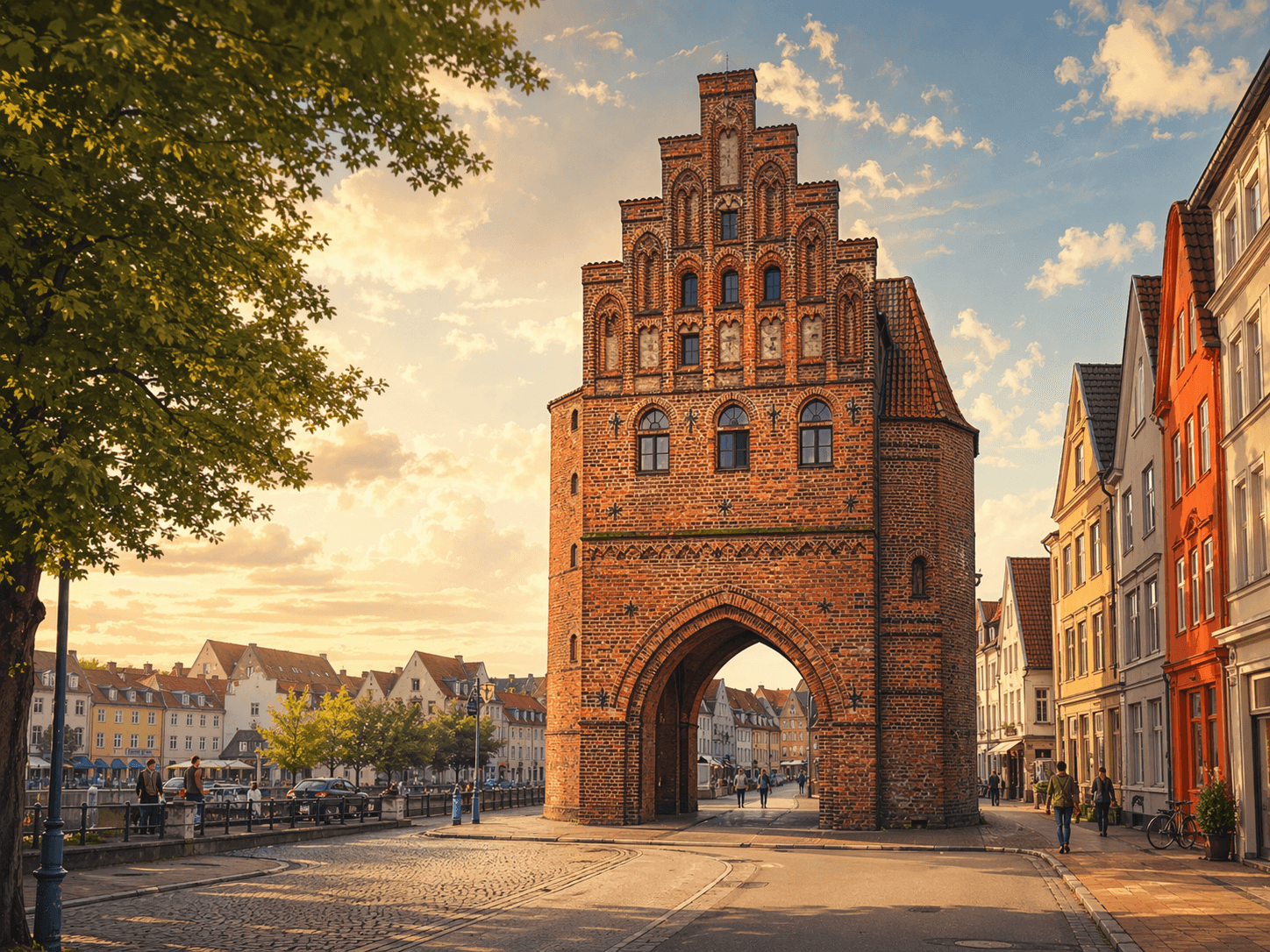
Flensburg’s urban development and construction planning in March 2026: From the new construction plan for the Gesundheitscampus Peelwatt to new public transport projects and the renovation of the Schiffbrücke – an in-depth look into current planning policy.
Urban Development in Motion: Flensburg in March 2026
Flensburg has established itself as a pioneer in urban development in recent years. March 2026 marks a key phase in the city's planning strategy, with infrastructure, housing supply, public transport, and construction planning taking center stage. In the meeting of the Committee for Environment, Planning and Urban Development on March 3, as well as in Session 52 on March 17, numerous projects, decisions, and planning steps were discussed that will shape the city's development in the coming years.
Housing Protection and Social Security: The Zweckentfremdungssatzung Ordinance
The Zweckentfremdungssatzung ordinance, which came into effect in 2025, is a central element of Flensburg’s housing protection strategy. It aims to prevent the loss of social housing through commercial use, short-term rentals, or vacancy. Between June 2025 and February 2026, a total of 20 applications for conversion were submitted – 14 for short-term rentals and six for commercial use. Five demolition applications were also submitted.
Of these 20 applications, three were approved and three rejected. The evaluation period runs until 2030, allowing the long-term effects of the ordinance to be assessed. It is also assumed that the ordinance has a preventive effect on potential buyers, which could reduce the number of unreported conversions.
Another central topic was the accommodation of individuals affected by violence. The administration has been tasked with including housing for organizations such as the Frauenhaus, NeuStart, and Frauen_Wohnen in the development of new multi-story residential buildings. This illustrates how closely social security and urban planning are intertwined.
Mobility and Public Transport: Planning for a Modern Transport Network
The Local Public Transport Plan for Schleswig-Holstein (LNVP 2027–2031) is another project that strongly influences Flensburg’s transport planning. The city has submitted a technical position paper in which it welcomes various measures, including the provision of barrier-free access at stops and the creation of new stations at key locations such as the Central Hospital or the Deutsche Haus/Rathaus.
At the same time, Flensburg has criticized the lack of focus on barrier-free accessibility and the insufficient assessment of service quality. In addition, specific projects that have been included in the LNVP were presented, including the Flügel concept for the RE74 Jübek–Flensburg line and the capacity expansion on several routes. The general renovation of the Hamburg–Flensburg route and the reactivation of the Flensburg-Niebüll railway line are also under consideration.
Another important project is the on-demand transport system SMILE24, which aims to improve public transport and increase accessibility in rural areas. The use of HVO (Hydrotreated Vegetable Oil) as a transitional technology on the Marschbahn and the electrification of lines are further steps toward climate-friendly mobility.
Construction Planning and Infrastructure: From the Schiffbrücke to the Gesundheitscampus
The meeting on March 17 focused on several specific construction projects. The Schiffbrücke Flensburg is part of a comprehensive renovation that is in the preliminary planning phase until 2025. With a cost of 19 million euros, the project includes the demolition and restoration of the wharf edge as well as measures to stabilize the harbor. The construction work will be carried out using modern materials such as reinforced concrete slabs and sheet pile walls.
Another highlight was the planning of the Gesundheitscampus Peelwatt, where a new ambulatory surgical center (AOZ) is to be built. This building will not only provide gynecological care but also enable termination of pregnancy – an important addition to the region's medical services. The B-Plan 305 will be revised, and the land reservation is planned until 2027.
The construction of a new Lidl store on Trögelsbyer Weg was also decided. The site was chosen on the grounds of the former Rewe store. The construction work is planned in accordance with the tree protection ordinance, with replacement planting and environmentally friendly measures such as green roofs and PV systems.
Future Perspectives and Challenges
Flensburg's urban development in March 2026 shows how closely social, ecological, and infrastructural issues are interlinked. The city is moving toward a sustainable, inclusive, and well-connected urban image in which both the preservation of housing and the improvement of mobility are priorities.
At the same time, it becomes clear that planning is associated with challenges: from financing to implementation and coordination with stakeholders. The evaluation periods, criticism regarding the representation of barrier-free accessibility, and discussions about the financing of measures make it clear that urban development remains a dynamic process that must be continuously adapted and optimized.
Conclusion: Flensburg as a Model City for Sustainable Urban Development
The decisions and planning of March 2026 show that Flensburg is on the right path to establish itself as a model city for sustainable urban development. With a combination of social housing protection, climate-friendly mobility, modern infrastructure, and urban diversity, the city is setting impulses that can have an impact beyond the regional level.
Although challenges remain – from long-term financing to the implementation of major projects – Flensburg remains an example of how a city can actively shape its future.
NeoSearch analyses public council documents, committee minutes and municipal announcements. Source references appear automatically once verified meeting data is available.
What does this mean for businesses?
Municipal council decisions are early indicators: following the council agenda surfaces projects and tenders months before the official award — before they ever reach the procurement portals.
Track similar decisions in your region
Set up monitoring for Finance and Budget in Schleswig-Holstein — prefilled from this article.
Set up monitoring →More signals from Flensburg
Flensburg's Open After-School Program: Structural Adjustments and Legal Right of Access from 2026
In April 2026, Flensburg's Education Committee approved significant changes to the framework concept of the Open After-School Program at primary schools and special education centers. The adjustments aim to implement the legal right of access to after-school care, simplify the module structure, and adapt parental contributions. We analyze the background, implications, and future perspectives.
Read more → Social Justice in Flensburg: A Month in Focus on Social and Housing Policy
April 2026 in Flensburg was marked by decisive steps in social and housing policy. From the fee increase in homeless support to the strengthening of queer counseling services – the city is focusing on inclusive structures and long-term perspectives.
Read more → Kindergartens in Flensburg: Support, Catering, and Inclusion in Focus
In April 2026, important decisions and discussions regarding kindergartens (KiTas) were at the center of attention in Flensburg. The Youth Welfare Committee decided on adjustments to the support for KiTas and discussed the future of catering, inclusion, and the impact on socially disadvantaged families. In this blog post, we examine the background, decisions, and their implications for the city of Flensburg.
Read more →