Financial Policy in Flensburg: Budget Planning, Investments, and Funding in Focus
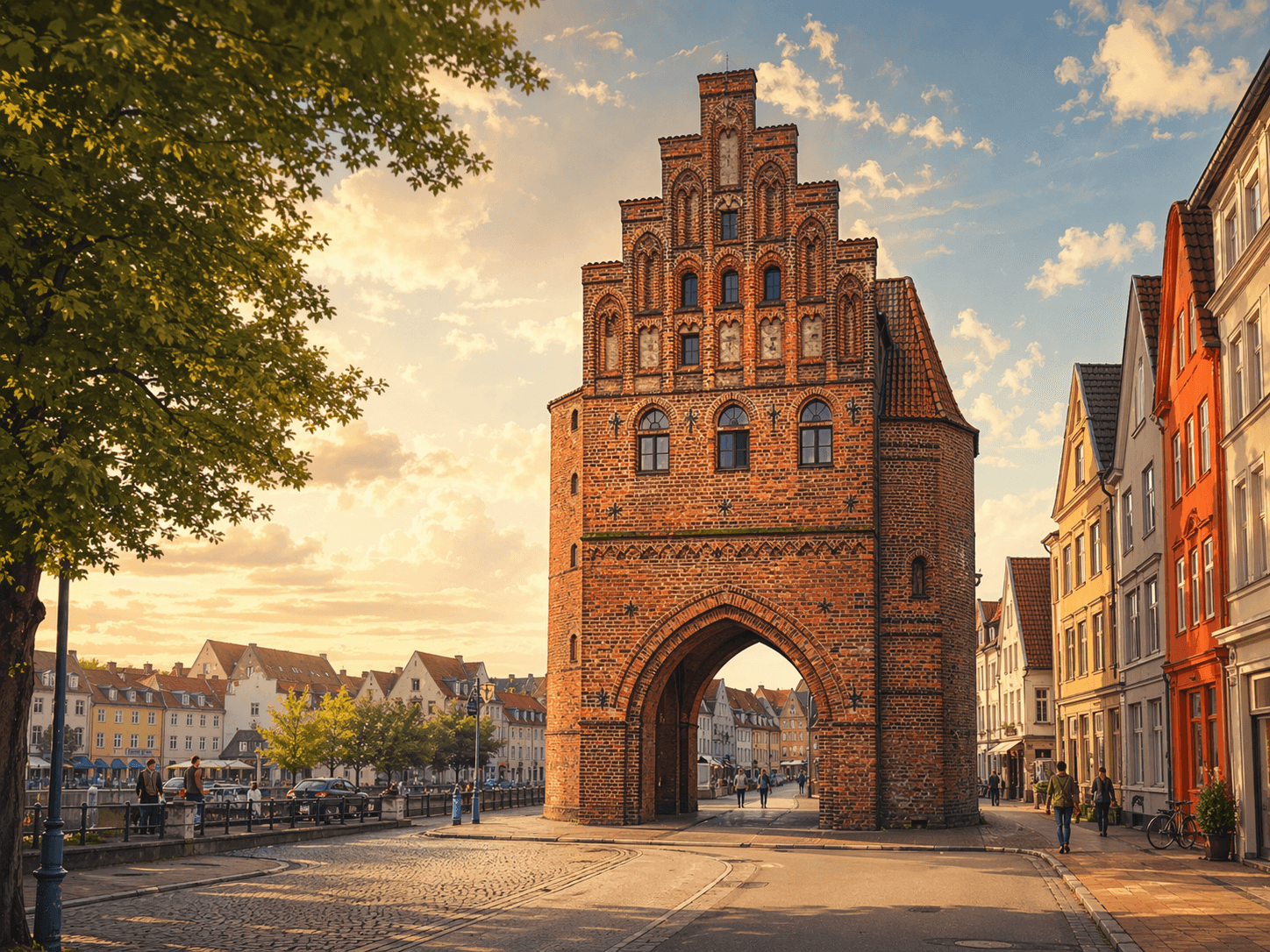
In February 2026, Flensburg took decisive steps in municipal financial policy. The city responded to challenges in the education sector, invested in infrastructure, and strengthened its crisis resilience through personnel measures. We analyze the key developments and their financial implications.
Major Investments in Education
Flensburg has committed to several significant investments in the education sector this month. The renovation of Fördegymnasium, with a total volume of over 39 million euros, is a central project. In addition to the investment costs, annual rental follow-up costs of approximately 3.32 million euros will need to be covered in the budget of the Department for Education, Sports, and Culture. Furthermore, the Max von der Grün School is being rebuilt, with 11.4 million euros allocated for this. The annual rental follow-up costs for the new building amount to 763,100 euros and will be financed from the budget starting in 2027. These investments show how strongly Flensburg is thinking about the future viability of its educational landscape—and how high the financial demands are.
Utilizing Funding: Campus Bath Expansion
Another financial highlight is the planned expansion of the Campus Bath. The city has applied to use funding from the Schleswig-Holstein program "New Construction and Expansion of Swimming Sports Facilities." With a funding volume of 25 million euros and a funding share of up to 60%, the program offers an attractive opportunity to reduce the costs of the extension with a multifunctional area and 25m pool. The application must be submitted by April 2026, and the own funds must be available by 2030. This shows how central it is to actively use funding to make major projects financially viable.
Strengthening Crisis Resilience: Civil Defense
Flensburg has also invested in personnel to strengthen its crisis resilience. Two full-time positions for the coordination of civil defense and technical-biological civil protection have been established. The funding comes from the "Special Situations Staff Pool" and costs approximately 128,000 euros per year. These measures are necessary to meet the legal requirements of the state of Schleswig-Holstein from 2026 onwards and to ensure that the city remains capable of action in crisis situations. The costs are moderate, but the tasks, such as data processing, coordination with security authorities, and secrecy protection, require professional implementation.
Social Ticket: Price Adjustment and Funding
Another topic is the price adjustment of the social ticket (S-Ticket). Starting in April 2026, the end-user price will increase to 30 euros per month, while the municipal subsidy will rise to 33 euros. The city must provide an additional 135,000 euros in the 2026 budget for this. The municipal subsidy remains a crucial component to ensure that low-income groups have access to social local transport. The funding is directly taken from the budget, showing how committed Flensburg is to ensuring fair mobility.
Outlook: Budget 2027 and Investment Planning
The budget planning for 2027 is already taking shape in February 2026. The schedule includes several meetings for investment conferences and guideline decisions. Particularly notable is the planning for the East Fire Station, whose costs are estimated at 36.2 million euros. The funding has already been included in the investment plans, and the completion is planned for 2029. This investment underlines the long-term planning security that Flensburg aims for its infrastructure.
Conclusion: Stability and Vision
The financial policy in Flensburg in February 2026 reflects a balance between stability and vision. Major investments in education and security, the use of funding, and the adaptation of social benefits such as the social ticket show how the city wants to shape its future. The financial decisions are precisely defined, and the budget planning for 2027 already lays the foundation for further developments. Flensburg proves that it is possible to combine long-term goals with realistic budgets.
NeoSearch analyses public council documents, committee minutes and municipal announcements. Source references appear automatically once verified meeting data is available.
What does this mean for businesses?
Municipal council decisions are early indicators: following the council agenda surfaces projects and tenders months before the official award — before they ever reach the procurement portals.
Track similar decisions in your region
Set up monitoring for Finance and Budget in Schleswig-Holstein — prefilled from this article.
Set up monitoring →More signals from Flensburg
Flensburg's Open After-School Program: Structural Adjustments and Legal Right of Access from 2026
In April 2026, Flensburg's Education Committee approved significant changes to the framework concept of the Open After-School Program at primary schools and special education centers. The adjustments aim to implement the legal right of access to after-school care, simplify the module structure, and adapt parental contributions. We analyze the background, implications, and future perspectives.
Read more → Social Justice in Flensburg: A Month in Focus on Social and Housing Policy
April 2026 in Flensburg was marked by decisive steps in social and housing policy. From the fee increase in homeless support to the strengthening of queer counseling services – the city is focusing on inclusive structures and long-term perspectives.
Read more → Kindergartens in Flensburg: Support, Catering, and Inclusion in Focus
In April 2026, important decisions and discussions regarding kindergartens (KiTas) were at the center of attention in Flensburg. The Youth Welfare Committee decided on adjustments to the support for KiTas and discussed the future of catering, inclusion, and the impact on socially disadvantaged families. In this blog post, we examine the background, decisions, and their implications for the city of Flensburg.
Read more →