Legal Security in the Use of Public Spaces: Saarbrücken in March 2026
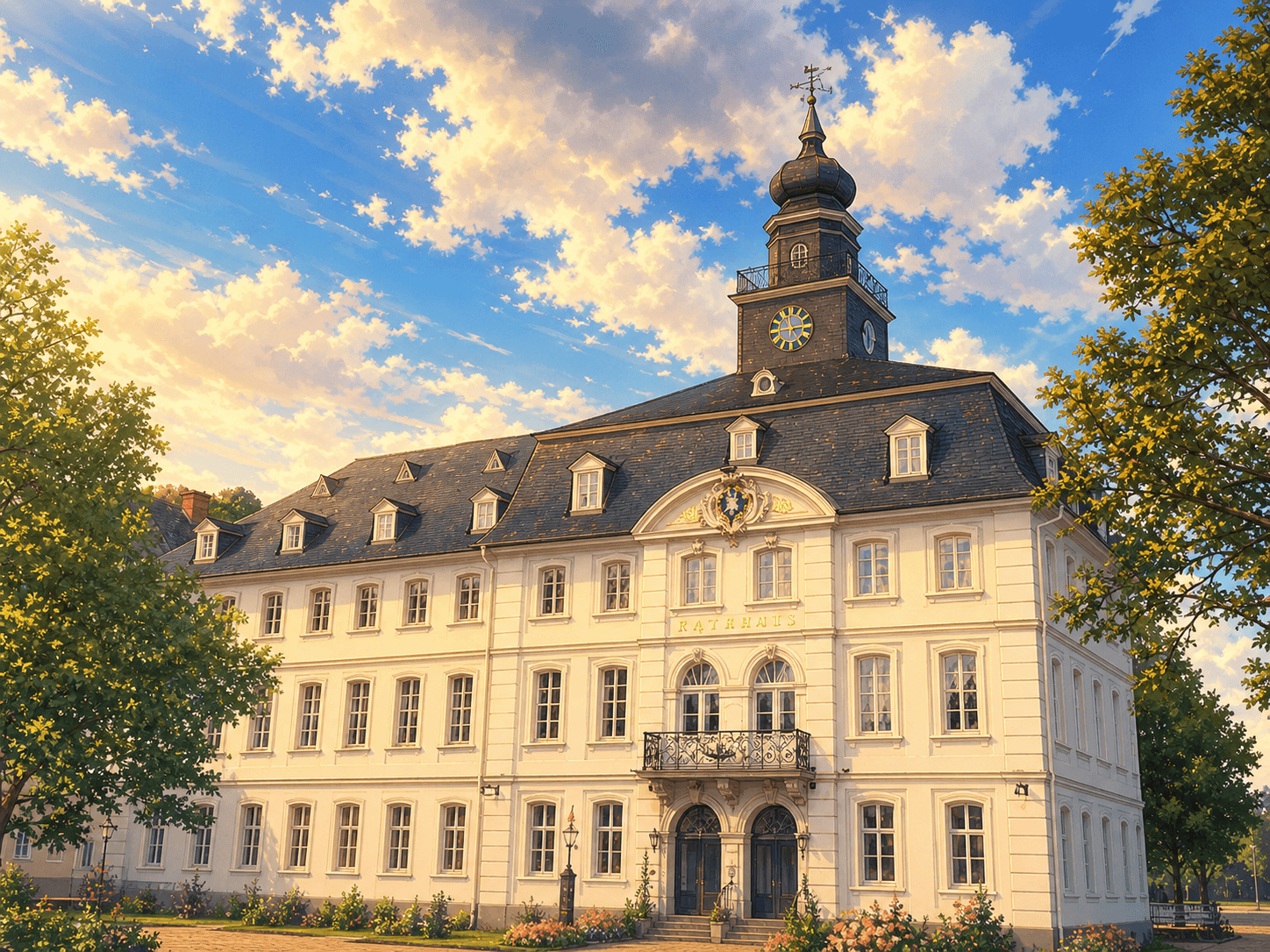
In March 2026, Saarbrücken focused on legal questions, particularly regarding the use of public spaces by constitutionally hostile parties. The Personnel and Legal Committee intensively discussed legally secure practices to protect the free democratic basic order.
Legally Secure Use of Public Spaces: The Situation in Saarbrücken
In an increasingly polarized political landscape, the question of how municipalities can exclude constitutionally hostile parties from the use of public spaces is particularly relevant. In March 2026, specific legal and political decisions in Saarbrücken were in focus, addressing how to deal with such challenges.
The Factional Motion and the Controversy
A central issue at the Personnel and Legal Committee meeting on March 18, 2026, was a motion to restrict the use of public spaces by constitutionally hostile parties. The AfD, classified by the Federal Office for the Protection of the Constitution as "clearly right-wing extremist," was at the center of the debate. The motion proposed a general restriction on the use of municipal spaces by such parties.
However, this approach met resistance. The committee rejected the motion and instead opted for regular individual case assessments, relying on concrete indications of danger. This means the city does not rely on blanket bans but examines in each individual case whether the use of a space actually violates the free democratic basic order.
Legal Framework and Court Decision
The decision of the Munich Administrative Court of February 13, 2026 (4 CS 26.28), played a decisive role. It clarified that restrictions on freedom of speech are only permissible if there is a sufficiently concrete danger forecast. A ban on a planned AfD event was deemed legally invalid.
In addition, the administration emphasized that the burden of proof for the existence of exclusion criteria lies with the city. This means that municipal authorities must not assume danger lightly but must provide specific evidence to justify the prohibition of an event.
Practical Implementation: Individual Assessment and Legal Security
Saarbrücken has thus consciously chosen a legally secure and flexible solution. The individual case assessment enables politically motivated events to be evaluated individually without issuing blanket bans. This protects the free democratic basic order while safeguarding the rights of citizens.
The administration stresses that access to municipal facilities can only be denied in exceptional cases, if there is a specific threat to public safety or order. This approach is both legally compliant and politically responsible.
Outlook: The Balance Remains Under Scrutiny
In the coming months, it will depend on how the new regulations are implemented in practice. The city must learn to balance legal security, freedom of speech, and safety. In this context, the individual case assessment will play a central role. At the same time, the observation of the political landscape and the involvement of the administration remain crucial to minimizing legal risks.
NeoSearch analyses public council documents, committee minutes and municipal announcements. Source references appear automatically once verified meeting data is available.
What does this mean for businesses?
Municipal council decisions are early indicators: following the council agenda surfaces projects and tenders months before the official award — before they ever reach the procurement portals.
Track similar decisions in your region
Set up monitoring for Policy and Legal Matters in Saarland — prefilled from this article.
Set up monitoring →More signals from Saarbruecken
Sport in Saarbrücken: Highlights and Challenges in April 2026
In April 2026, Saarbrücken was the focus of several key sports policy decisions and projects. The Committee for Sports and Public Facilities addressed the preparation for the Special Olympics, the renovation of sports facilities, and the long-term security of the sports infrastructure. An overview.
Read more → Climate Protection in Saarbrücken: How the State Capital Advances the Energy Transition in April 2026
In April 2026, the state capital of Saarbrücken made numerous climate-related decisions and launched initiatives to achieve its climate protection goals. The focus was on municipal heat planning, the promotion of renewable energies, and the strengthening of the climate protection management. Here is an analysis of the most important developments.
Read more → Social Affairs in Saarbrücken: Focus on Migration, Integration, and Neighborhood Policy in April 2026
In April 2026, Saarbrücken saw important decisions and discussions in the field of social affairs, particularly on topics such as refugee accommodations, the advisory board for people with disabilities, and senior participation in Rastpfuhl. This blog analyzes the political priorities, backgrounds, and implications.
Read more →