Mainz Monthly Blog March 2026: Housing, Digitalization, and Climate Adaptation in Focus
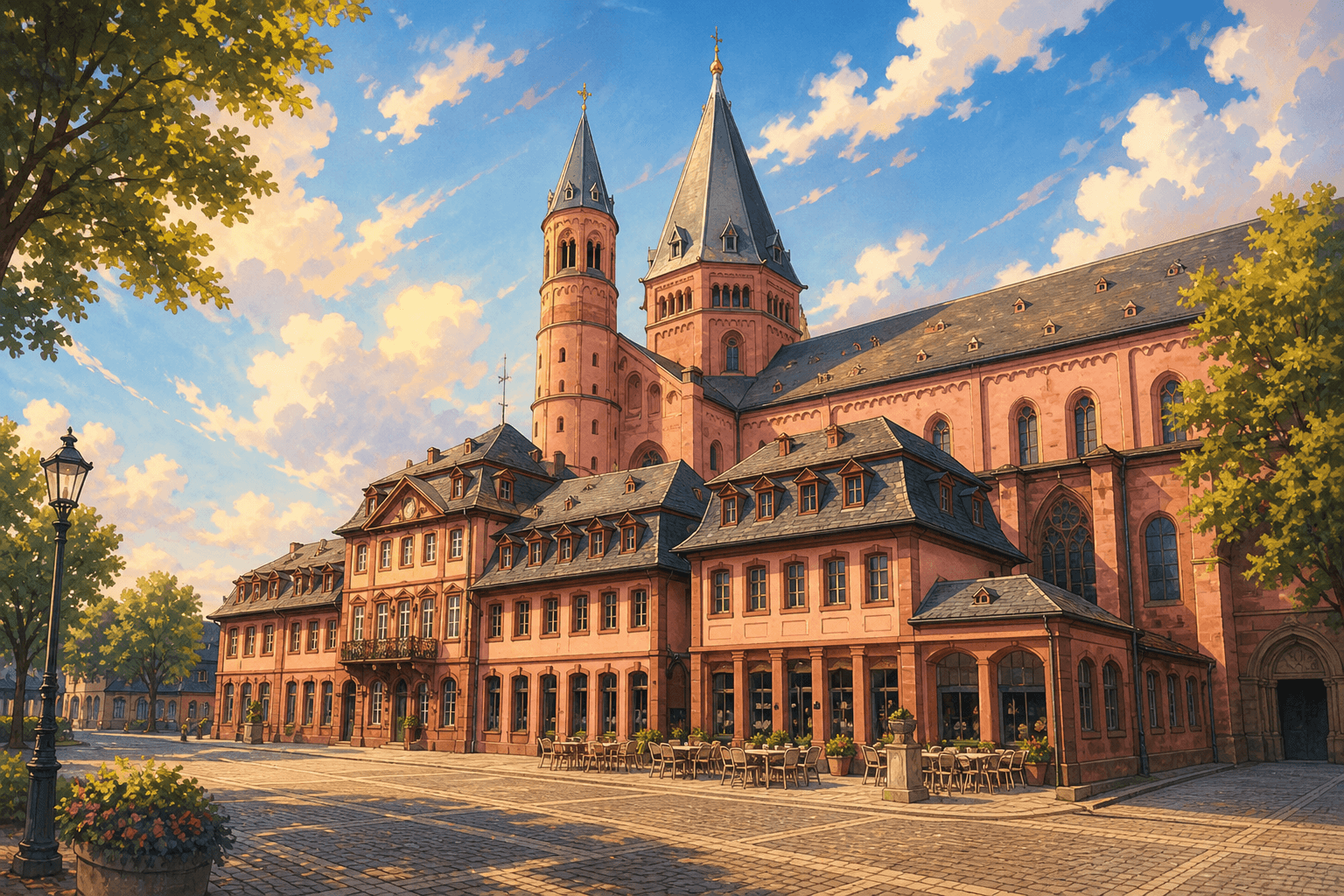
March 2026 brought key decisions for Mainz regarding urban development, digitalization, and climate protection. Here is an overview of the most important topics and developments of the month.
Housing and Urban Development in Focus
What was important this month
- Rejection of construction projects in Weisenau and Bretzenheim: Two controversial construction projects were rejected due to legal and urban planning deficiencies.
- New residential unit in Hechtsheim: A third residential unit in the attic of Kernerweg 36 has been approved – under clear conditions.
- IEK 2026 is being continued: The new city center development concept aims to prepare Mainz for the future – with a focus on climate adaptation and mixed-use development.
- Start of fiber optic expansion in Hechtsheim: Broadband expansion is expected to begin in the first quarter of 2027.
- Digital register for paper bins: Mainz is making its administration more transparent – with a new digital system.
Housing and Urban Development: Caution Against Overdevelopment
In March 2026, several construction projects were under municipal review. In Weisenau, an application for a semi-detached house at Dr.-Friedrich-Kirchhoff-Straße 16 was unanimously rejected. The base area exceeded the permitted size, and there were no proofs for greenery and noise protection.
In Bretzenheim, a project also stalled: The conversion of an automotive workshop at Marienborner Straße 49 into a micro-apartment building was also rejected. The objection to the construction notice is now being reviewed by the City Law Committee.
In contrast, a project in Hechtsheim was approved: The third residential unit in Kernerweg 36 is allowed to be created in the attic. Conditions such as no structural changes and compliance with greening requirements were met.
Digitalization and Transparency: Paper Bins in the Digital Spotlight
Another milestone for Mainz: The city council unanimously approved (with one abstention) the introduction of a digital register for paper bins. The goal is to systematically record and make the distribution and financing of the bins transparent. The city administration is now tasked with implementation, with costs to be detailed during the concrete implementation phase.
This measure is part of a broader trend to make Mainz's administration more transparent and efficient. Public minutes and digital participation formats show that the city is on its way to smarter governance.
Climate Adaptation and City Center Development: IEK 2026
March 2026 was also marked by the continuation of the Integrated Development Concept (IEK) for Mainz's city center. With a budget of around 200,000 euros, the concept is being expanded to include six new target areas: These include the city center's mixed-use development, climate adaptation, cultural diversity, mobility, safety, and digitalization.
Climate adaptation plays a central role in this. During the public participation phase, measures such as greening, shading, and climate protection were discussed. The planning of photovoltaic systems on new school buildings, such as in Vor der Frecht, is also part of the climate strategy.
Mobility and Safety: Improvements and Priorities
In the mobility sector, there were improvements in March. An additional pedestrian safety signal will be installed at the intersection of An den Mühlwegen in Hechtsheim. In Bretzenheim, the issue of safety at the St. Bernhard/Hans-Böckler-Straße stop remains unresolved, as the CDU inquiry has yet to be answered.
Snow removal priorities were also discussed: Feldbergstraße and Raupelsweg in Mainz-Neustadt were classified in snow removal priority levels 3 and 4 – a comprehensive re-prioritization is not possible for the current season.
Future Mainz: Culture, Education, and Fire Protection
In addition to urban planning topics, there were also decisions in the fields of education and culture. The Vocational School II in Neustadt will move to the Holzstraße, a decision the city council will make on March 25, 2026. The specific premises and renovation process are still under discussion.
In fire protection, there was a personnel change: Stefan Behrendt was unanimously appointed as fire and disaster protection inspector, while Mark Jüliger and Holger Hagen were appointed as deputy inspectors. These decisions are important for the safety of the city and its residents.
Connections and Trends
A central trend of the month is the increased focus on climate change and sustainability. Whether in city center development, fiber optic expansion, or fire protection – Mainz is showing that climate-friendly and resilient structures are becoming the center of attention. At the same time, the city remains cautious in urban planning matters and relies on clear legal and urban planning requirements.
The digitization of the administration and the inclusion of citizens in decision-making processes are also clearly visible. With the digital paper bin register and participation in the IEK 2026, Mainz shows that transparency and citizen participation are not just lip service.
Conclusion and Outlook
March 2026 was a month of clear decisions for Mainz: Housing, digitalization, climate protection, and education were in focus. The rejection of controversial construction projects shows that the city remains consistent in its urban planning requirements. At the same time, Mainz is setting impulses for a smarter administration and sustainable urban development.
In April it will become clear whether the city council approves the relocation of the Vocational School II and how the IEK 2026 further develops. The topics of mobility and safety remain current – not least against the backdrop of the upcoming winter season.
Mainz is continuing to move towards a sustainable, digital, and citizen-oriented city – with clear planning and transparent decision-making.
NeoSearch analyses public council documents, committee minutes and municipal announcements. Source references appear automatically once verified meeting data is available.
What does this mean for businesses?
Urban development, zoning plans and commercial settlements create early construction and supply opportunities. Following council decisions reveals projects before they go to tender.
Track similar decisions in your region
Set up monitoring for economic development in Rheinland-Pfalz — prefilled from this article.
Set up monitoring →More signals from Mainz
Housing Crisis in Mainz: Challenges, Deficits, and Strategies for 2026
The housing deficit in Mainz is continuing to rise while subsidized housing is declining. The city faces the challenge of creating affordable housing for all population groups – especially for senior citizens, single parents, and low-income households. A deep dive into the current situation, causes, and possible courses of action.
Read more → Youth Policy in Mainz: Playgrounds, Media Protection, and Youth Participation in April 2026
In April 2026, Mainz intensifies its focus on youth policy, emphasizing the modernization of playgrounds, strengthening media protection, and promoting youth participation in political bodies. The Youth Welfare Committee plays a central role in these efforts.
Read more → Mobility Development in Mainz – April 2026 in Focus
In Mainz, the administration is actively addressing the future of mobility. April 2026 brought numerous decisions regarding tram infrastructure, traffic calming, public transport improvements, and the development of green infrastructure. This blog post analyzes the most important developments and their impact on urban mobility.
Read more →