Mainz in Motion: Urban Development and Construction Planning in March 2026
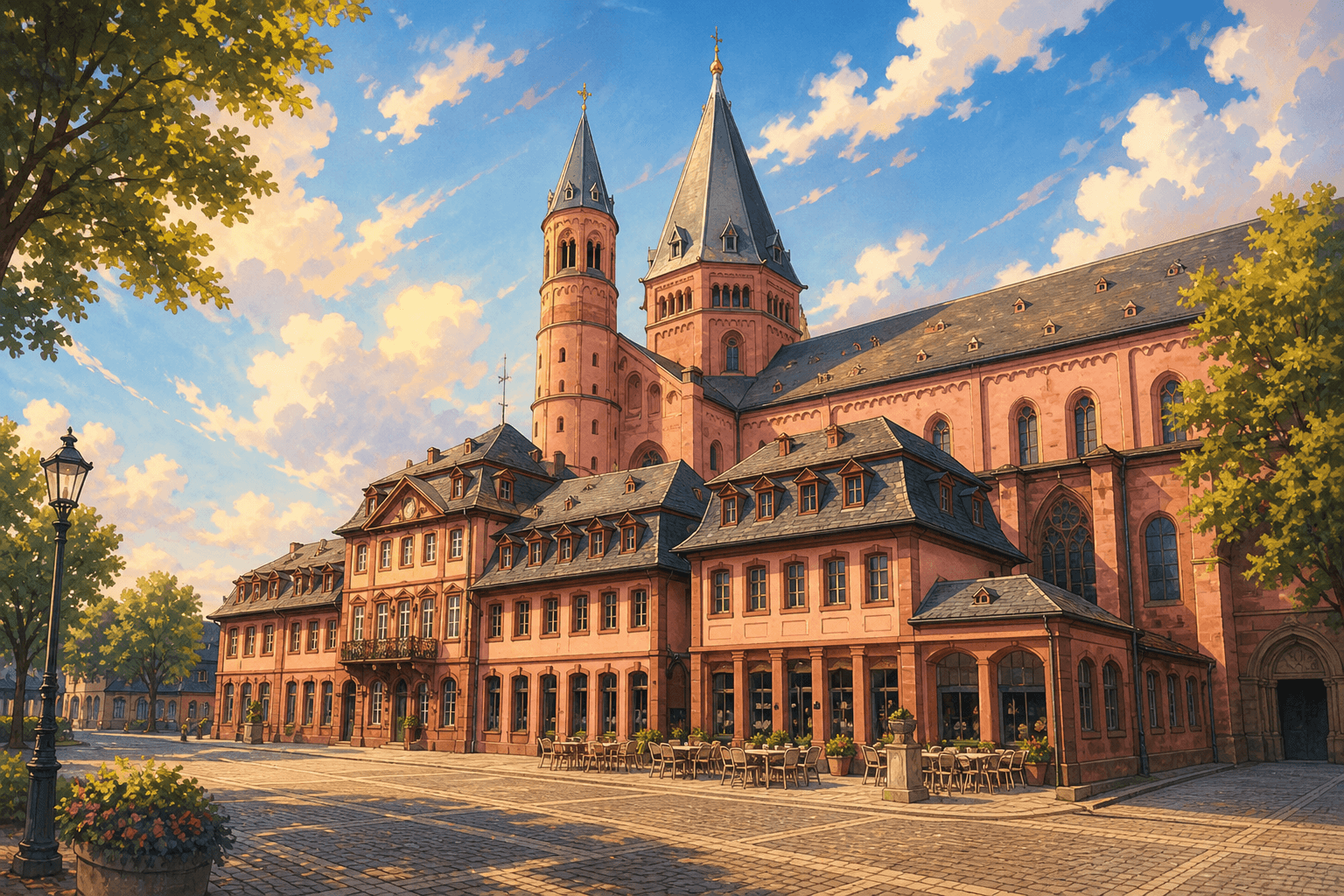
In March 2026, a lot is in the air in Mainz when it comes to urban development. From the city center to the districts – the discussions about building, housing, and urban space design show how complex and dynamic urban development is. A focus lies on climate resilience, but also on social cohesion. We take a closer look behind the meeting minutes.
Mainz in March 2026: Urban Development between Resistance and Change
Mainz is moving forward. In March 2026, numerous urban planning decisions were at the center of attention in the Rhineland-Palatinate capital city. The building committees and local advisory boards discussed controversially about new housing projects, zoning plans, and traffic planning. At the same time, the city continued to promote a climate-friendly, livable, and barrier-free urban design – not least within the framework of the Integrated Development Concept for the City Center 2026 (IEK 2026).
The Tensions of Construction: Approval Procedures and Local Advisory Boards
In several districts, the tensions between urban planning regulations and local interests became clearly visible. For example, in Weisenau, a building application for a semi-detached house with three residential units was rejected, even though the local advisory board had unanimously approved it. The reason: the planning violated the zoning plan, as the ground area was exceeded by 125% and the permissible number of residential units (2) was not respected.
A similar situation occurred in Bretzenheim, where the conversion of a car garage into a micro-apartment building was rejected. Here, too, urban planning regulations stood in the way – and the administration succeeded in obtaining approval in accordance with § 36a of the German Building Code (BauGB) with the consent of the committee.
In contrast, the project in Hechtsheim saw the third residential unit in an attic space unanimously approved. Particularly noteworthy was the fact that this was the first time the so-called "Building Turbo" was applied. This procedure accelerates approval processes, especially when no structural changes are made.
City Center Development: IEK 2026 and Climate Resilience
The city center is a central focus of the city's planning. With the IEK 2026, another milestone was set. The concept, which was unanimously approved (with one abstention), aims at a sustainable, socially balanced, and climate-resilient development. This includes measures such as the reduction of sealed surfaces (approximately 670 m²) and the development of new forms of housing such as apartments for trainees and senior housing.
Creating more green spaces is also central. Tiny Forests and wildflower meadows are intended not only to increase biodiversity but also to positively influence the climate of the living environment. The city is relying on natural solutions – such as climbing plants as sun protection or solar trees that provide shade and generate electricity at the same time.
Mobility and Urban Space: Car Reduction and Barrier-Free Routes
Mobility is being rethought in Mainz. In March 2026, several projects were presented to strengthen cycling and optimize pedestrian traffic. For example, the Große Bleiche between Flachsmarktstraße and Umbach is to become a car-reduced zone. Functional and aesthetic improvements are planned for the Schöfferstraße and Fuststraße.
Barrier-free accessibility is another focus. In the Emmerich-Josef-Straße, it is being examined whether elevators can be installed. At the same time, the intersection of Schusterstraße/Quintinstraße is being redesigned to be accessible to all people. In the city center, more public restroom facilities are being built to improve the quality of stay.
Culture and Experience Space: Mainz as a Vibrant Urban Space
Culture and urban space are closely linked. In Mainz, public space is increasingly being used for cultural purposes – for example, performances in the Roman Theater or cultural formats along the Münsterstraße. At the same time, history is becoming visible, such as through the design of the Gauer Tor or the Elector’s Palace. Another project: the Walk of Fame of Mainz Cabaret, which enriches the urban space with artistic accents.
The experience value is also being increased in the districts. The Mombacher Adventure Forest is an example of this: a nature-oriented play area that encourages creative and self-determined play. Industrial-style playground equipment is deliberately avoided to allow children to develop their own ideas for play.
Outlook: Mainz as a Model for Sustainable Urban Planning
In March 2026, Mainz was a city in motion – not only in the streets, but also in the planning meetings. The discussions on building, housing, mobility, and culture show how complex urban development is. The city is setting impulses towards climate resilience, social justice, and barrier-free living environments. At the same time, it remains sensitive to local interests and the needs of the people living there.
The future of Mainz will not only be shaped by building plans, but also by the people who live, work, and engage in the city. And that is a good thing.
NeoSearch analyses public council documents, committee minutes and municipal announcements. Source references appear automatically once verified meeting data is available.
What does this mean for businesses?
Town halls, fire stations, depots and administrative buildings create early construction and refurbishment opportunities. Following council agendas reveals projects before they go to tender.
Track similar decisions in your region
Set up monitoring for public buildings & administration in Rheinland-Pfalz — prefilled from this article.
Set up monitoring →More signals from Mainz
Housing Crisis in Mainz: Challenges, Deficits, and Strategies for 2026
The housing deficit in Mainz is continuing to rise while subsidized housing is declining. The city faces the challenge of creating affordable housing for all population groups – especially for senior citizens, single parents, and low-income households. A deep dive into the current situation, causes, and possible courses of action.
Read more → Youth Policy in Mainz: Playgrounds, Media Protection, and Youth Participation in April 2026
In April 2026, Mainz intensifies its focus on youth policy, emphasizing the modernization of playgrounds, strengthening media protection, and promoting youth participation in political bodies. The Youth Welfare Committee plays a central role in these efforts.
Read more → Mobility Development in Mainz – April 2026 in Focus
In Mainz, the administration is actively addressing the future of mobility. April 2026 brought numerous decisions regarding tram infrastructure, traffic calming, public transport improvements, and the development of green infrastructure. This blog post analyzes the most important developments and their impact on urban mobility.
Read more →