Housing Scarcity and Marketing: Urban Development in Warendorf in March 2026
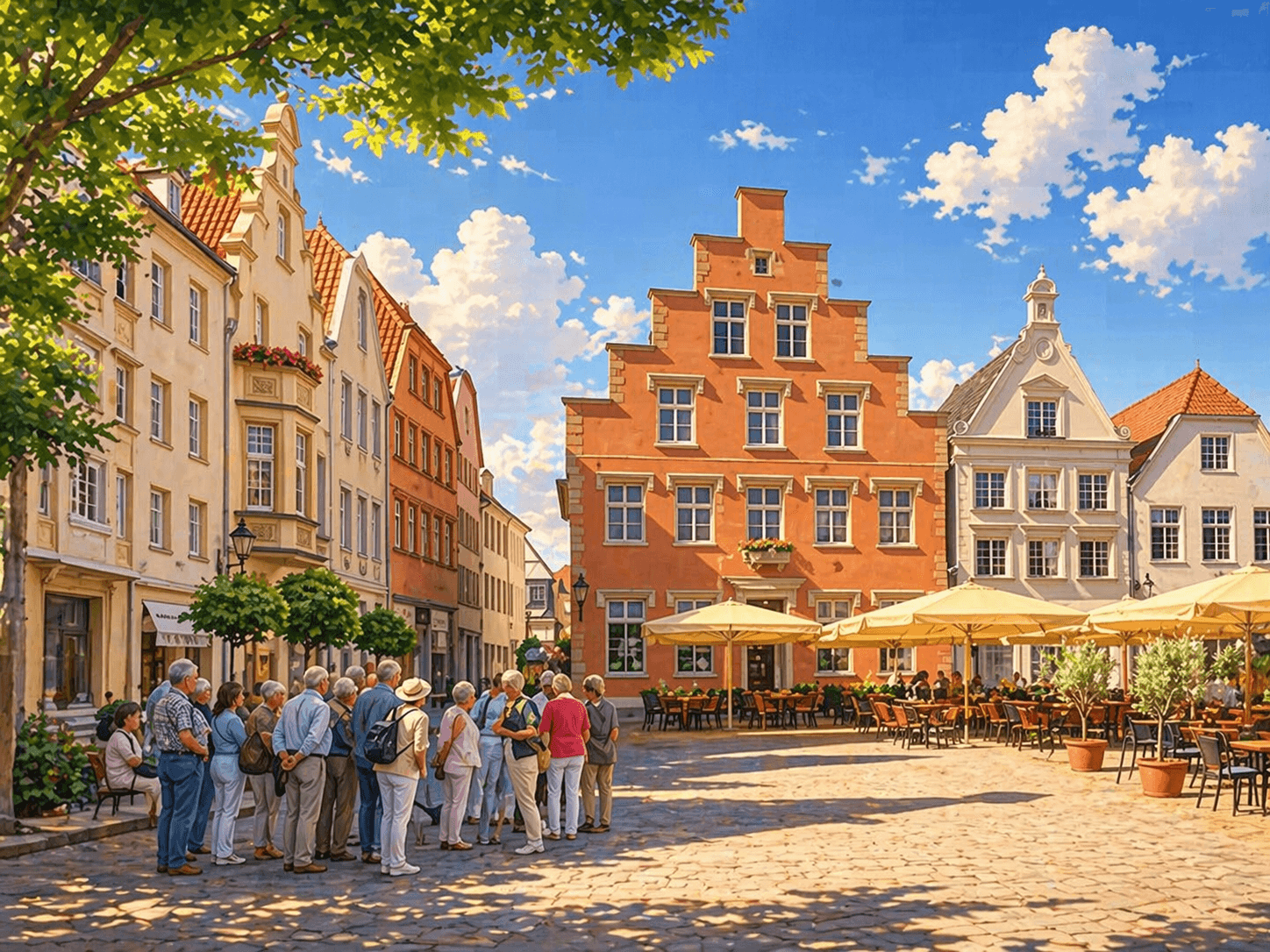
The district of Freckenhorst-Hoetmar in Warendorf focused intensively on the marketing of construction plots in March 2026, particularly in the development areas "Kiebitzfeld" and "Grüner Markenweg." At the same time, discussions on traffic trials and street name changes were held, which will influence the city's mobility and identity in the future.
Housing Marketing: New Approaches in Einen
The marketing of construction plots in Warendorf is a central topic that reveals both political and economic tensions. In the development area "Kiebitzfeld" in Einen, all twin-house plots have remained unsold to date, despite strong investor interest. To de-escalate the situation and meet housing demand, a proposal was submitted to expand the allocation criteria.
Mechtildis Wissmann, speaking on behalf of the local union Einen-Müssingen, and the CDU council members aimed to enable investors' access as well. The proposed change allows twin-house plots to be purchased either for self-use (215 €/sqm) or for rental purposes (260 €/sqm). At the same time, the prioritization for buyers who purchase a plot for self-use and an adjacent plot for rental remains in place.
This measure is not only a response to the stagnant marketing situation, but also a step toward financial relief for the city. Investors can play a role without the city having to abandon its self-use obligations.
Traffic Trials and Street Renaming
In addition to housing marketing, topics related to urban mobility were also at the center of the March meetings. The temporary traffic trial on the Stiftsmarkt in Freckenhorst was positively evaluated. An online survey with 1,064 participants showed that 979 respondents viewed the trial as a success. Although the traffic calming measures led to a reduction in through traffic, the Stiftsmarkt is now perceived as calmer and more pleasant.
The administration plans to continue the traffic trial until the permanent redesign is implemented. Proposed improvements include increased barrier-free access, additional greenery, and better lighting. In the winter months, an adjustment to the bollard regulation could also lead to more parking spaces.
In addition, street name changes were approved: Wagenfeldstraße will be renamed Dorfkamp and Heinrich-Tenhumberg-Straße will be renamed Langkamp. The process was accompanied by public participation and generated political tensions, especially in response to a suspension motion from the FWG faction. Ultimately, the renaming was unanimously approved. The total costs amount to 7,900 euros.
Project Development: Brinkhaus Site and Emsseepark
Another focal point was the development of the Brinkhaus site. An external office will be commissioned with project management to advance planning up to the design phase. This is necessary to avoid future planning errors and to enable the sales process after the Ems river redesign in 2029. The estimated cost for project management is 320,000 euros, with 60% of the cost being subsidized.
In addition, the planning of barbecue areas in Emsseepark and lockers in the city center is being examined. These projects are part of the efforts to make the city more attractive by providing more local recreation and practical infrastructure.
Outlook
The decisions made in March 2026 show that Warendorf is actively addressing the challenges of housing marketing, traffic calming, and urban development. The expansion of allocation criteria for construction plots is a pragmatic step to involve investors while preserving the obligation of self-use. At the same time, the positive evaluation of the Stiftsmarkt trial shows that Warendorf is on the right path to optimizing urban spaces for living and staying.
In the coming months, it will be particularly important to implement the results of public participation in the permanent redesign of the Stiftsmarkt and the development of the Brinkhaus site. Only with a clear vision and practical planning can Warendorf remain a livable city in the long term.
NeoSearch analyses public council documents, committee minutes and municipal announcements. Source references appear automatically once verified meeting data is available.
What does this mean for businesses?
Urban development, zoning plans and commercial settlements create early construction and supply opportunities. Following council decisions reveals projects before they go to tender.
Track similar decisions in your region
Set up monitoring for economic development in Nordrhein-Westfalen — prefilled from this article.
Set up monitoring →More signals from Warendorf
Urban Development in Warendorf: Planning and Implementation in April 2026
In April 2026, Warendorf focused on significant changes in urban land-use planning. Particularly in the District Committee Freckenhorst-Hoetmar, important decisions were made regarding the development in the area "Hof Lohmann". An overview of the background, procedures, and implications.
Read more → Key Developments in Warendorf – April 2026
April 2026 brought significant decisions regarding urban planning and infrastructure in Warendorf. The District Committee Freckenhorst-Hoetmar approved changes to the zoning plan, while the Operating Committee advanced important investments in the sewer system. Here is an overview of the key topics.
Read more → Financial Policy in Warendorf: Between Taxes, Investments, and Budget Constraints
In March 2026, Warendorf faced numerous financial policy decisions – from the introduction of the Grundsteuer C to infrastructure investments and austerity debates. This blog article analyzes the key developments and background.
Read more →