Education and Culture in Warendorf: Challenges and Opportunities in March 2026
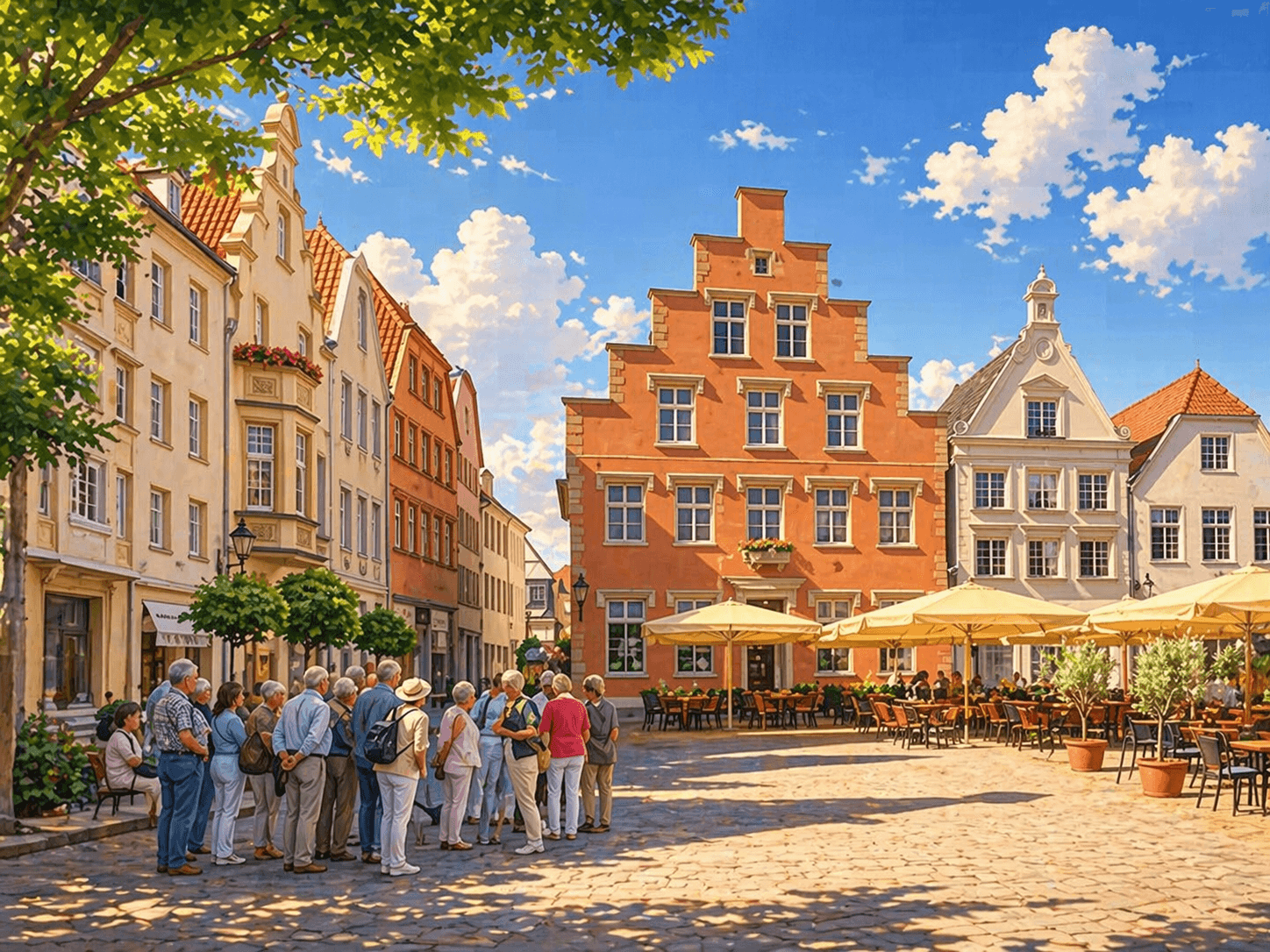
In March 2026, Warendorf focused on numerous decisions in the field of education and culture – from the funding of cultural projects to the implementation of the right to full-day school care. The Education and Culture Committee discussed budget cuts, subsidies, and the future of municipal educational institutions. An analysis report.
Education and Culture in Warendorf: Between Cuts and Creativity
The city of Warendorf has traditionally established itself as a culturally vibrant location with a strong educational profile. In March 2026, the Education and Culture Committee addressed a number of issues on the agenda, covering both the financial situation of local institutions and the future of cultural and educational offerings. The focus was on securing projects, implementing the right to full-day school care, and adapting budget plans.
Cultural Projects: Stability Through Funding?
A central project that came into focus is the "Writing at the Cigar Maker's House." This cultural residency program for German-language writers has been supported since 2025 and is planned to continue as a pilot project until 2028. The project is financially secured with a maximum self-retention of 1,000 euros and a stipend of 1,500 to 1,800 euros per month for the recipients – although this heavily depends on subsidies and donations. For 2026, a funding requirement of at least 7,000 euros is planned, which is why the city is asking for further support, for example from the Sparkassen Foundation.
In the same context, the parliamentary groups discussed the future of the project. While some groups proposed an evaluation, the administration favors an annual continuation. The city library is planned as a partner for readings and events, which strengthens the networking between cultural and educational institutions.
Budget Cuts: Pressure on Culture and Education
Several cuts in the field of education and culture are planned for the 2026 budget. The city library faces a 5% cut in its media budget, which could lead to a reduction in lending offers, newspaper subscriptions, and digital media. The Left Party faction called for the budget to be maintained at 65,000 euros to ensure access to knowledge and education. At the same time, the subsidy for the "Theater am Wall" is planned to be reduced by 50%, which has been criticized as disproportionate. The SPD parliamentary group requested a moderate cut of a maximum of 25% to avoid overburdening the volunteers of the association.
These budget cuts not only affect the institutions themselves but also the users. The city library has gained significant importance in recent years – both in terms of visitors and lending figures. A reduction in offerings would negatively impact social participation, especially among less-educated groups.
Full-Day School Care: Expansion and Challenges
Another central topic was the implementation of the right to full-day school care (OGS) starting with the school year 2026/27. With almost 700 places in the Open Full-Day School (OGS), an expansion is expected – although the city is not able to provide full-day care for 100% of the children, as additional offerings such as the "School from Eight to One" exist in parallel. The administration estimates that up to 80% of children could receive an OGS place, although spatial shortages at some schools already exist today.
To ensure the quality of care, construction measures are planned at several primary schools, including an extension at the Josefschule and the expansion of the Everwordschule. In addition, a quality circle is being established to coordinate the cooperation between schools, OGS providers, and the local youth office. The city is working with four independent providers (Innosozial, Caritas, AWO, and Kolping) to ensure the care services.
Outlook: What's Next?
The coming months will show whether the financial cuts in education and culture in Warendorf can be mitigated. The discussions in the Education and Culture Committee show that there is broad support for a strong educational and cultural profile in the city. At the same time, the budget realities must be considered – meaning that compromises between financial sustainability and cultural diversity must be found.
Warendorf is facing the challenge of strengthening its educational institutions and cultural offerings even in times of tight budgets. The planned evaluations, funding applications, and construction measures are first steps toward a future-oriented development. The active citizen participation, for example in street name changes or cultural projects, also shows that Warendorf has a lively and committed urban life – an advantage that must be preserved.
NeoSearch analyses public council documents, committee minutes and municipal announcements. Source references appear automatically once verified meeting data is available.
What does this mean for businesses?
Schools, daycare centres and public buildings create early planning and construction opportunities. Following council agendas surfaces tenders for refurbishment, new builds and fit-out months before the official award — from shell construction to specialist planning to furnishing.
Track similar decisions in your region
Set up monitoring for education & public facilities in Nordrhein-Westfalen — prefilled from this article.
Set up monitoring →More signals from Warendorf
Urban Development in Warendorf: Planning and Implementation in April 2026
In April 2026, Warendorf focused on significant changes in urban land-use planning. Particularly in the District Committee Freckenhorst-Hoetmar, important decisions were made regarding the development in the area "Hof Lohmann". An overview of the background, procedures, and implications.
Read more → Key Developments in Warendorf – April 2026
April 2026 brought significant decisions regarding urban planning and infrastructure in Warendorf. The District Committee Freckenhorst-Hoetmar approved changes to the zoning plan, while the Operating Committee advanced important investments in the sewer system. Here is an overview of the key topics.
Read more → Financial Policy in Warendorf: Between Taxes, Investments, and Budget Constraints
In March 2026, Warendorf faced numerous financial policy decisions – from the introduction of the Grundsteuer C to infrastructure investments and austerity debates. This blog article analyzes the key developments and background.
Read more →