Münster in April 2026: Urban Development at the Crossroads of Preservation, Sustainability, and Growth
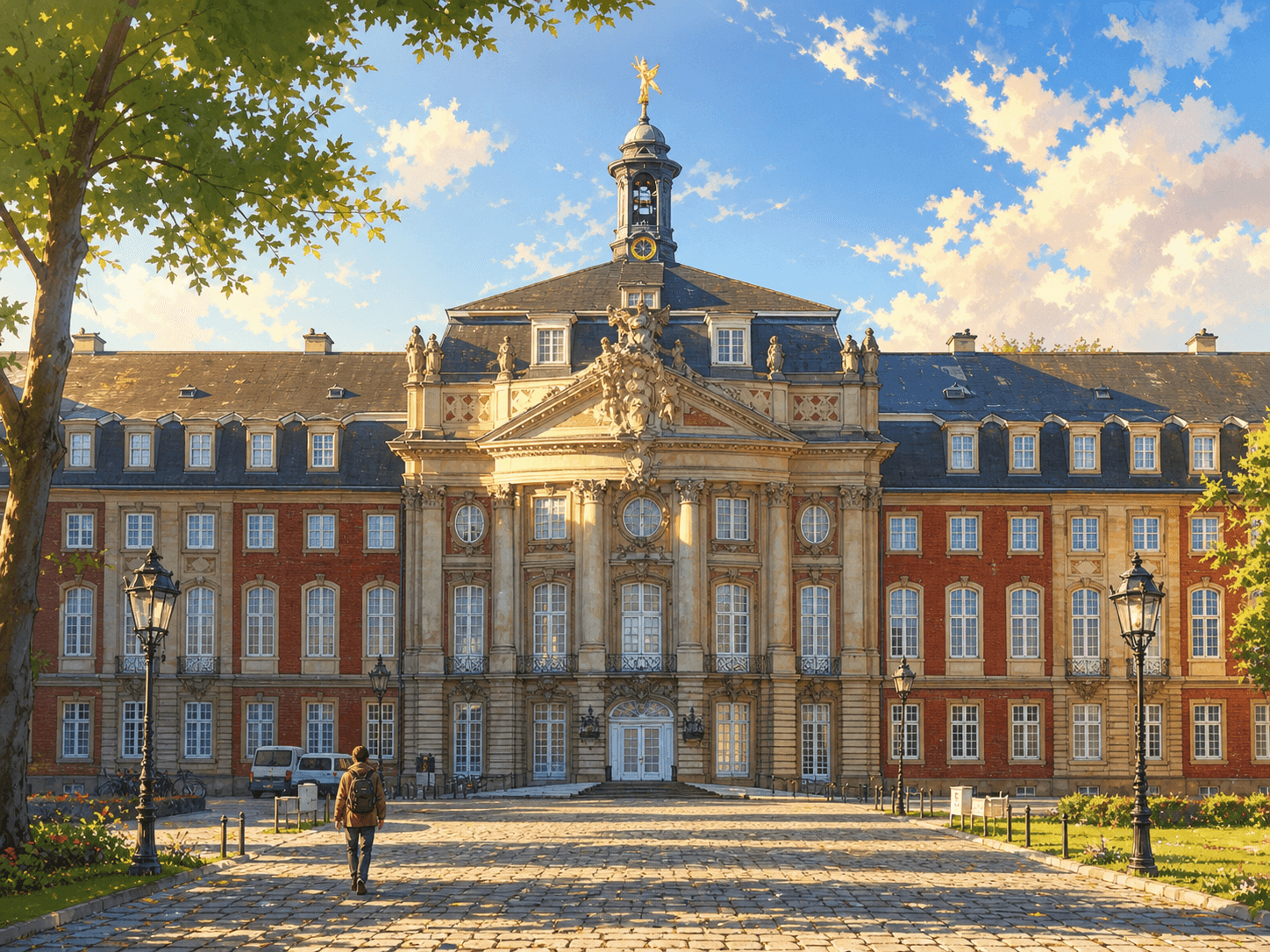
In April 2026, Münster took decisive steps in urban development. The city addressed a wide range of topics – from integrating renewable energies in protected historic areas to rethinking retail. Below is an overview of the key developments and their significance for the city's future.
Urban Development in Münster: From Solar Panels to Local Retail
Münster is in the midst of intense urban planning and decision-making in April 2026 – a sign of a city actively shaping its future with a focus on sustainability, preservation, and growth. Numerous topics such as the integration of solar panels in historic city areas, the continuation of the retail and center concept, and the expansion of transportation infrastructure were on the agenda of the city’s committees.
Renewable Energy in Urban Preservation
Since 2021, Münster has been integrating solar panels into protected historic districts. By the end of 2025, 3,428 photovoltaic (PV) modules had been approved or were in the pipeline, with 2,016 already implemented. Particularly noteworthy is the role of flat roofs on public and church buildings, which are central to energy generation.
The challenge lies in balancing energy efficiency with urban preservation. The city assesses these measures as “predominantly necessary,” indicating Münster’s active commitment to climate protection without endangering its historical heritage. In the historic city and Nordviertel protected areas, the approval rate is high, but implementation often takes 1–2 years – a challenge also known in other cities.
Retail Concept 2026: Future-Proofing Retail
The continuation of the Retail and Center Concept (EHK) is another key focus. The goal is to create a “future-proof local supply” that protects retail centers from unfavorable developments while ensuring supply security in the districts.
The Chamber of Commerce and Industry supports the concept, especially the recommendation to use drugstores as traffic generators. However, recommendations for Nienberge and Roxel were withdrawn to avoid sales losses in the Havixbecker town center. Instead, alternatives such as grocery stores with expanded drugstore offerings are being favored.
Currently, Münster’s centrality in the drugstore sector stands at 126%, meaning the city not only serves its own residents but also attracts purchasing power from the surrounding areas. At the same time, discussions are ongoing on how to exclude retail from industrial areas without prior designation, to avoid unnecessary land shortages.
Traffic Planning and Roundabout Adjustments
Another focus was the adjustment of the roundabout at Von-Esmarch-Straße/Busso-Peus-Straße/Roxeler Straße. After the planning moratorium was lifted in May 2025, the signal-controlled intersection (Variant 3) was preferred due to its best possible traffic safety and high public acceptance. The total cost of the measure is about 1.9 million euros, with around 60% covered by grants.
The planning follows the “Vision Zero” – the goal of completely avoiding fatal and serious traffic accidents. The focus on cycling and the improvement of traffic quality for pedestrians and car drivers shows how Münster is sustainably developing its traffic infrastructure.
Waste Management and City Cleanliness
Progress was also made in the field of waste management. Münster is planning measures to combat illegal waste dumping and is relying on prevention and increased controls. The EU Waste Framework Directive obliges the city to reduce food waste by 30% by 2030. In addition, the responsibility of manufacturers for textiles is being examined, which means manufacturers will have to pay fees for waste collection in the future.
Another project is the launch of a "City Cleanliness" campaign starting in spring 2026. Two additional positions in the municipal enforcement office will be responsible for bulky waste collection and the removal of litter. Although staffing shortages exist and no "waste detectives" are being established, the municipal enforcement office is being strengthened.
Conclusion: A City in Transition
In April 2026, Münster demonstrates that urban development is not only about buildings and land, but also about visions, sustainability, and social responsibility. The city is at the intersection of preservation and innovation, between renewable energy and retail concepts. The decisions made here not only shape the cityscape of the coming years but also the quality of life for its residents.
The challenges are diverse, but the solutions show that Münster is ready to meet the demands of the future – with clear concepts, broad participation, and a strong focus on sustainability.
NeoSearch analyses public council documents, committee minutes and municipal announcements. Source references appear automatically once verified meeting data is available.
What does this mean for businesses?
Municipal council decisions are early indicators: following the council agenda surfaces projects and tenders months before the official award — before they ever reach the procurement portals.
Track similar decisions in your region
Set up monitoring for kommunale Projekte in Nordrhein-Westfalen — prefilled from this article.
Set up monitoring →More signals from Munster
Culture and Community in Münster: Theater and Historical Preservation in Focus
In April 2026, important decisions and developments in the field of culture and community were at the center of attention in Münster. The Cultural Committee intensely addressed the future of Theater Münster and the expansion of the expert advisory board for the historical site Villa ten Hompel.
Read more → Münster's Youth Policy in April 2026: Leisure Spots, Demonstrations, and Future Visions
In April 2026, youth policy topics such as leisure meeting points, demonstrations, and collaborations with political parties were at the center of the Youth Council's focus in Münster. This deep dive reveals which decisions were made and what challenges remain.
Read more → Münster Invests in Resuscitation and Care: Where State, Technology, and Society Must Collaborate
In April 2026, Münster will discuss key measures to strengthen the resuscitation chain and care provision. The goal is to increase survival rates in cases of cardiac arrest while securing the care infrastructure for the future.
Read more →