Education Policy in Moers: Investments in Early Opportunities, Full-Day Schools, and Infrastructure
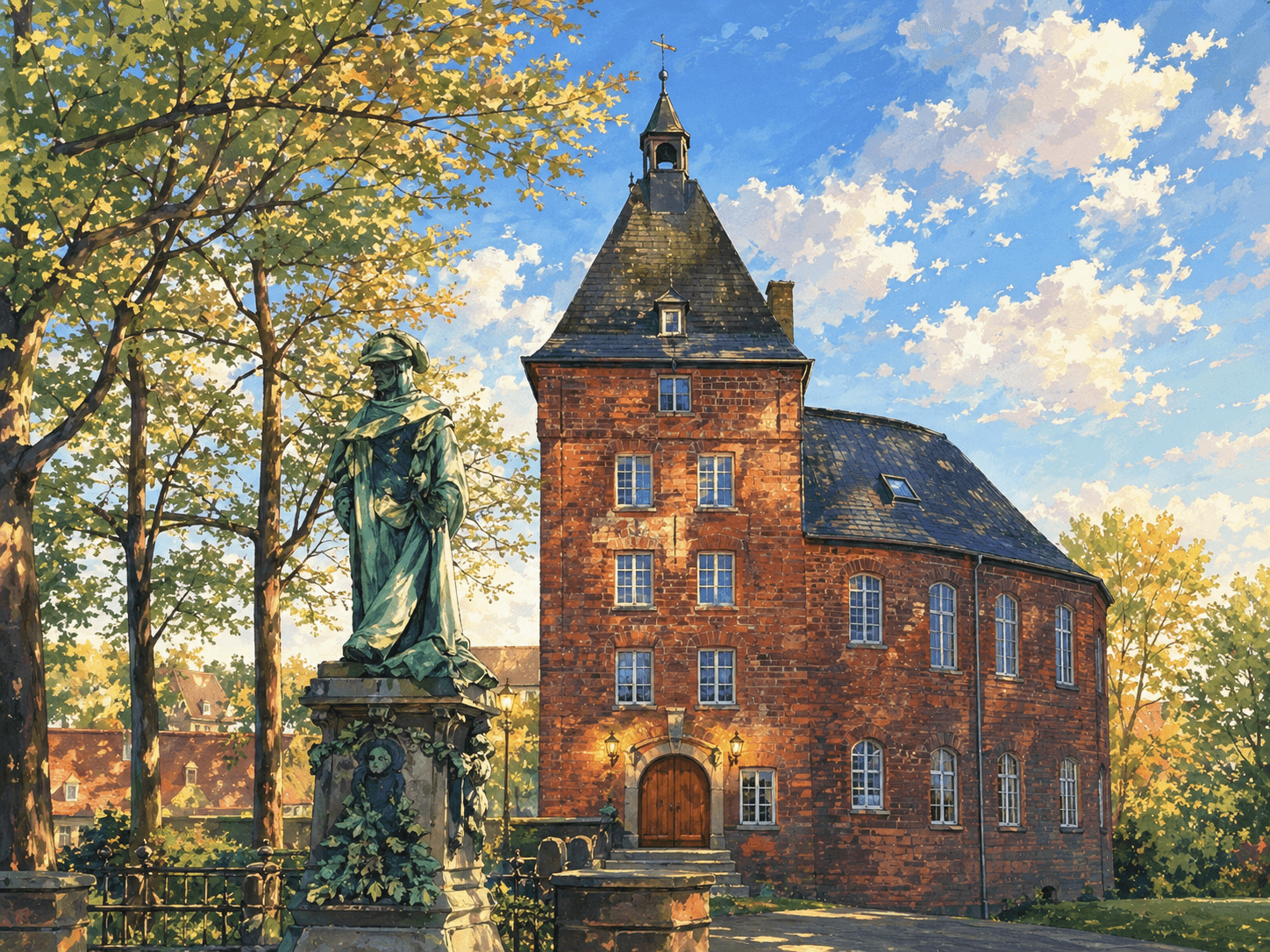
In March 2026, education policy decisions were at the center of attention in Moers. The School Committee focused on the establishment of Family Primary School Centers, the expansion of full-day school care, and investments in school infrastructure.
Education Policy in Moers: The March 2026 Spotlight
In recent weeks, Moers has taken decisive steps in education policy. With the establishment of Family Primary School Centers (FGZ), the expansion of full-day school care, and significant investments in school infrastructure, the city has sent a clear message: education is a central building block for equal opportunities and social development.
Early Opportunities Program and Family Primary School Centers
The establishment of Family Primary School Centers is a central element of Moers’ education policy. The School Committee has recommended submitting applications for FGZ for at least two primary schools. These centers aim to consolidate educational, educational care, and family-specific offers at a single school, cooperating with the Open Full-Day School and health facilities.
The municipal share for these projects is 20 percent, which means 18,400 euros per school for two FGZ locations. Funding, on the other hand, covers up to 80 percent of personnel and material costs, making the projects financially viable. The funding period runs until 2029 and can be extended until 2034.
The Early Opportunities Program is another central component. Seven schools in Moers are already participating, and the total budget amounts to nearly 8.5 million euros. Investments in learning labs, inclusive and movement spaces are central components. Each school receives a base amount of 250,000 euros to cover specific needs.
Full-Day Schools and Expansion of Care Capacities
The Open Full-Day School (OGS) in Moers is another project that came into focus. By 2026/2027, the intake capacity is to be expanded to 2,450 children. In the 2025/2026 season, 2,407 children were already enrolled, enabling the city to also accommodate refugee children. The additional costs for 2026 have already been considered in the budget.
The decision on the expansion of care capacities was accompanied by several committees and finally adopted by the City Council of Moers on March 25, 2026. In addition, a regulation on the collection of parental contributions for childcare was discussed, with the parity rotation model being expanded.
Investments in School Building Infrastructure
In school infrastructure, Moers has made significant progress. Numerous construction measures have been approved or completed, including the expansion of Astrid Lindgren Primary School (Cecilienstraße), where additional costs of 1.03 million euros arose, mainly due to inclusion requirements and supply difficulties.
Another project is the new gymnasium hall at Lindenschule (Johann-Steegmann-Allee), which will be equipped for trampoline sports. The construction planning for the Adolfinum Gymnasium (Wilhelm-Schroeder-Straße) is in the approval phase and will be expanded to five tracks. The costs have increased to 5.85 million euros.
In addition, Adolf-Reichwein Primary School (Reichweinstraße) will be expanded to three tracks by 2028. The cost development here was unexpectedly positive, as the costs dropped from 5.3 million euros to 4.8 million euros.
Structural Developments and Financing
The financing of education policy in Moers is closely linked to funding programs. Projects such as the expansion of Astrid Lindgren Primary School benefit from the "Good School 2020" program, which provides 600,000 euros. The expansion of Lindenschule and the Adolfinum, on the other hand, is financed from the "Load Compensation G9" program.
Investments in education and social affairs have already been considered in the 2026 budget, including the costs for FGZ and full-day schools. The investment planning therefore remains stable, even if inflation and construction delays lead to additional costs.
Outlook
Moers has clearly positioned itself in March 2026 as a city that sees education as a key to the future. The focus is on early support through FGZ, the expansion of full-day school care, and investment in modern learning environments. The decisions show how important education is to create equal opportunities and reduce social inequalities.
In the coming months, it will be all about successfully implementing the planned projects, optimally using funding and further improving infrastructure in schools. Education policy in Moers is not just a task – it is a central building block for the development of the city.
NeoSearch analyses public council documents, committee minutes and municipal announcements. Source references appear automatically once verified meeting data is available.
What does this mean for businesses?
Schools, daycare centres and public buildings create early planning and construction opportunities. Following council agendas surfaces tenders for refurbishment, new builds and fit-out months before the official award — from shell construction to specialist planning to furnishing.
Track similar decisions in your region
Set up monitoring for education & public facilities in Nordrhein-Westfalen — prefilled from this article.
Set up monitoring →More signals from Moers
Moers: Urban Development and Construction Planning in April 2026 – Highlights and Challenges
In the April 2026 session, urban development, traffic, and infrastructure were at the center of attention in Moers. With plans for new workshops, traffic improvements, and sewer construction, the city is investing in long-term projects – yet not all initiatives received approval.
Read more → Moers April 2026 – Traffic, Budget and Planning in the Spotlight
In April 2026, Moers focused on decisions related to traffic, budget and urban planning. Here is a compact monthly review.
Read more → Governance in Moers: Transparent Access to Council Information
In the week of April 2026, the focus in Moers was on the digital transparency of the municipal administration. A new council information system promises greater accessibility for citizens, politicians, and administration. But how far has the implementation progressed, and what challenges remain?
Read more →