Building Planning and City Politics in Moers: March 2026 in Focus
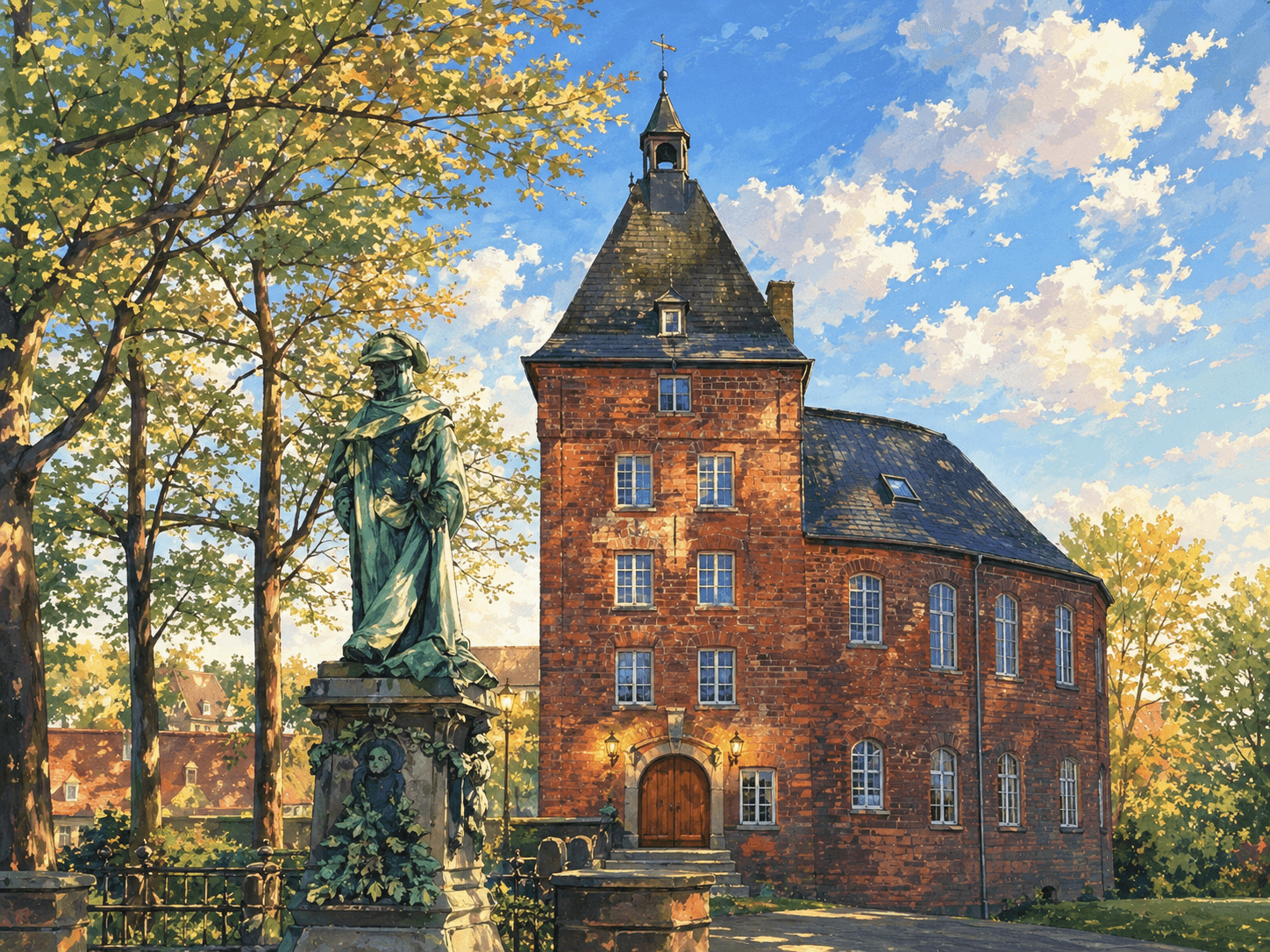
In March 2026, the city of Moers focused on numerous construction projects and urban development initiatives. From school construction and new fire station buildings to investments in culture and leisure, the city is pursuing long-term planning that is both financially and infrastructurally sustainable.
Building Planning and City Politics in Moers: March 2026 in Focus
The city of Moers has long been recognized as a municipality with clear priorities in urban development. In March 2026, the committees and council sessions made a number of decisions and plans for the city's future. With a focus on school construction, fire department infrastructure, sustainability, and investments in culture and leisure, Moers is currently in an intense construction phase that brings both infrastructural and financial challenges.
Prioritization of Construction Projects: A Clear Structure
The city of Moers has categorized construction measures into three priority levels – A (highest urgency), B and C (lower priority). This list was developed in close cooperation with the executive board and considers factors such as technical urgency, building condition, and grant program requirements.
Priority A includes measures that are already in planning and financially secured. Projects in categories B/C are not yet in execution but are long-term plans and financially dependent on grants.
Financial flexibility is limited, which underlines the necessity of precise prioritization. The prioritization list is not only a planning tool but also a communication instrument to inform citizens about the status and order of construction projects.
School Construction and Renovations: Investment in the Future
One of the central topics in the building planning for March 2026 was school construction. The city of Moers has decided on a comprehensive modernization and expansion of its schools to meet pedagogical and infrastructural requirements.
A special project is the Annastraße Primary School, where an expansion to three classes has been approved. A freestanding, two-story new building was preferred, as an extension would not have been economically viable. The estimated cost for the project is 4.8 million euros, including a buffer of 527,000 euros.
Other schools such as the Adolfinum Gymnasium, the GG Gebrüder Grimm, and the Hermann-Runge Primary School also appear on the renovation list. Particularly notable is the planning of an inclusive daycare center (KTE) at Barbarastraße, which is planned as a replacement building.
Investments in school construction are not only a matter of equipment but also of ensuring high-quality education in Moers. The inclusion of energy efficiency measures, such as insulation, modern heating systems, and building management systems, also demonstrates the city's sustainability orientation.
Fire Department and Emergency Services: Security for the Future
Another central project is the construction of an interim station in the former THW building. With costs of 567,000 euros, the building will be used as a replacement until the new fire station is completed. In addition, the spray booth will be converted into a cleaning facility for PPE (100,000 euros), and the exhaust systems at the main fire station will be upgraded (500,000 euros).
These investments in emergency services are not only a matter of security but also a signal for the long-term stabilization of fire department capacities in Moers. The planning of storage areas for power generators in various districts (Hülsdonk, Scherpenberg, Repelen) also shows that Moers is prepared for crisis scenarios.
Sustainability and Energy Efficiency: A Central Component
As part of the building plans and renovations, Moers has also focused on sustainability. In the year 2024/25, the city already saved 661 MWh of heat and 84 MWh of electricity. In addition, the city reduced 2,129 tons of CO₂, resulting in a saving of 81,000 euros in energy costs.
These successes are made possible by measures such as the modernization of heating systems, insulation, and water installations. The KliMo Monitoring Report for the school year 2024/25 underlines the importance of such investments for the city's long-term energy efficiency.
Culture and Leisure: Investments in the Public Space
In addition to infrastructural investments, Moers is also focusing on the development of its cultural and leisure offerings. The renovation of the "White House" into a theater, the restoration of the Rheinkamp Cultural Center, and the new construction of the petting zoo are examples of projects that enrich the public space.
In particular, the renovation of the "White House" with costs of 270,000 euros in the performance phase 0 shows how cultural projects in Moers are planned and financially secured. These investments are not only a contribution to the city's culture but also a signal of the city's attractiveness for visitors and residents alike.
Conclusion: Moers is Building for the Future
March 2026 was marked in Moers by a wide range of building plans that are both infrastructurally and financially sustainable. From school construction and fire department infrastructure to investments in culture and leisure, Moers shows itself to be a city that actively shapes its future.
The prioritization list, the energy efficiency measures, and the long-term planning indicate that Moers is not only aiming for the next construction start but for sustainable city politics. The challenges of financing and dependence on grants remain, but the city has clearly set the course – a development that will be particularly worth watching in the coming years.
NeoSearch analyses public council documents, committee minutes and municipal announcements. Source references appear automatically once verified meeting data is available.
What does this mean for businesses?
Schools, daycare centres and public buildings create early planning and construction opportunities. Following council agendas surfaces tenders for refurbishment, new builds and fit-out months before the official award — from shell construction to specialist planning to furnishing.
Track similar decisions in your region
Set up monitoring for education & public facilities in Nordrhein-Westfalen — prefilled from this article.
Set up monitoring →More signals from Moers
Moers: Urban Development and Construction Planning in April 2026 – Highlights and Challenges
In the April 2026 session, urban development, traffic, and infrastructure were at the center of attention in Moers. With plans for new workshops, traffic improvements, and sewer construction, the city is investing in long-term projects – yet not all initiatives received approval.
Read more → Moers April 2026 – Traffic, Budget and Planning in the Spotlight
In April 2026, Moers focused on decisions related to traffic, budget and urban planning. Here is a compact monthly review.
Read more → Governance in Moers: Transparent Access to Council Information
In the week of April 2026, the focus in Moers was on the digital transparency of the municipal administration. A new council information system promises greater accessibility for citizens, politicians, and administration. But how far has the implementation progressed, and what challenges remain?
Read more →