Urban Development in Cologne: Focus on Design and Feasibility in February 2026
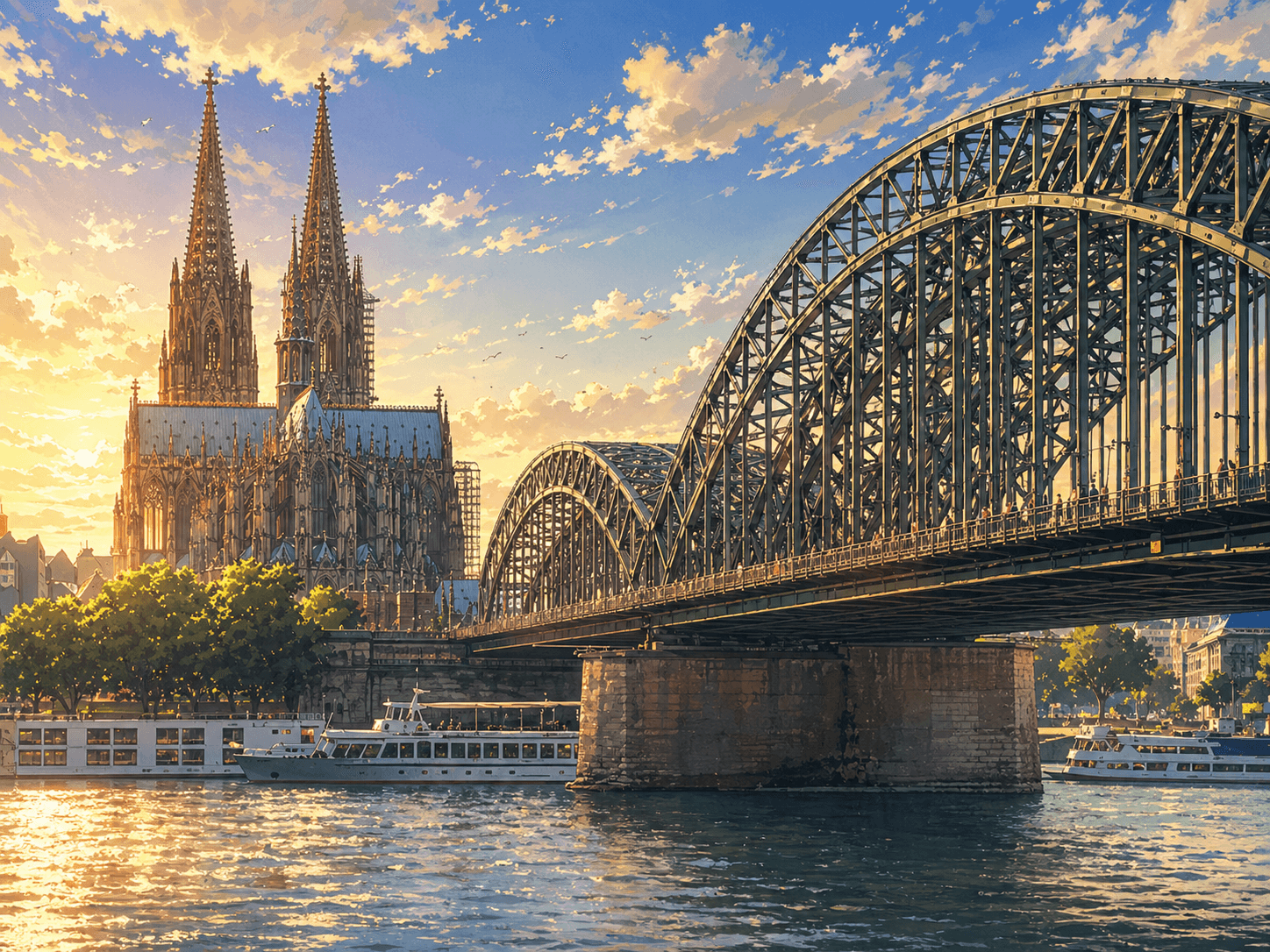
In February 2026, several key development projects were at the center of public and political debate in Cologne. The Design Advisory Board discussed important urban planning projects such as the "Weltstadthaus" in the Old Town and the feasibility study for the Radeberger Areal. Here is an analysis of the decisions, backgrounds, and implications.
Urban Planning Debates in Cologne: Between Design, Feasibility, and Sustainability
Cologne proved to be a dynamic hub for urban planning discussions in February 2026. The Design Advisory Board, a central advisory body for urban development issues, was at the heart of several decision-making processes. Particularly notable were the debates surrounding the "Weltstadthaus" in the Old Town and the feasibility study for the Radeberger Areal. Both projects reflect the challenges of modern urban development: striking a balance between design, feasibility, livability, and ecological responsibility.
The "Weltstadthaus": Design Criticism Meets Political Decision
The "Weltstadthaus" project in the Old Town/Nord area presented the Design Advisory Board with a series of challenges. While the plans for a new building at Schildergasse 65 were generally positively evaluated, the cantilever of upper floors into the public street space sparked criticism. The concern was that such cantilevers could negatively impact public space, particularly as the trees along the Cäcilienstraße could no longer be planted under the overhang.
As a result, the board recommended to critically reconsider the cantilever and possibly reduce it. In addition, the question of the entrance area's ability to inspire enthusiasm was raised: Is the space sufficient for pedestrians and cyclists? Finally, the board also called for the development of a protected area on the rooftop terrace that does not conflict with the city's height concept.
Another aspect: With a building height of over 40 meters, a political decision would be required. This shows that urban development projects in Cologne are not only examined technically, but also politically.
Radeberger Areal: Balancing Housing, Business, and Green Spaces
Another central project was the feasibility study for the Radeberger Areal in Cologne-Mülheim. The study, presented in January 2026 and developed by RADEBERGER GRUPPE in collaboration with Chapman Taylor, examined two variants (A and B) and proposed a use concept with 60 % residential space and 40 % commercial use.
The neighborhood density is based on the so-called Cooperative Land Development Model, which is considered a guiding principle for sustainable development in Cologne. The plan includes, among other things, a market square, neighborhood squares, a weekly market, and commercial areas for startups, cafés, Fab Labs, and craft centers. Particularly innovative is the use of the roofs: Rooftop bars, smart roofs, urban gardening, and public rooftop terraces and garden roofs are planned.
Another central aspect is the integration of kindergartens and neighborhood parking facilities, which are intended to strengthen the social and family-friendly character of the area. The traffic planning takes into account both motorized and public transport. The project is a milestone for the development of new neighborhoods in Cologne and shows how urban development could look in the future.
The Role of the Design Advisory Board: Between Reports and Recommendations
The Design Advisory Board played a central role in February 2026. At its 20th meeting in the Rathaus Spanischer Bau, several projects were discussed, including the renovation of the RheinEnergie substation in Cologne-Ehrenfeld and the area of Lerchenweg/Schaffrathsgasse in Cologne-Bocklemünd. The board pursues not only technical, but also ecological and social goals.
Although its recommendations are not binding, they significantly contribute to the quality of urban planning. Resubmitting projects after consultation is not uncommon, but rather a central step in the planning perspective. The recommendation to design buildings in such a way that the conversion of office space into residential space is possible in the long term shows the vision of flexible, sustainable urban development.
Outlook: Urban Development in Cologne as a Model for the Future
The projects and debates of February 2026 show that Cologne is actively orienting itself toward the future of urban development. With projects like the "Weltstadthaus" and the Radeberger Areal, not only is the city's cultural identity preserved, but social and ecological responsibility is also redefined. The combination of design criticism, feasibility, and sustainability becomes a central guideline here.
In the future, it will be important how well the recommendations of the Design Advisory Board are implemented and whether political decisions do justice to the technical discussions. In a time when cities are being scrutinized, Cologne is a pioneer with these projects—not only in North Rhine-Westphalia, but also beyond the region.
NeoSearch analyses public council documents, committee minutes and municipal announcements. Source references appear automatically once verified meeting data is available.
What does this mean for businesses?
Urban development, zoning plans and commercial settlements create early construction and supply opportunities. Following council decisions reveals projects before they go to tender.
Track similar decisions in your region
Set up monitoring for economic development in Nordrhein-Westfalen — prefilled from this article.
Set up monitoring →More signals from Koeln
Youth Participation in Chorweiler: A New Approach for a Stronger Democratic Culture
In April 2026, the District Council of Chorweiler made important decisions regarding the establishment of a youth representation. The focus is on creating a structured and advisory form of youth participation – a step toward more actively involving young people in the city's political processes.
Read more → Education Policy in Cologne – What Was Decided in April 2026
In April 2026, Cologne's Committee for Schools and Further Education made several decisions that will shape the city's educational landscape in a lasting way. From the expansion of grammar schools, the reduction of primary school tracks, to new offerings at the music school – here is a detailed analysis.
Read more → Governance Developments in Cologne: April 2026 in Focus
In April 2026, Cologne was marked by numerous decisions in the areas of governance and administration. From municipal heat planning to administrative procedures and the revision of rules of procedure – the city emphasized transparency, citizen-oriented action, and long-term planning.
Read more →