Cologne in January 2026: Mobility, Housing and Integration in Focus
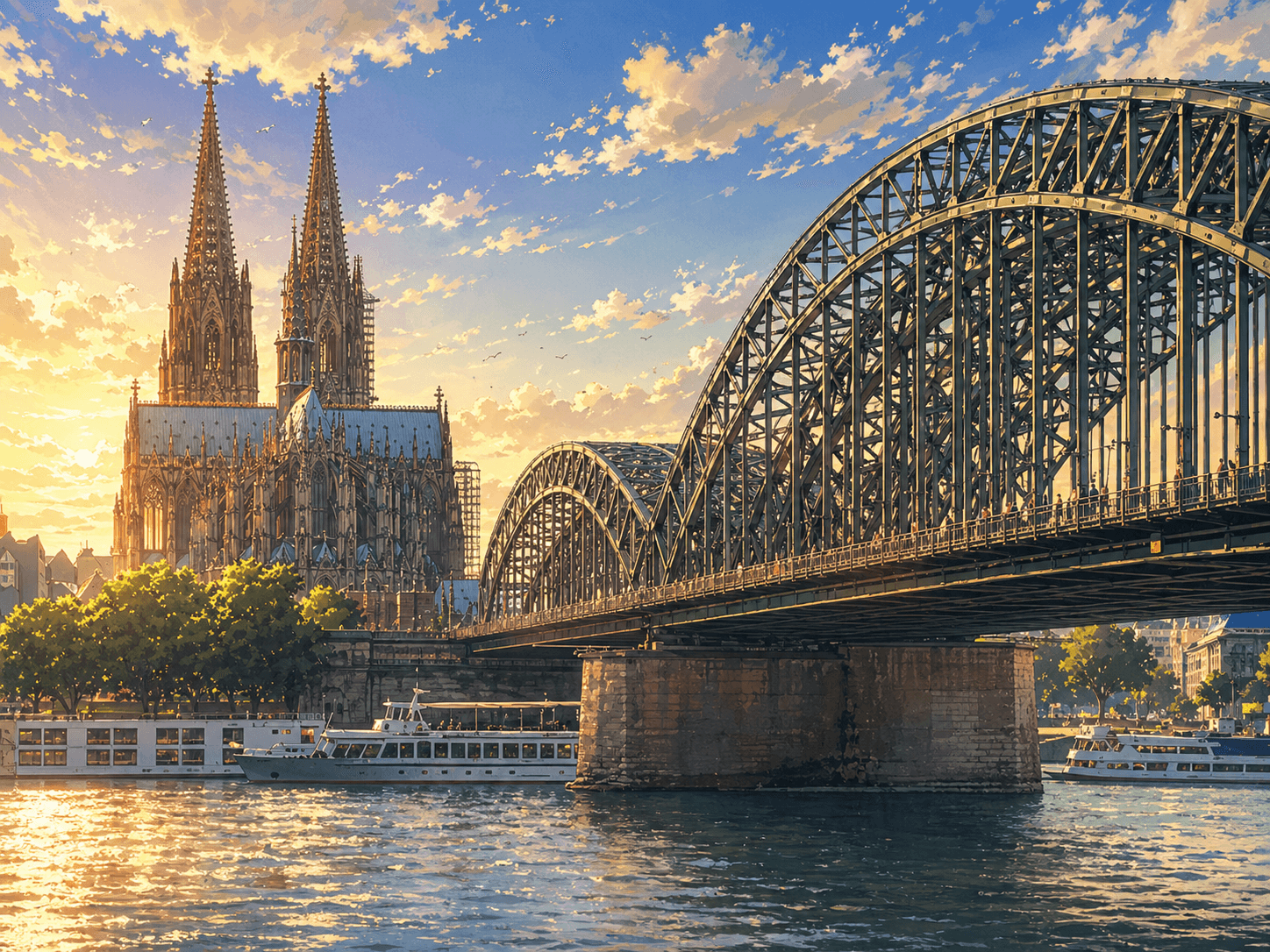
In January 2026, key topics such as mobility planning, housing promotion and the integration of refugees were at the forefront in Cologne. Here is a compact monthly review of the most important developments.
Cologne in January 2026: Mobility, Housing and Integration in Focus
What was important this month
- The Mobility Committee rejected the abolition of the cycle expressway between Cologne and Frechen and decided to procure new tram cars.
- The "Bau-Turbo-Gesetz" (Construction Acceleration Act) is easing the housing market, and a new neighborhood project in Fühlingen with subsidized housing is starting.
- The Round Table on Refugee Issues underlines the continuation of the integration of refugees, with over 9,200 people in municipal accommodations.
- The Cologne School Building Company starts renovations at five schools, including energy efficiency measures and photovoltaic (PV) systems.
- The city is implementing climate-friendly measures, including the renewal of protective installations along Industriestraße.
Mobility: Tram Cars, Cycle Expressways and Traffic Management Projects
In January, Cologne focused on modern and sustainable mobility. The Mobility Committee rejected a motion by the FDP parliamentary group to abolish the cycle expressway between Cologne and Frechen and instead supported the expansion of cycling infrastructure. At the same time, the city decided to procure 33 new tram cars of type K4500, funded with up to 364 million euros. This marks a milestone for the future of the Cologne tram system.
In addition, micro-simulations for traffic management on the Mülheimer Bridge were approved in order to analyze potential bottlenecks. The SPD parliamentary group also supported the expansion of the Rheinenergie-Stadion tram stop with cost-efficient planning options. These measures show how the city is actively responding to the challenges of urban traffic.
Housing: Construction Acceleration Act and Neighborhood Development
The housing market remains a central topic for discussion. With the implementation of the Bau-Turbo-Gesetz (Construction Acceleration Act), the city of Cologne aims to speed up the construction process and relieve the housing market. In a pilot project on Heinrichshofweg, a neighborhood is being developed with 30% subsidized and 20% price-reduced housing. This project is a step towards social mixing and affordable housing.
In addition, guidelines for the application of the law were approved and are being implemented in several district councils. The renovation of the Paul-Maar School and other schools also includes energy-saving measures, through which the city reduces CO₂ emissions in the long term and advances climate protection.
Integration: Ongoing Exchange and Structural Development
In January, the integration of refugees remained a central topic. The Round Table on Refugee Issues reported that currently 9,204 refugees are living in municipal accommodations, including 1,974 from Ukraine. With a quota of 97.11%, Cologne has largely fulfilled its intake quotas, and the city expects up to 516 additional assignments from the state.
In the integration of refugee children into the education system, 1,737 school places were occupied in January alone. The city is focusing on structural improvements, such as the new version of the rules of procedure for the Committee on Equal Opportunities and Integration. The amendment proposal to the Foreigners Advisory Committee was unanimously adopted, strengthening the inclusion of disadvantaged groups.
Culture and Education: Museum Development and School Renovations
Cologne's cultural policy focused on investments in the future in January. The Operations Committee of the Wallraf-Richartz Museum & Fondation Corboud approved three status reports, including an exhibition tour in Japan and the construction of a museum extension. Although no motions were passed, this signals the continuation of museum development.
In the education sector, the renovation of five schools was approved, with the Cologne School Building Company responsible for implementation. The Catholic Main School on the Rhine is closing, and Gymnasium Neustadt-Nord is reducing to three entry classes. At the same time, the branch site of the Richard-Riemerschmid Vocational College is being relocated to a container facility, demonstrating flexibility in space planning.
Finance and Administration: Investments and Legal Issues
Financially, Cologne focused on investments in public transport and cultural projects. The Council approved an investment disbursement of 403,000 euros for the Rheinenergie-Stadion tram stop. Funding of 485,347 euros was released for the media and creative industries as well as for retail.
Legal issues were also in focus: The adjustment of the emergency services fee ordinance with new fees was approved, and the regulation on Sunday sales for events is intended to promote economic activity. In addition, the Election Review Committee unanimously confirmed the validity of the 2025 Municipal and Integration Council elections.
Cross-Cutting Developments: Urban Development and Climate Protection
Urban development in January focused on planning security and sustainability. With the second amendment to the building plan 64450/02 in Lindenthal, development gaps can be closed. In Heinrichshofweg, a neighborhood with housing, local retail and care is being created, improving the daily lives of Cologne's residents.
Climate protection remains a central issue: The renewal of protective installations along Industriestraße and the renovation of schools with PV systems show how the city is reducing its CO₂ balance. At the same time, the new waste management ordinance promotes circular economy and material separation.
Final Summary and Outlook
January 2026 in Cologne was marked by concrete decisions in the areas of mobility, housing, integration and education. The city is investing in the future, whether through the procurement of new tram cars, the implementation of the Bau-Turbo-Gesetz or the further development of cultural institutions. At the same time, the integration of refugees remains a focus, showing progress in both education and social policy.
February will be interesting to see how the approved projects are implemented and whether the planned neighborhood developments and renovations will benefit Cologne's residents in a tangible way. The continuation of climate protection measures and the implementation of the Bau-Turbo-Gesetz will be central topics shaping urban development in the coming months.
NeoSearch analyses public council documents, committee minutes and municipal announcements. Source references appear automatically once verified meeting data is available.
What does this mean for businesses?
Town halls, fire stations, depots and administrative buildings create early construction and refurbishment opportunities. Following council agendas reveals projects before they go to tender.
Track similar decisions in your region
Set up monitoring for public buildings & administration in Nordrhein-Westfalen — prefilled from this article.
Set up monitoring →More signals from Koeln
Youth Participation in Chorweiler: A New Approach for a Stronger Democratic Culture
In April 2026, the District Council of Chorweiler made important decisions regarding the establishment of a youth representation. The focus is on creating a structured and advisory form of youth participation – a step toward more actively involving young people in the city's political processes.
Read more → Education Policy in Cologne – What Was Decided in April 2026
In April 2026, Cologne's Committee for Schools and Further Education made several decisions that will shape the city's educational landscape in a lasting way. From the expansion of grammar schools, the reduction of primary school tracks, to new offerings at the music school – here is a detailed analysis.
Read more → Governance Developments in Cologne: April 2026 in Focus
In April 2026, Cologne was marked by numerous decisions in the areas of governance and administration. From municipal heat planning to administrative procedures and the revision of rules of procedure – the city emphasized transparency, citizen-oriented action, and long-term planning.
Read more →