Gütersloh Mobility Policy: Challenges and Progress in February 2026
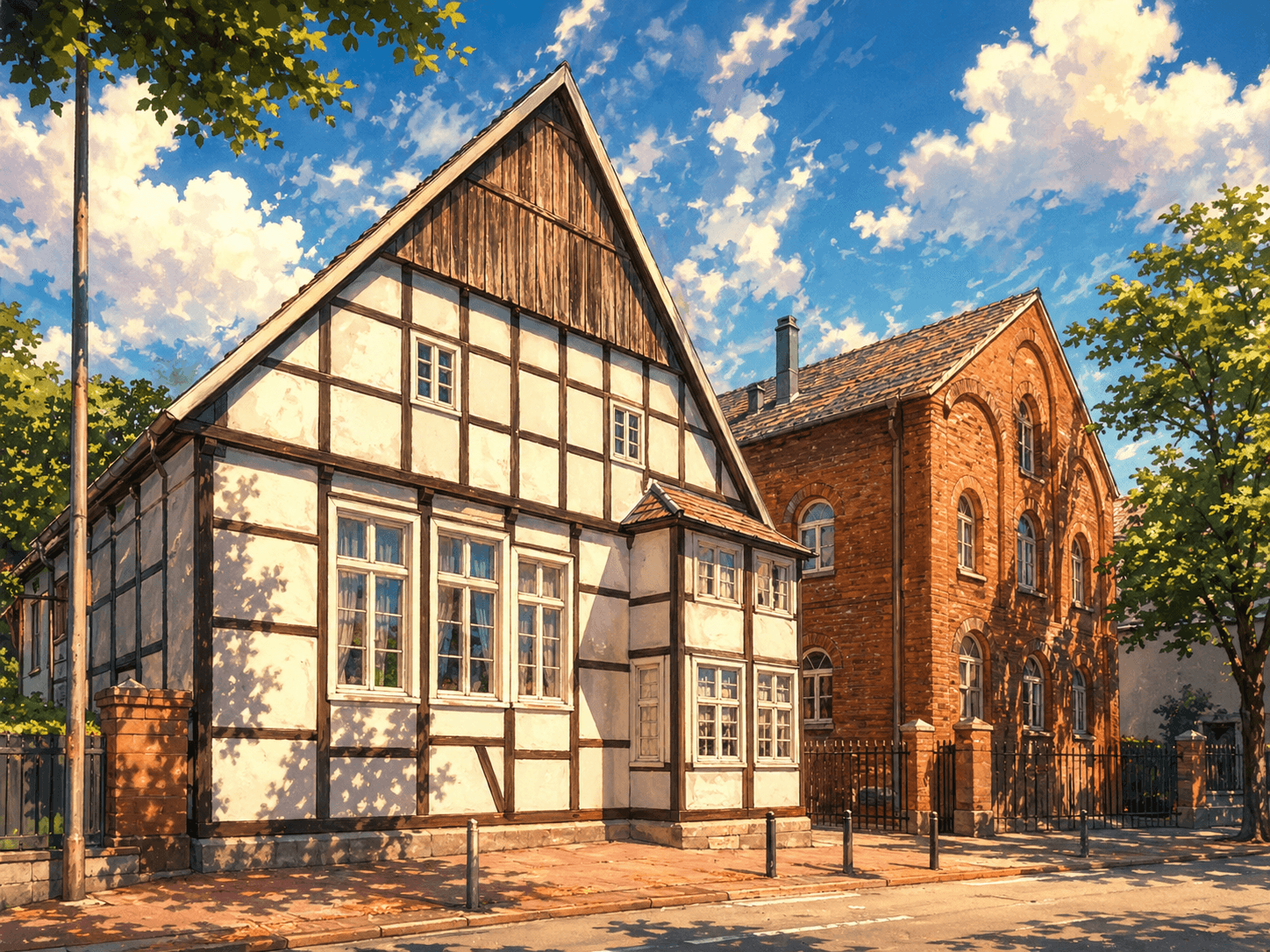
Gütersloh's mobility policy in February 2026 addressed key topics such as pedestrian zones, cycling, public transport, and traffic management. An overview of decisions, debates, and future prospects.
Mobility in Gütersloh: Between Safety, Traffic Concepts, and Financial Planning
In February 2026, several central topics of mobility policy were in focus in Gütersloh. Discussions in the Council and committees revealed the complexity of the challenges: from the architectural design of the city center to the financial security of local public transport. Below, the most important developments and backgrounds are presented thematically.
Pedestrian Zone Spiekergasse: Citizen Petition and Structural Closure
The Spiekergasse was once again a central topic in February 2026. A citizen petition calling for the exclusion of motorized individual transport from the pedestrian zone received broad support. However, the city administration rejected the petition from a legal standpoint, as no traffic-related necessity existed. Instead, the Mayor submitted a petition for structural closure, aiming to improve safety and the quality of stay in the city center in the long term.
The current situation is paradoxical: although the Spiekergasse is no longer used by delivery traffic, it remains officially accessible to vehicles. A structural closure could be the key to clear traffic guidance and the strengthening of pedestrian and bicycle traffic.
Traffic Situation at Südring: Safety and Parking
The Südring remains a critical point in Gütersloh's traffic network. With 4,000–4,500 vehicles per day, the traffic flow is intense. Cyclists in particular are advised to proceed with caution: between 2022 and 2025, four cycling accidents were recorded. Although the danger level is not assessed as particularly high, the parking space allocation remains a contentious issue.
Marked parking spaces reduce average speed and increase traffic safety, but also lead to parking violations. Between June 2025 and January 2026, 31 such violations were recorded. The city relies on regular inspections by traffic monitoring units, but long-term solutions still seem to be pending.
Public Transport and Funding: Stadtbus GmbH in Focus
Local public transport (ÖPNV) was another key topic. Since 2025, the City of Gütersloh has assumed investment cost subsidies (IKZ) for Stadtbus GmbH directly. This represents a financial burden reflected in the 2026 budget as Subplan 61. The city also funds losses of Stadtbus GmbH, which raises questions about the long-term sustainability of the ÖPNV concept.
A planning order for ÖDA (public local transport) is scheduled for the first quarter of 2026. At the same time, a feasibility study for the Cycle Superhighway OWL 2.0 is being advanced in the federal state of North Rhine-Westphalia, with Bielefeld taking the lead. For Gütersloh itself, this means that the focus is on regional cooperation and networking.
Pedestrian and Cycling Traffic: Concepts and Funding
There were also developments in the area of pedestrian and cycling traffic. For the planning of measures in 2026, 30,000 € were allocated, which is only sufficient for a few projects. At the same time, a SUMP (Sustainable Urban Mobility Plan) is being prepared, which is required by the TEN-T Regulation. The costs for this amount to 150,000 €.
Another project is the mobility management at schools under the title "Lass(t) uns Laufen." Although the project was conceptually completed in 2025, the 2026 budget allocation was reduced to 0 €. Implementation will therefore be carried out using existing staff, which raises questions about the project's long-term stability.
Conclusion: Mobility in Gütersloh – On the Way to a Sustainable Future
Gütersloh's mobility policy shows that the city is actively addressing the challenges of the future. From the architectural design of the city center to the financing of public transport – the discussions in February 2026 show that the balance between safety, sustainability, and financial planning is decisive.
In the coming months, it will be particularly important to evaluate traffic trials, further develop parking space concepts, and integrate the Cycle Superhighway OWL 2.0 into local planning. Only with clear goals and financial security can Gütersloh create a mobility system that is accessible and safe for all population groups.
NeoSearch analyses public council documents, committee minutes and municipal announcements. Source references appear automatically once verified meeting data is available.
What does this mean for businesses?
Urban development, zoning plans and commercial settlements create early construction and supply opportunities. Following council decisions reveals projects before they go to tender.
Track similar decisions in your region
Set up monitoring for economic development in Nordrhein-Westfalen — prefilled from this article.
Set up monitoring →More signals from Guetersloh
Gütersloh Cultural Policy 2026: City Archives in the Spotlight – Preservation, Education, and Civic Participation
In April 2026, the Gütersloh City Archives will be at the center of cultural debate and activity. The Cultural Committee will discuss the financial future of cultural institutions, while the archive remains active with numerous educational projects and exhibitions.
Read more → School Development and Digital Education in Gütersloh – Focus April 2026
In April 2026, the City of Gütersloh's Education Committee thoroughly addressed the future of primary and secondary schools. From the establishment of family-oriented primary school centers to digitalization in classrooms – the topics highlight how the city is advancing its educational landscape.
Read more → Gütersloh Construction Planning in April 2026: Urban Density, Climate and Open Space
In April 2026, the city of Gütersloh set impulses for its urban development in several meetings. The focus was on inner-city densification, climate protection measures, and the balance between urban expansion and open space. Particularly noticeable were the plans for the "Verler Straße / Am Coesfeld" site and the zoning plan No. 334 in the central part of the city.
Read more →