Gelsenkirchen April 2026: Real Estate, Culture, and the Future of Care
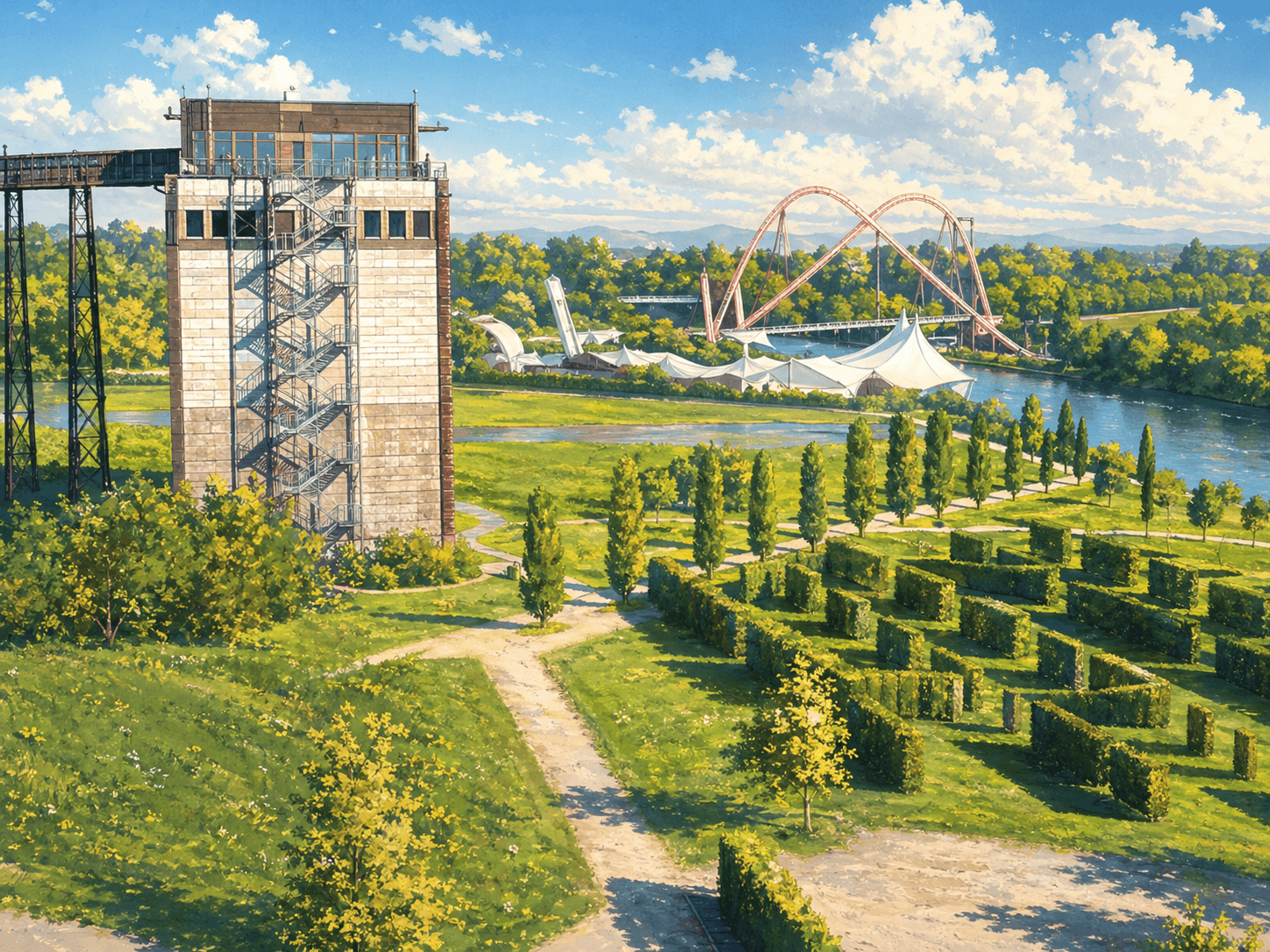
In April 2026, Gelsenkirchen focused on real estate, cultural initiatives, and the future of care. Here is the monthly review for its residents.
City Development and Culture in Focus – April 2026 in Gelsenkirchen
What Was Important This Month
- The city acquired 12 properties for urban renewal projects.
- The second edition of the Gastro Guide will be printed in 5,000 copies.
- The Evening Secondary School will be converted into an Evening Gymnasium starting in August 2026.
- A new City Management Office Buer with a focus on event management will be established.
- A new district heating network with up to 100 MW capacity will be constructed by 2031.
- No additional need for inpatient care beds was identified.
City Development and Real Estate: New Developments for the Urban Structure
In April 2026, Gelsenkirchen actively engaged in shaping its urban structure. The city acquired a total of 12 properties for urban renewal – a measure aimed at promoting future neighborhood developments. In several cases, the SEG (Urban Renewal Company Gelsenkirchen) acted as the preferential buyer, demonstrating the city's targeted investment in its development.
These steps are part of a long-term strategy to utilize vacant land and revitalize neighborhoods. The exact locations and financing remain under discussion, but it is clear that Gelsenkirchen is investing in active urban development.
Culture and Events: Price Adjustments and New Projects
In the cultural sphere, the focus in April 2026 was primarily on price adjustments at the Municipal Cinema (KoKi). Admission fees will be increased to 7.50 EUR (standard), 6.50 EUR (reduced), and 4 EUR (GE-Pass). In addition, 10-ticket packages will be offered, which is a good model for regular visitors.
Furthermore, the Institute for Urban History will be expanded by 1,800 running meters of archive space, supported by 50,000 EUR from the LWL Cultural Committee. Although the Walk of Fame and other projects such as the City Garden were discussed, no concrete decisions were made. Nevertheless, it is evident that Gelsenkirchen aims to strengthen its cultural identity.
Care and Seniors: Expansion and Future Security
In the care sector, the city of Gelsenkirchen has decided that no additional need for inpatient care beds exists. This aligns with the current care needs planning, which is updated annually in accordance with § 11 Abs. 7 APG NRW. At the same time, the AWO Senior Center Darler Heide will be rebuilt and is expected to be completed by the end of 2028.
Overall, Gelsenkirchen is well-equipped with 2,589 inpatient care beds. Nevertheless, the expansion of 101 new care beds remains a central planning priority. The discussions show that the city is focusing on a future-proof care infrastructure.
Administration and Law: Transparent Processes and Discussions
In several committees, the review of exclusion grounds under § 31 of the Municipal Code was addressed. Legal inquiries were handled by Department 30 – Law, demonstrating that Gelsenkirchen is committed to transparent and legally secure administration.
In addition, urgent motions were discussed, such as the renovation of the Music Pavilion in the City Garden. Chairpersons and secretaries were updated, with clear substitution rules in place for absences.
Climate and Energy: Expansion of the District Heating Network
The expansion of the district heating network by Iqony Wärme GmbH is a milestone in Gelsenkirchen’s climate policy. The planned pipelines with up to 100 MW (DN 600) and a 25 MW connection capacity to the Erle area are expected to be operational by mid-2031.
The total heat production of the Iqony companies already amounts to ~4,500 GWh/year, with ~51% coming from climate-neutral sources. This shows that Gelsenkirchen is making significant progress toward becoming a climate-neutral city.
Public Life and Finances: Grants and Projects
In the Gelsenkirchen-South District Forum, 40 proposals with a total volume of 98,400 EUR were presented. Of these, 40,000 EUR in grants were unanimously awarded. Payments began in April.
In addition, street maintenance measures in Gelsenkirchen-South were funded with 490,000 EUR from own resources. This is another sign that the city is investing in its infrastructure.
Connections and Trends: Urban Development and Future Security
April 2026 shows a Gelsenkirchen that is actively shaping its future. On the one hand, investments are being made in infrastructure, culture, and care, while on the other hand, climate protection is being anchored as a central area of action. The city is pursuing a clear strategy that takes into account both economic and social aspects.
The transparent administration and legal security in decision-making processes also contribute to building trust. Gelsenkirchen proves that it is possible to design a city that is efficient and future-ready on multiple levels.
Conclusion and Outlook
Gelsenkirchen has once again shown in April 2026 that it is a well-rounded city. From urban development through culture to care and climate protection – all areas are in motion. The investments in real estate, infrastructure, and education show that Gelsenkirchen is not standing still but actively investing in its future.
In May 2026, it will be interesting to observe how the decisions will be more concretely implemented. The introduction of the City Management Office Buer, the expansion of the district heating network, and the further development of school policy are just some of the topics that will be in the spotlight in the coming weeks and months.
NeoSearch analyses public council documents, committee minutes and municipal announcements. Source references appear automatically once verified meeting data is available.
What does this mean for businesses?
Urban development, zoning plans and commercial settlements create early construction and supply opportunities. Following council decisions reveals projects before they go to tender.
Track similar decisions in your region
Set up monitoring for economic development in Nordrhein-Westfalen — prefilled from this article.
Set up monitoring →More signals from Gelsenkirchen
Health Policy in Gelsenkirchen: Between Prevention, Safety, and Care Needs
In April 2026, important decisions on health policy were in focus in Gelsenkirchen. From violence prevention in emergency services to mental health care and care planning – the city is relying on cooperation, innovation, and prevention.
Read more → Gelsenkirchen's Mobility Transformation: From School Traffic to the IGA 2027
In April 2026, Gelsenkirchen focused intensively on traffic policy topics – from the parent taxi service to the major construction projects for the IGA 2027. This blog analyzes the most important developments and background information.
Read more → Gelsenkirchen: Legal Challenges and Political Tensions in April 2026
In April 2026, Gelsenkirchen was at the center of numerous legal and political issues, ranging from public order policy to elections and social problems. This blog analyzes the key decisions and discussions in the field of Policy and Legal Matters.
Read more →