Housing Policy in Düsseldorf – Between Affordable Housing, Budget Cuts and Social Integration
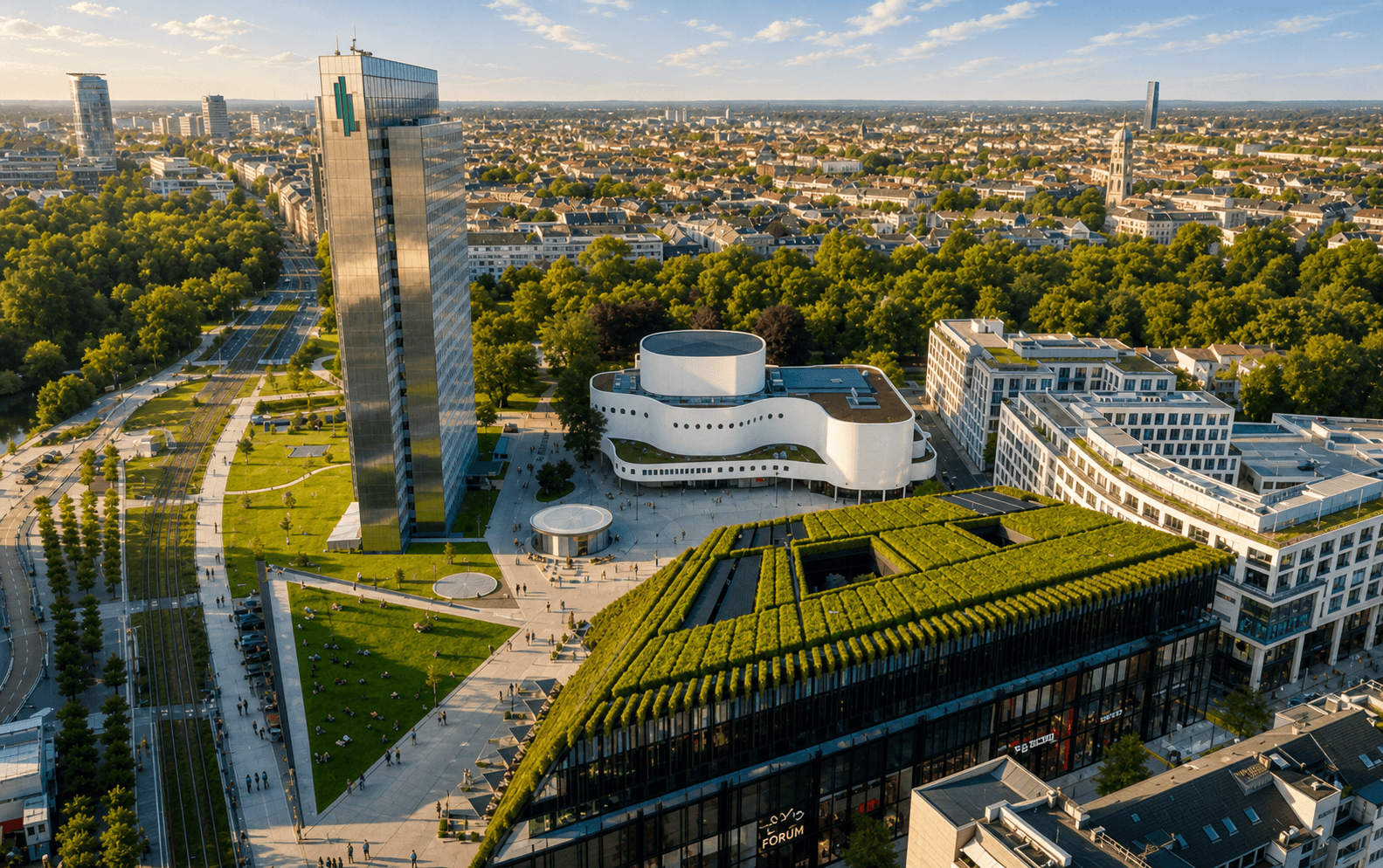
At the March meeting of Düsseldorf's Committee for Housing and Modernization, affordable housing, budget cuts and social integration were in the spotlight. The discussions show how closely housing policy is linked to social, financial and structural challenges – and what this means for the future of the state capital.
Housing Policy in Düsseldorf: Between Criticism, Cuts and Concepts
Housing policy in Düsseldorf is at a turning point. With rising rents, a decline in social housing offers and the need to integrate migration and integration into urban development, the debate on affordable housing has never been more intense. In March 2026, council factions, the administration and experts discussed various ways to tackle the challenges – with different priorities and objectives.
Criticism of Existing Support Programs
Düsseldorf's current housing policy is facing sharp criticism. In particular, DIE LINKE criticizes existing support programs such as the "Impulsprogramm Wohnungsneubau" and the support for owner-occupied and rental housing as insufficient and opaque. Critical voices argue that the supported housing offers are not affordable for the general population and often remain in private ownership.
In contrast, SPD and Volt demand the cancellation of certain support programs, such as low-interest loans for affordable housing construction, for financial reasons. The debate highlights the tension between social responsibility and budget discipline – a topic that also repeatedly arises in the field of integration work.
Budget Cuts and Administrative Adjustments
The budget administration is a central hub in housing policy. While DIE LINKE proposes to channel funds from cuts into the SWD to create affordable housing, SPD/Volt advocate for adjusting the administrative cost contribution. The proposal to increase the contribution amount for the monitoring of supported housing aims to generate additional funds to relieve the administration.
This financial realignment affects not only housing policy but also integration work. For example, the cuts in Product 3135102 (Integration of people with a migration background) amount to 245,310 euros for 2026 – a clear step back in a city that sees itself as an open and diverse metropolis.
The Role of SWD and the Future of Affordable Housing
The Duisburg Stadtwerke (SWD) is a key player in housing policy. DIE LINKE calls for investments of 132 million euros in the SWD to strengthen its ability to build affordable housing on a significant scale. The SWD is highlighted as one of the few actors who are actually effective on the market – an argument that repeatedly comes up in the debate on the future of municipal housing policy.
However, the definition of "affordable housing" remains controversial. The current definition sets a rent limit that should not exceed 30 percent of household income – a threshold that is often exceeded in practice. In addition, the installation of photovoltaic systems on new buildings is mandatory, which supports climate protection goals but also leads to higher construction costs.
Neighborhood Development and Urban Planning Visions
In Düsseldorf, not only individual homes are being considered, but also entire neighborhoods. The planning of a new housing district with 800–1000 housing units, including social and technical infrastructure, shows how urban development could be shaped in the future. The development along the railway line with a direct connection to Benrather train station is a milestone that combines mobility, sustainability and population growth.
However, these projects are not without risks. For example, the plots in Itter-Holthausen are located in a flood risk area – a challenge that must be taken into account in planning. In addition, the question remains open as to whether the planned housing will actually be accessible to all population groups.
Conclusion: Housing Policy as a Central Building Block of a Social City
The debate in Düsseldorf in March 2026 shows that housing policy cannot be viewed in isolation. It is closely intertwined with financial policy, integration, climate protection and social justice. The challenges are great – but the discussions about the role of the SWD, the funding of integration projects and the planning of new districts also show that solutions are possible.
In the coming months, it will depend on how the political actors achieve the balance between social responsibility, financial stability and urban planning vision. Düsseldorf has the opportunity to become a model for affordable housing in Germany's urban areas – provided the debates along the currently discussed paths are continued and implemented.
NeoSearch analyses public council documents, committee minutes and municipal announcements. Source references appear automatically once verified meeting data is available.
What does this mean for businesses?
Urban development, zoning plans and commercial settlements create early construction and supply opportunities. Following council decisions reveals projects before they go to tender.
Track similar decisions in your region
Set up monitoring for economic development in Nordrhein-Westfalen — prefilled from this article.
Set up monitoring →More signals from Duesseldorf
Educational Policy in Düsseldorf: Safety, Capacity, and Innovation in Focus
In April 2026, educational policy in Düsseldorf focused on safety issues, capacity expansion at special needs schools, and innovative projects to prevent school avoidance. The School Committee addressed central challenges and reform approaches that will shape the future of the educational system in the state capital.
Read more → Youth Policy in Düsseldorf: Focus on Psychosocial Support, Democracy, and Poverty Reduction in April 2026
In April 2026, Düsseldorf has taken several key steps in youth policy. From psychosocial support for young people to the implementation of democracy projects and the fight against child poverty: The Youth Welfare Committee is setting impulses for a resilient and livable city for young people.
Read more → Düsseldorf's Integration and Housing Policy in April 2026: Focus on Participation, Antiracism, and Legal Security
In an intense April 2026, Düsseldorf took decisive steps in integration and social policy. The focus was on issues such as antiracism, linguistic and social integration, legal security in homeless shelters, and the strengthening of migrant organizations. The Committee for Equal Opportunities and Integration made key decisions that will shape future policy.
Read more →