Düsseldorf's Urban Development in March 2026: Housing, Infrastructure, and Transportation
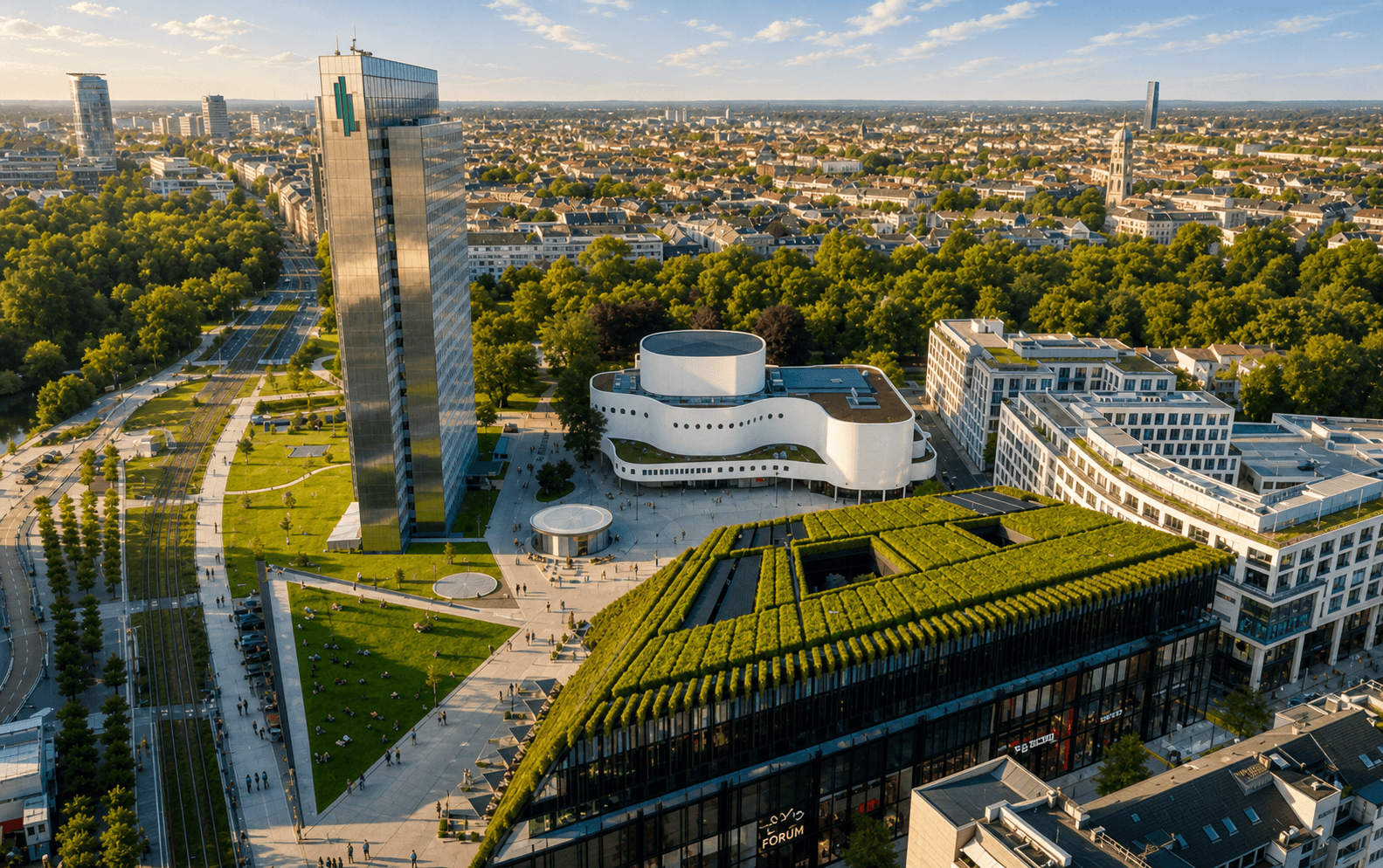
In March 2026, Düsseldorf intensified its efforts in urban development and construction with forward-looking projects. From securing affordable housing to establishing new mobility stations and optimizing traffic infrastructure – the city is pursuing a broad range of measures.
Housing Policy and Land Allocation: The Path to Meeting Demand
Düsseldorf continues to focus on targeted expansion of housing construction to relieve demand for affordable housing. In March 2026, five buildable plots on Pastor-Dörr-Ring were allocated to the highest bidders. With a total area of 1,582 m² and an indicative value of €1,050/m², single-family homes and semi-detached houses are planned. The city is pursuing two approaches: lease-to-own agreements and direct purchase contracts.
The SPD and Volt called for the topic to be added to the agenda of the Committee for Planning and Urban Development to ensure transparency and oversight. The sales procedures are conducted digitally via a cloud platform, which makes the process more efficient, but also raises criticism regarding accessibility for certain population groups.
Neighborhood Development: From Industrial Sites to Vibrant Residential Areas
Another focal point was the development of the former Cold Rolling Mill site. With an area of 21.8 hectares, a residential district with approximately 800–1,000 housing units is planned. The winning design of the urban planning competition from 2017/2018 (Schellenberg + Bäumler) forms the basis for the zoning plan. In addition to housing, commercial rows and social infrastructure are planned.
The goal is to secure industrial and craft uses while simultaneously providing new impulses for the development of social and technical structures. Non-central retail will be regulated, while brothels and gambling remain explicitly prohibited. This demonstrates the clear focus on a vibrant but order-oriented neighborhood development.
Construction Projects and Permit Processes: Where Düsseldorf is Growing
March 2026 was a busy month for the Düsseldorf construction industry: numerous building applications were approved, including the expansion of a building at Karl-Rudolf-Straße 178 into a short-term commercial rental with 60 beds. Also approved was the construction of a residential complex at Josef-Gockeln-Straße with 30 housing units and a community center, with 50% of the project subsidized.
Further projects include the construction of a warehouse for PSD Bank Dome at Theodorstraße 281 and the establishment of a production kitchen at the LVR Hospital. Overall, a wide range of building applicants is evident, covering both residential and commercial and infrastructure projects.
Infrastructure and Transport: Expansion for More Mobility
The city is investing heavily in traffic safety and development. For example, a proposal to optimize pick-up and drop-off zones at primary schools on Schillstraße was discussed in the District Committee 9. In addition, the Benrather Schloßallee / Bonner Straße is being further developed as a hub for cyclists and Stadtbahn users.
Another project is the construction of a mobility station on Werstener Dorfstraße. Here, car-sharing parking spaces, bike and e-scooter sharing stations, bike racks, and a repair station will be created. With a budget of €119,914.52 and 80% funding through the "Funding of Regional Mobility" (FöRi-MM) program, the project is planned for the first half of 2026. The goal is to establish a total of 100 such mobility stations in Düsseldorf by 2030 to promote multimodal travel chains and reduce emissions.
Outlook: Urban Development as a Long-Term Investment
The measures taken in March 2026 show that Düsseldorf is consciously focusing on future-oriented urban development. Ensuring affordable housing, adapting infrastructure to future mobility needs, and developing vibrant neighborhoods are central elements of this strategy.
However, challenges remain: the balance between growth and sustainability, between investments in private and public space, and the assurance of social justice in the urban space are issues that must be intensively addressed in the coming years.
NeoSearch analyses public council documents, committee minutes and municipal announcements. Source references appear automatically once verified meeting data is available.
What does this mean for businesses?
Urban development, zoning plans and commercial settlements create early construction and supply opportunities. Following council decisions reveals projects before they go to tender.
Track similar decisions in your region
Set up monitoring for economic development in Nordrhein-Westfalen — prefilled from this article.
Set up monitoring →More signals from Duesseldorf
Educational Policy in Düsseldorf: Safety, Capacity, and Innovation in Focus
In April 2026, educational policy in Düsseldorf focused on safety issues, capacity expansion at special needs schools, and innovative projects to prevent school avoidance. The School Committee addressed central challenges and reform approaches that will shape the future of the educational system in the state capital.
Read more → Youth Policy in Düsseldorf: Focus on Psychosocial Support, Democracy, and Poverty Reduction in April 2026
In April 2026, Düsseldorf has taken several key steps in youth policy. From psychosocial support for young people to the implementation of democracy projects and the fight against child poverty: The Youth Welfare Committee is setting impulses for a resilient and livable city for young people.
Read more → Düsseldorf's Integration and Housing Policy in April 2026: Focus on Participation, Antiracism, and Legal Security
In an intense April 2026, Düsseldorf took decisive steps in integration and social policy. The focus was on issues such as antiracism, linguistic and social integration, legal security in homeless shelters, and the strengthening of migrant organizations. The Committee for Equal Opportunities and Integration made key decisions that will shape future policy.
Read more →