Düsseldorf's Mobility Policy in February 2026: Infrastructure, Safety, and Climate Resilience in Focus
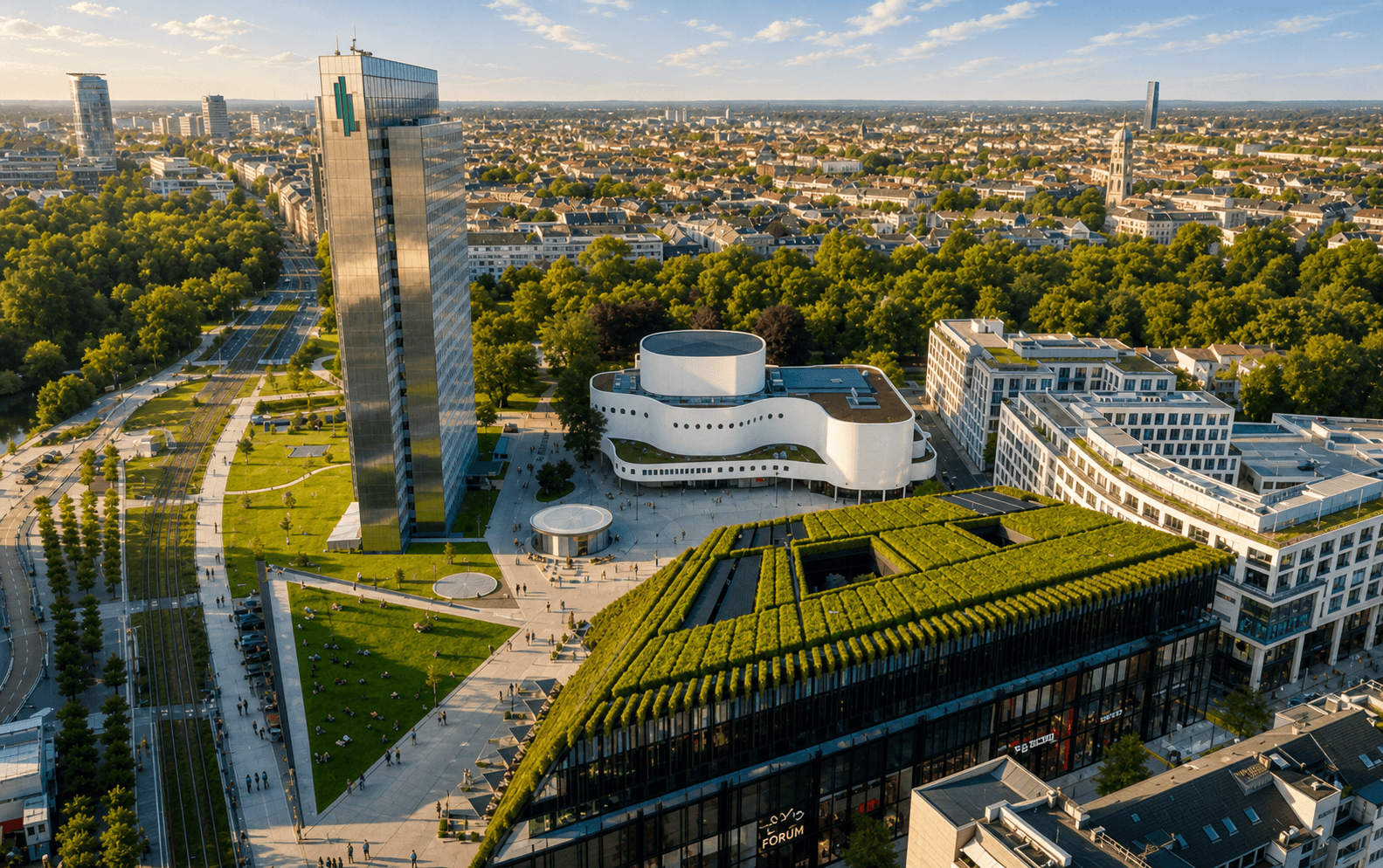
In February 2026, Düsseldorf focused on key measures to improve mobility. From the redesign of bicycle infrastructure to speed controls and climate adaptation – this blog provides a comprehensive insight into the political priorities and their impacts.
Mobility Development in Düsseldorf: Expansion, Safety, and Climate Resilience
Düsseldorf has shown itself to be a city with a clear mobility strategy in February 2026. A variety of decisions made in the Order and Traffic Management departments, as well as in the district committees, have led to concrete measures aimed at improving the traffic infrastructure, safety, and climate adaptability. These developments not only reflect political will but also represent a clear response to the challenges of modern urban life.
Infrastructure and Wayfinding: Safety through Clear Structures
One of the central topics of the mobility meetings was the redesign of traffic areas, particularly in the areas of bicycle and pedestrian pathways. Measures to remove incorrect traffic signs and to create clear pavement markings were decided in the Theo-Champion-Straße, Hansaallee, and Belsenplatz areas. The aim is to reduce conflicts among different road users and to increase safety.
In addition, the LED retrofitting of pedestrian crossings in Oberkassel was approved to improve visibility. These measures are not only technically significant but also socially relevant, as they enhance road safety for particularly vulnerable groups such as pedestrians and cyclists.
Traffic Safety and Speed Control: From Speed Cameras to Speed Limits
Safety on Düsseldorf's roads was a central focus. An application for the installation of a speed measurement system on the Kevelaerer Straße was passed by the SPD and CDU to combat street racing and speeding. At the same time, nighttime speed limits were discussed, especially in sensitive residential areas.
Another focus was on the Theodor-Heuss Bridge, where renovation work and temporary traffic light rearrangements led to restrictions in bus traffic. The administration examined alternative measures and traffic organization solutions to ensure public transport as best as possible.
Climate Resilience and Greening: Mobility in Harmony with the Environment
In Düsseldorf, mobility is not considered in isolation but is embedded in the context of climate and environmental policy. The city is focusing on greening and climate adaptation to increase the resilience of its infrastructure. In the Grünau redesign area, over 100 trees were cut down and replanted to strengthen climate resilience. In addition, new drinking fountains and mobile cooling systems were planned for parks and squares to reduce heat stress for citizens.
The redesign of the Königsallee (west side) with wider sidewalks, green strips, and barrier-free facilities also demonstrates how mobility development and climate protection can go hand in hand.
Public Transport and Traffic Planning: Light Rail as a Key to Relief
In the discussion about public transport, the challenges posed by the renovation of the Theodor-Heuss Bridge were in the foreground. Since Rheinbahn buses can no longer cross the bridge, alternative routes and contingency measures are being examined. In this context, the light rail is seen as a more reliable alternative to the bus.
In addition, line 833 and the on-demand system "flexy" are being considered as complementary solutions to optimize traffic flow. The city is therefore investing in flexible, modern transport solutions tailored to the needs of its citizens.
Conclusion: Mobility as a Central Building Block of Urban Development
Düsseldorf proves with the decisions of February 2026 that mobility is not only a technical challenge but a central building block of urban development. The combination of infrastructure measures, safety concepts, and climate-adapted thinking shows how a modern city can move toward the future.
In March and April 2026, the implementation of these plans will be the focus. The evaluation of the fairground traffic concepts, the continuation of bridge renovation work, and the implementation of bicycle infrastructure will show whether the political visions can be translated into practice.
NeoSearch analyses public council documents, committee minutes and municipal announcements. Source references appear automatically once verified meeting data is available.
What does this mean for businesses?
Municipal council decisions are early indicators: following the council agenda surfaces projects and tenders months before the official award — before they ever reach the procurement portals.
Track similar decisions in your region
Set up monitoring for kommunale Projekte in Nordrhein-Westfalen — prefilled from this article.
Set up monitoring →More signals from Duesseldorf
Educational Policy in Düsseldorf: Safety, Capacity, and Innovation in Focus
In April 2026, educational policy in Düsseldorf focused on safety issues, capacity expansion at special needs schools, and innovative projects to prevent school avoidance. The School Committee addressed central challenges and reform approaches that will shape the future of the educational system in the state capital.
Read more → Youth Policy in Düsseldorf: Focus on Psychosocial Support, Democracy, and Poverty Reduction in April 2026
In April 2026, Düsseldorf has taken several key steps in youth policy. From psychosocial support for young people to the implementation of democracy projects and the fight against child poverty: The Youth Welfare Committee is setting impulses for a resilient and livable city for young people.
Read more → Düsseldorf's Integration and Housing Policy in April 2026: Focus on Participation, Antiracism, and Legal Security
In an intense April 2026, Düsseldorf took decisive steps in integration and social policy. The focus was on issues such as antiracism, linguistic and social integration, legal security in homeless shelters, and the strengthening of migrant organizations. The Committee for Equal Opportunities and Integration made key decisions that will shape future policy.
Read more →